
Sleep and Metabolic Health: Why Rest Is a Foundation of Everyday Energy
When we think about improving energy and metabolic health, two things usually come to mind:
Nutrition and movement.
But there is another essential part of the equation:
Sleep.
Sleep is not simply a period when the body shuts down.
Throughout the night, the brain and body move through highly organized stages of sleep while numerous physiological processes continue.
Sleep influences:
- Energy regulation
- Glucose metabolism
- Appetite
- Hormonal signaling
- Immune function
- Learning and memory
- Emotional regulation
- Cardiovascular health
- Physical recovery
That makes sleep much more than downtime.
It is part of the biological foundation that allows us to function well during the day.
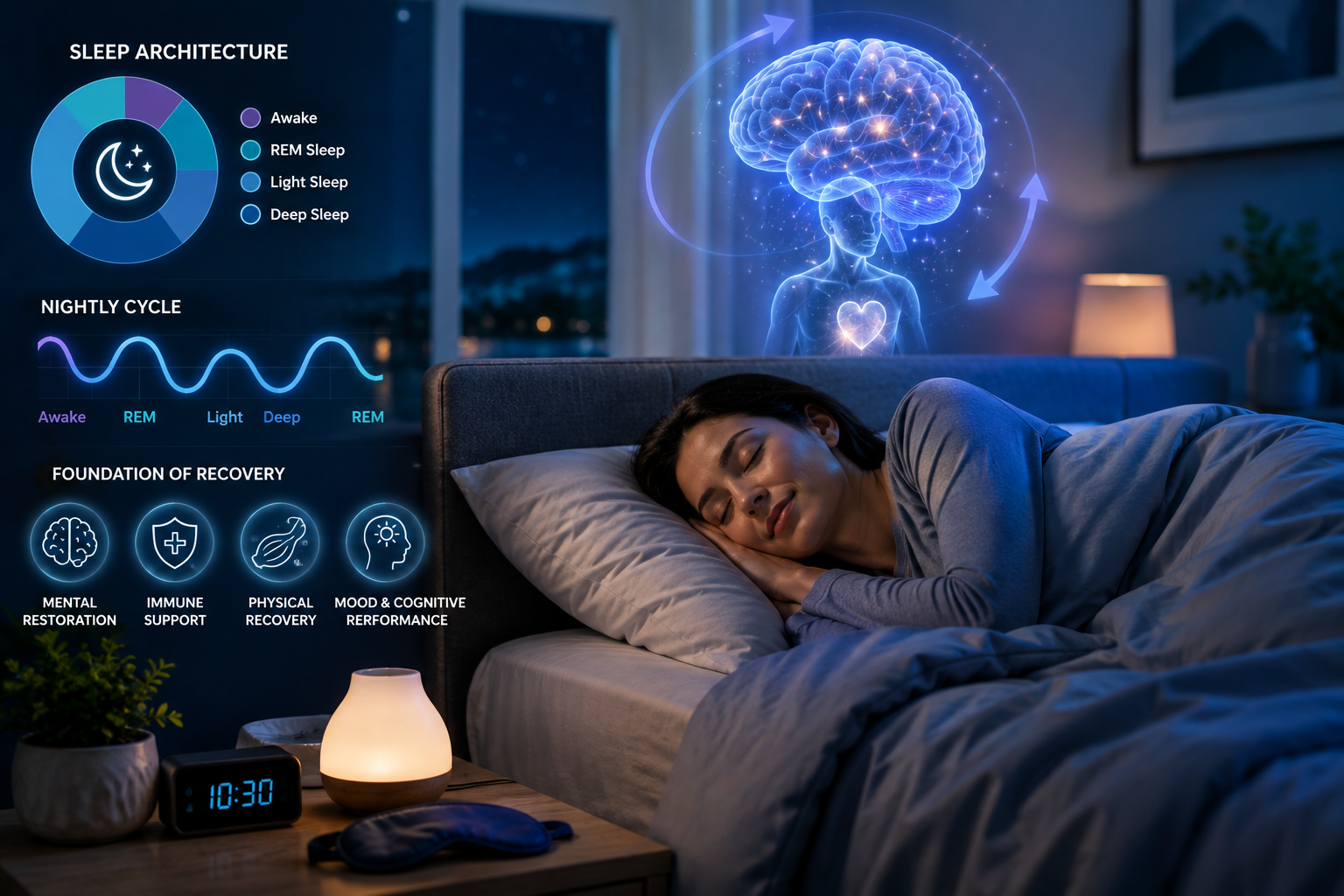
What Happens While You Sleep?
Normal sleep occurs in repeating cycles that include several stages of non-rapid-eye-movement (NREM) sleep and rapid-eye-movement (REM) sleep.
These stages are not interchangeable.
Across the night, the amount of time spent in different stages changes, creating what researchers call sleep architecture.
During sleep, the body continues regulating hormones, cardiovascular activity, metabolism, immune signaling, memory processing, and tissue recovery.
The brain is also highly active during portions of the night.
So rather than thinking of sleep as "doing nothing," it is more accurate to think of it as a different physiological state with its own essential functions.
Sleep and Everyday Energy
Everyone knows what one bad night can feel like.
You may wake up:
- Groggy
- Irritable
- Less focused
- More dependent on caffeine
- Less motivated to exercise
- More interested in highly palatable foods
One short night does not ruin your health.
The greater concern is a repeated pattern of insufficient or disrupted sleep.
Over time, inadequate sleep has been associated with changes in metabolic, cardiovascular, cognitive, and psychological health.
- Sleep and Appetite
Researchers have long been interested in the relationship between sleep and appetite regulation.
Two hormones frequently discussed are ghrelin and leptin.
Ghrelin participates in hunger and energy regulation.
Leptin is produced primarily by fat tissue and contributes to longer-term energy-balance signaling.
Some controlled sleep-restriction studies have found changes in these hormones alongside increased hunger and appetite.
However, the relationship is not as simple as:
Less sleep = ghrelin rises + leptin falls.
Not every study finds exactly the same hormonal response.
Sleep duration can also influence eating through other pathways.
When we are tired, we may:
- Have more opportunities to eat because we are awake longer
- Seek highly rewarding foods
- Have less energy for meal preparation
- Experience changes in decision-making and impulse control
- Exercise less
- Use caffeine or sugary foods to compensate for fatigue
The relationship between sleep and eating behavior is therefore both biological and behavioral.
Why Food Can Look Different When You're Tired
Think about the difference between choosing breakfast after a refreshing night's sleep and choosing food after being awake half the night.
Fatigue changes the context in which food decisions are made.
A balanced meal may require preparation.
A sweet pastry or highly processed snack offers immediate convenience and reward.
This doesn't mean sleep deprivation automatically causes poor food choices.
It means sleep is part of the environment in which those choices occur.
- Sleep and Insulin Sensitivity
Sleep also interacts with glucose metabolism.
Insulin helps regulate blood glucose by facilitating glucose uptake and influencing energy storage and use.
Controlled laboratory studies have shown that restricting sleep can temporarily reduce insulin sensitivity in healthy individuals.
This is important because it demonstrates that metabolic health isn't determined solely by what we eat.
How we sleep can influence the way the body responds to food.
But this should not be interpreted to mean that a few bad nights cause diabetes.
Type 2 diabetes develops through a complex interaction of genetics, body composition, physical activity, diet, sleep, medications, age, and many other factors.
Sleep is one piece of that larger metabolic picture.
- Sleep and the Stress-Response System
Sleep and stress are closely connected.
Cortisol—one of the hormones involved in the body's stress-response system—follows a daily rhythm.
Its concentration generally rises around waking and changes throughout the day and night.
Sleep restriction and circadian disruption can alter aspects of this rhythm.
But it is too simplistic to say:
"Poor sleep keeps cortisol high all day."
The relationship varies according to sleep duration, timing, circadian phase, stress exposure, and individual physiology.
A more useful way to think about it is this:
Sleep and the stress-response system continuously influence one another.
Stress can make sleep difficult.
Poor sleep can make everyday stressors harder to manage.
That can create a cycle in which each problem reinforces the other.
Sleep Is About More Than Hours
Sleep duration matters.
But so do:
- Sleep consistency
- Sleep timing
- Sleep continuity
- Circadian alignment
- Sleep disorders
- Environmental conditions
Someone can spend eight hours in bed and still wake exhausted if sleep is repeatedly interrupted.
That is why "just get eight hours" is incomplete advice.
For most adults, major health organizations generally recommend approximately seven or more hours of sleep per night, although individual needs vary.
Quality and regularity matter too.
Your Circadian Clock Sets the Stage
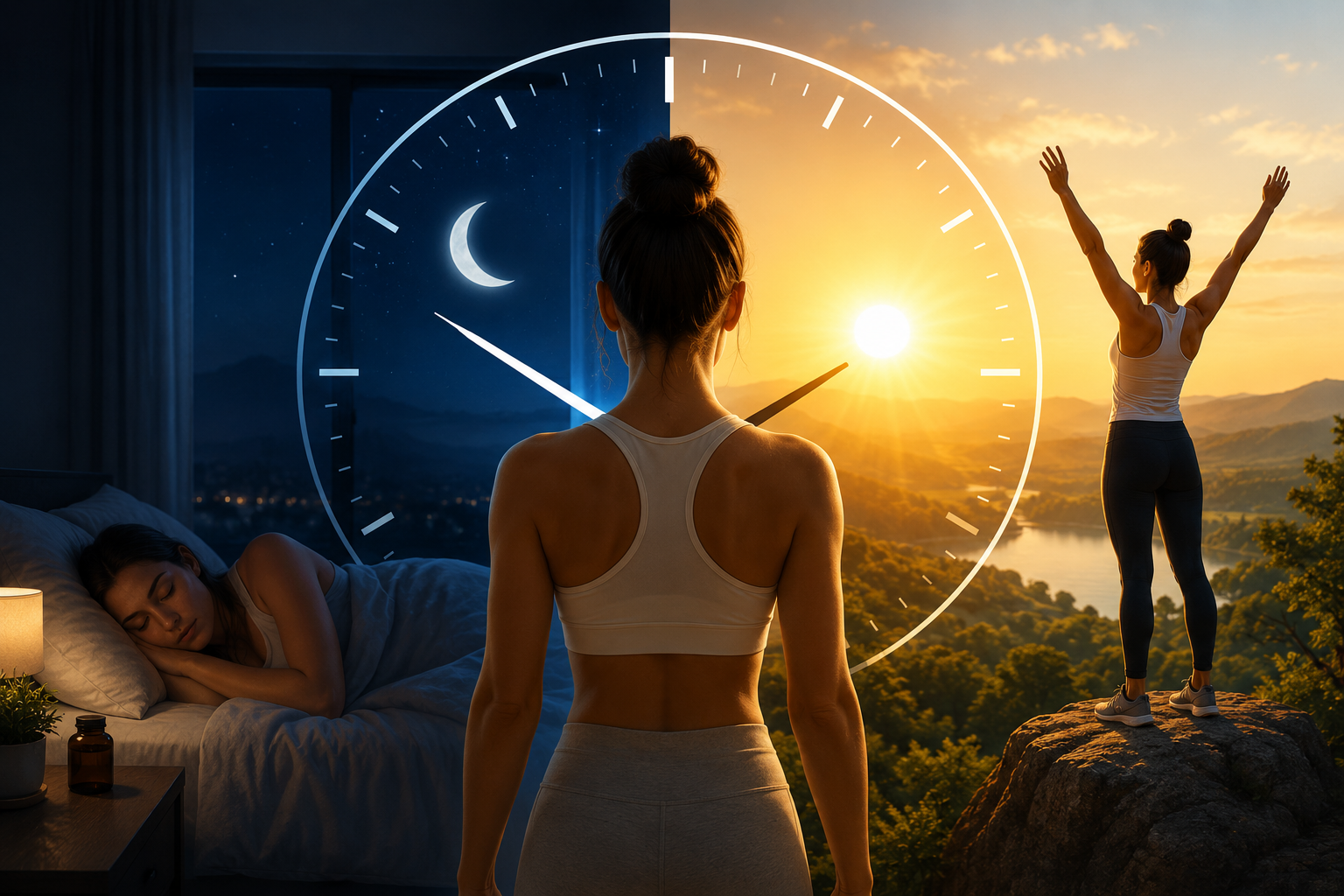
Humans have an internal timing system known as the circadian rhythm.
The brain's central biological clock coordinates daily patterns in:
- Sleep and wakefulness
- Hormonal activity
- Body temperature
- Alertness
- Metabolism
- Digestion
Light is one of the strongest environmental signals for this system.
Bright light during the day helps reinforce daytime alertness.
As evening approaches and environmental light decreases, the biological system prepares for nighttime.
This is one reason our light environment can influence sleep.
Evening Light and Screens
You've probably heard:
"Blue light destroys your sleep."
Reality is more nuanced.
Light reaching the eyes in the evening can influence circadian signaling and melatonin production, and shorter-wavelength light can have particularly strong effects under certain conditions.
But screens can affect bedtime in another obvious way:
They keep us engaged.
One video becomes another.
One message becomes a conversation.
One email reminds us of tomorrow's work.
Suddenly bedtime is 45 minutes later.
So the solution doesn't have to be fear of blue light.
A better principle is:
Give your brain and eyes a calmer, dimmer environment as bedtime approaches.
Three Evidence-Informed Habits for Better Sleep
You don't need an elaborate nighttime ritual or a collection of expensive sleep products.
Start with the basics.
- Create a Light Transition
During the final part of the evening, gradually reduce bright light when practical.
Try:
- Dimming overhead lights
- Using softer lamps
- Lowering screen brightness
- Putting work away
- Choosing calmer activities
- Stepping away from stimulating content before bed
There is no universal rule requiring everyone to stop using screens exactly 60 minutes before sleep.
If you sleep well while reading on a tablet, there is little reason to become anxious about it.
The larger goal is to create a transition from daytime stimulation to nighttime rest.
- Be Strategic With Caffeine
Caffeine works primarily by blocking adenosine receptors in the brain, reducing the sensation of sleepiness.
Its effects can persist for hours.
Caffeine's half-life varies considerably between individuals and can be influenced by genetics, pregnancy, medications, smoking, liver function, and other factors.
That means there is no perfect caffeine cutoff for everyone.
If you have trouble falling asleep, experiment with moving your final coffee or caffeinated beverage earlier in the day.
For some people, stopping after lunch works well.
Others metabolize caffeine differently.
Pay attention to your own response.
- Give Dinner Time to Settle
Eating late does not automatically ruin sleep.
But very large, heavy meals close to bedtime can be uncomfortable for some people and may aggravate symptoms such as reflux.
When practical, allow some time between a substantial evening meal and lying down.
There is no need for a rigid rule that everyone must stop eating at a particular hour.
Your schedule, health, activity level, medications, and nutritional needs all matter.
Keep Your Bedroom Comfortable
Temperature can influence sleep comfort.
Core body temperature naturally changes across the sleep-wake cycle, and many people sleep better in a relatively cool room.
You've probably seen recommendations such as 18°C to 20°C (65°F to 68°F).
That can be a useful starting point—not a biological requirement.
The best bedroom temperature is one that allows you to sleep comfortably without becoming too hot or too cold.
Also consider:
- Noise
- Light
- Mattress comfort
- Bedding
- Air circulation
Your bedroom does not need to resemble a laboratory.
It needs to be comfortable enough for you to sleep.
Consistency May Be More Powerful Than a Perfect Routine
The human circadian system responds well to regular environmental cues.
When possible, try to maintain reasonably consistent:
- Wake times
- Bedtimes
- Meal timing
- Morning light exposure
- Activity patterns
Perfect consistency is unrealistic.
Weekends happen.
Travel happens.
Celebrations happen.
Life happens.
The goal is not to go to bed at exactly 10:07 every night.
It is to give your biological clock a reasonably predictable pattern most of the time.
Morning Light Can Help the Next Night
One of the most overlooked sleep habits actually happens after waking.
Get daylight.
Outdoor morning light provides a strong signal to the circadian system that the biological day has begun.
Try:
- Drinking coffee outside
- Walking the dog
- Taking a short morning walk
- Eating breakfast near natural light
- Walking part of your commute
The exact amount of light needed varies with season, latitude, cloud cover, and individual circumstances.
You don't need to stare at the sun.
Simply getting outdoors is a practical place to start.
Movement Helps Too
Regular physical activity is another important part of healthy sleep.
Walking, resistance training, cycling, swimming, gardening, yoga, and other forms of movement can support overall sleep and health.
There is a useful pattern emerging across wellness:
Nutrition supports sleep. Movement supports sleep. Sleep supports nutrition and movement.
These behaviors are not isolated pillars.
They reinforce one another.
Alcohol Is Not a Sleep Aid
Alcohol can make some people feel sleepy initially.
But sedation is not the same thing as healthy sleep.
Alcohol can alter sleep architecture and contribute to fragmented sleep later in the night.
It can also worsen snoring and sleep-disordered breathing in susceptible individuals.
If sleep quality is a priority, alcohol consumption—particularly near bedtime—is worth considering.
Don't Ignore Persistent Sleep Problems
Lifestyle habits can help many people sleep better.
But not every sleep problem can be solved by dimming the lights or drinking less coffee.
Persistent problems may indicate conditions such as:
- Insomnia
- Obstructive sleep apnea
- Restless legs syndrome
- Circadian rhythm disorders
- Medication effects
- Mental-health conditions
- Other medical problems
Pay particular attention to symptoms such as:
- Loud habitual snoring
- Gasping or choking during sleep
- Witnessed pauses in breathing
- Persistent excessive daytime sleepiness
- Morning headaches
- Difficulty staying awake while driving
- Long-term difficulty falling or staying asleep
These deserve professional evaluation.
Don't Turn Sleep Into a Performance
There is an ironic problem with modern sleep culture.
People sometimes become so determined to achieve "perfect sleep" that they become anxious about sleeping.
They monitor every stage.
Every awakening becomes a problem.
Every wearable score determines how they expect to feel the next day.
Sleep doesn't need to become another performance metric.
Wearable devices can provide interesting information, but consumer devices cannot perfectly measure sleep architecture.
Pay attention to the bigger picture.
Do you generally sleep enough?
Do you wake reasonably refreshed?
Can you function well during the day?
Those questions matter too.
The WonderfulLife Bottom Line
Sleep is not time stolen from productivity.
It is part of what makes productive, energetic waking hours possible.
Your body doesn't need perfect sleep every night.
It needs a healthy pattern over time.
Start with the fundamentals:
Protect enough time for sleep. Keep your schedule reasonably consistent. Get daylight during the day. Move your body. Be thoughtful about caffeine. Create a calmer evening environment. Keep your bedroom comfortable. Pay attention when persistent symptoms tell you something isn't right.
Nutrition matters.
Movement matters.
Stress management matters.
But none operates independently of sleep.
A healthier day often begins the night before.
Scientific References & Sources
- Spiegel, K., Tasali, E., Penev, P., & Van Cauter, E. (2004). Brief communication: Sleep curtailment in healthy young men is associated with decreased leptin levels, elevated ghrelin levels, and increased hunger and appetite. Annals of Internal Medicine, 141(11), 846–850.
- Buxton, O. M., Pavlova, M., Reid, E. W., Wang, W., Simonson, D. C., & Adler, G. K. (2010). Sleep restriction for 1 week reduces insulin sensitivity in healthy men. Diabetes, 59(9), 2126–2133.
- St-Onge, M. P., et al. (2016). Sleep duration and quality: Impact on lifestyle behaviors and cardiometabolic health. Circulation, 134(18), e367–e386.
Medical & Sleep Disclaimer
The information provided on WonderfulLife.ca is for educational, informational, and general wellness purposes only and is not intended as medical advice, diagnosis, or treatment.
Sleep needs vary between individuals, and persistent sleep difficulties can sometimes indicate an underlying medical or sleep disorder.
Consult a physician or qualified sleep professional if you regularly experience significant insomnia, excessive daytime sleepiness, loud snoring, gasping or choking during sleep, witnessed pauses in breathing, or other persistent sleep concerns.
Never drive or operate machinery when dangerously sleepy.
People taking medications or managing diabetes, cardiovascular disease, pregnancy, mental-health conditions, sleep disorders, or other medical conditions should seek individualized professional guidance before making significant changes that could affect their treatment.
Never disregard professional medical advice or delay seeking care because of information you have read on this website.
Credits
Author: WonderfulLife Editorial Team Editorial Assistance: Gemini Published For: WonderfulLife.ca









WonderfulLife Community
Join the Conversation