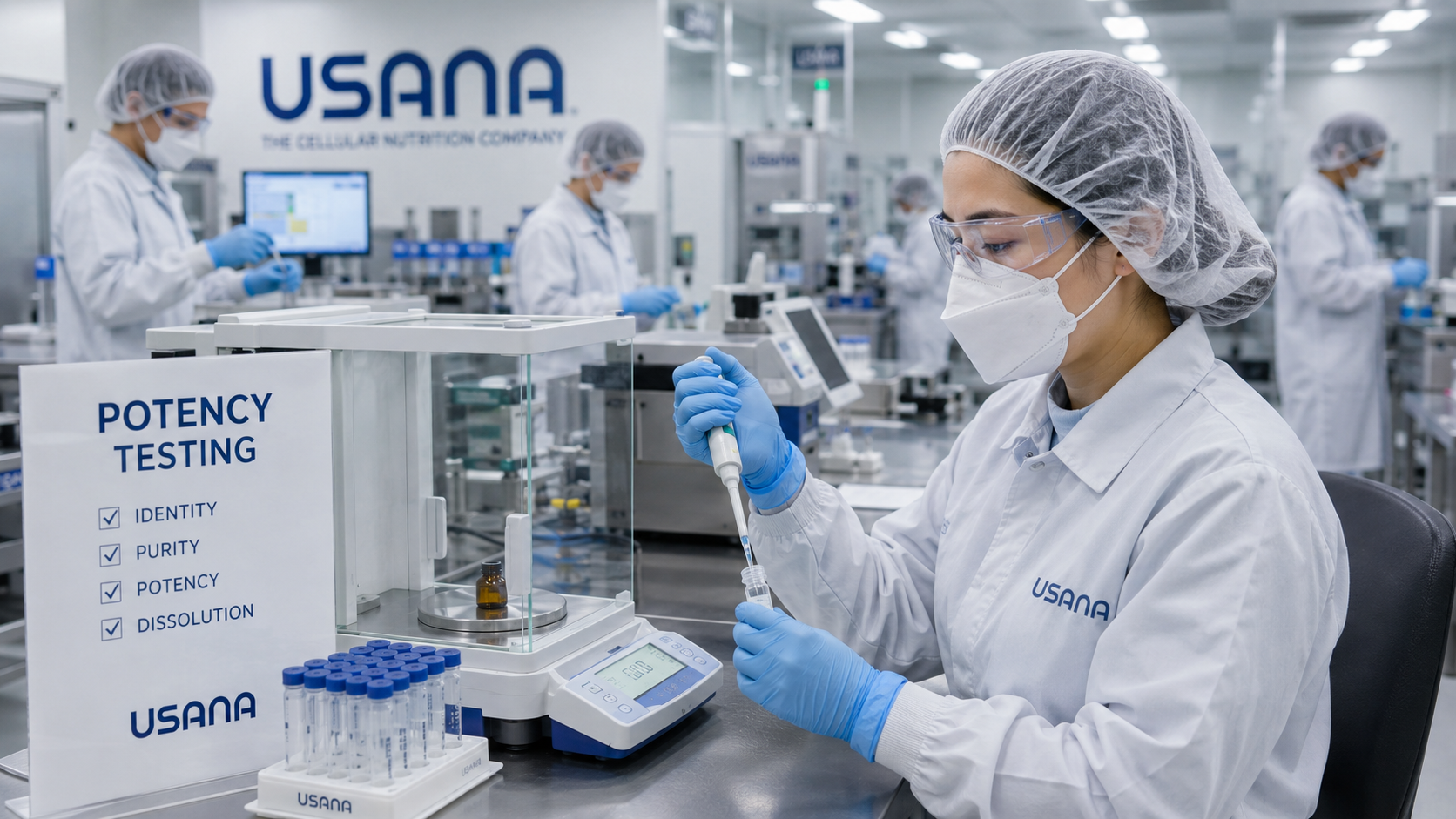
The Regulatory Divide: Understanding Supplement Manufacturing Standards
When consumers purchase a dietary supplement, it is easy to assume that every bottle on the shelf has undergone the same level of identity testing, potency verification, stability assessment, and contaminant screening.
That is not necessarily the case.
Dietary supplements are regulated products, but the rules governing them differ from those applied to pharmaceutical drugs. Just as importantly, the quality systems adopted by individual supplement manufacturers can extend well beyond minimum regulatory requirements.
Understanding this distinction can help consumers evaluate supplements based on more than attractive packaging, marketing claims, or price.
Dietary Supplements and Pharmaceuticals Are Regulated Differently
In the United States, dietary supplements are regulated under a framework that includes the Dietary Supplement Health and Education Act of 1994 (DSHEA) and FDA regulations.
Manufacturers of dietary supplements are subject to Current Good Manufacturing Practice (cGMP) requirements under 21 CFR Part 111.
These requirements address important areas including:
- Manufacturing operations
- Quality-control procedures
- Component specifications
- Identity testing
- Production records
- Packaging and labeling
- Handling of returned products
- Documentation and recordkeeping
Pharmaceutical drugs operate under a different regulatory framework, including 21 CFR Parts 210 and 211 for drug manufacturing.
These regulations include extensive requirements concerning manufacturing controls, laboratory procedures, documentation, equipment, facilities, stability programs, and finished-product testing.
The distinction matters—but it should not be oversimplified.
Dietary-supplement GMPs are real manufacturing requirements, not merely basic sanitation standards.
At the same time, some supplement manufacturers voluntarily build quality systems incorporating testing procedures, equipment, documentation, and manufacturing controls that may exceed the minimum requirements applicable to dietary supplements.
What Does "Pharmaceutical-Grade" Actually Mean?
Consumers frequently encounter the expression pharmaceutical-grade in supplement marketing.
The term can be useful when describing unusually rigorous manufacturing practices, but it requires context.
A dietary supplement does not automatically become a pharmaceutical drug simply because its manufacturer employs certain procedures associated with pharmaceutical manufacturing.
Likewise, "pharmaceutical-grade supplement" should not be interpreted as a universal government classification guaranteeing superior clinical effectiveness.
A more meaningful question is:
What does the manufacturer actually test, verify, document, and control?
That moves the discussion away from marketing terminology and toward measurable quality practices.
Raw Ingredient Verification: Quality Begins Before Manufacturing
A finished supplement can only be as consistent as the ingredients entering the manufacturing process.
Vitamins, minerals, amino acids, botanical extracts, oils, and other nutritional ingredients can vary considerably in identity, purity, concentration, and stability.
For that reason, sophisticated quality-control programs begin before ingredients reach the production line.
Incoming materials may be quarantined while appropriate testing and documentation are completed.
Identity Testing
Manufacturers need systems for confirming that an ingredient is actually what its documentation says it is.
Depending on the material, analytical technologies may include:
- High-Performance Liquid Chromatography (HPLC)
- Fourier Transform Infrared Spectroscopy (FTIR)
- Chromatographic fingerprinting
- Spectroscopic analysis
- Other validated analytical methods
The appropriate technique depends on the chemical characteristics of the ingredient being examined.
Purity and Contaminant Screening
Raw materials may also require testing for contaminants.
Depending on the ingredient and associated risks, testing can include:
- Lead
- Arsenic
- Cadmium
- Mercury
- Pesticide residues
- Residual solvents
- Undeclared substances
- Other chemical contaminants
Advanced instrumentation such as Inductively Coupled Plasma Mass Spectrometry (ICP-MS) can detect extremely small concentrations of certain elemental contaminants.
Microbiological Testing
Botanical and food-derived ingredients can also present microbiological risks.
Testing programs may therefore evaluate materials for organisms or indicators such as:
- Salmonella
- E. coli
- Yeasts
- Molds
- Total microbial counts
Specifications and testing requirements vary according to the material, manufacturing process, intended use, and applicable regulations.
Potency and Composition
For standardized ingredients, manufacturers may also measure concentrations of specified compounds.
Botanical extracts, for example, can be standardized for particular phytochemical constituents.
The broader principle is straightforward:
Quality cannot simply be inspected into a finished tablet. It must be managed throughout the manufacturing process.
Why In-House Analytical Capabilities Matter
Not every supplement company manufactures its own products.
Many brands use reputable third-party contract manufacturers, and outsourcing by itself does not mean a product is inferior. Contract manufacturers can operate sophisticated, highly compliant facilities.
However, vertical integration can give a company greater direct oversight of formulation, production, laboratory testing, and quality assurance.
Companies that invest in extensive analytical capabilities can potentially perform multiple quality checkpoints throughout manufacturing.
These can include raw-material analysis, blend testing, tablet testing, finished-product analysis, and stability evaluation.
Blend Uniformity: Making Every Serving Consistent
A nutritional formula can contain ingredients at dramatically different concentrations.
One component might be present in hundreds of milligrams while another trace nutrient appears in a much smaller quantity.
Manufacturing therefore requires careful blending procedures designed to achieve appropriate uniformity.
Quality-control procedures can evaluate whether ingredients are adequately distributed throughout a production batch.
This is especially important for complex multivitamin and multimineral formulations.
The objective is simple:
The nutritional composition of one serving should consistently reflect the intended formulation.
Tablet Compression, Hardness, and Disintegration
Making a good nutritional tablet involves balancing competing requirements.
A tablet must be strong enough to survive manufacturing, packaging, shipping, and normal handling.
But it must also disintegrate appropriately after consumption.
Manufacturers can therefore evaluate characteristics such as:
- Tablet weight
- Thickness
- Hardness
- Friability
- Disintegration
- Dissolution, where appropriate
These measurements help manufacturers maintain consistency from one production batch to another.
It is important, however, not to equate rapid laboratory disintegration automatically with superior human absorption.
Disintegration, dissolution, bioaccessibility, and bioavailability are related concepts, but they are not identical.
Actual nutrient absorption depends on the nutrient form, formulation, digestive physiology, interactions with food and other nutrients, and individual biological factors.
Potency at Manufacture vs. Potency Through Shelf Life
Another important quality question is what happens to a nutritional product after it leaves the manufacturing line.
Some nutrients are sensitive to:
- Heat
- Moisture
- Oxygen
- Light
- Time
A product that meets specifications immediately after manufacture must still remain within appropriate specifications during its labeled shelf life when stored as directed.
This is where stability testing becomes important.
Real-Time and Accelerated Stability Testing
Manufacturers can use stability programs to understand how formulations change over time.
Real-Time Stability Testing
Products are stored under defined conditions and tested at scheduled intervals throughout their expected shelf life.
Accelerated Stability Testing
Products may also be evaluated under elevated temperature and humidity conditions to help researchers understand potential degradation patterns and inform formulation and packaging decisions.
Testing may examine factors such as:
- Nutrient potency
- Physical appearance
- Moisture
- Tablet integrity
- Microbiological characteristics
- Other product-specific specifications
Manufacturers may formulate certain nutrients with appropriate overages when justified by stability data and applicable requirements.
An overage does not mean simply adding arbitrary excess nutrients. Its purpose is to account for predictable losses so that a product can continue to meet its labeled specifications throughout its intended shelf life.
What a Meaningful Potency Commitment Should Tell You
Marketing phrases such as "potency guaranteed" sound reassuring, but consumers should look beyond the phrase itself.
Useful questions include:
- Is potency evaluated only at manufacture or throughout shelf life?
- Are finished products tested against established specifications?
- Are stability studies performed?
- How are raw materials qualified?
- What happens when a material or finished batch fails specifications?
- Does the manufacturer maintain traceable production records?
- Are testing methods scientifically appropriate for the ingredients involved?
These questions reveal much more about manufacturing quality than a single marketing term.
The Role of Independent Certification
Third-party organizations can provide another layer of quality verification, but different certification programs evaluate different things.
A certification logo should therefore be understood according to the specific program behind it.
United States Pharmacopeia (USP)
USP develops public standards for the identity, strength, quality, and purity of medicines, food ingredients, and dietary supplements.
Its standards and verification programs should not be confused with a blanket endorsement of every supplement manufactured according to USP-related methods.
NSF
NSF operates standards and certification programs for dietary supplements.
Its programs can evaluate manufacturing practices and product quality against defined requirements.
NSF Certified for Sport
The NSF Certified for Sport program adds testing intended to reduce the risk that products contain certain substances prohibited in competitive sport.
This can be particularly relevant to professional and elite athletes.
Therapeutic Goods Administration (TGA)
Australia's Therapeutic Goods Administration regulates therapeutic goods sold in Australia and maintains manufacturing requirements for relevant products and facilities.
The TGA system differs substantially from the U.S. dietary-supplement regulatory framework, making direct comparisons difficult, but regulatory oversight from multiple jurisdictions can provide useful information about a manufacturer's quality systems.
Quality Is a System, Not a Slogan
The strongest lesson for consumers is that supplement quality cannot be reduced to a single phrase such as "natural," "premium," "laboratory tested," or even "pharmaceutical-grade."
Quality is the result of an entire system.
That system can include:
Supplier Qualification → Raw-Material Testing → Manufacturing Controls → In-Process Testing → Finished-Product Testing → Stability Evaluation → Documentation → Traceability
Each step reduces uncertainty.
And each provides another opportunity to identify a problem before a product reaches the consumer.
What This Means When Evaluating USANA
For WonderfulLife readers considering USANA nutritional products, the most useful approach is not simply to accept claims that the company produces "better supplements."
Instead, examine the evidence behind the manufacturing system.
Questions worth investigating include:
- Does USANA manufacture products in its own facilities or outsource production?
- What testing does it perform on incoming ingredients?
- What analytical capabilities exist within its laboratories?
- How are finished products evaluated?
- What stability-testing programs are used?
- Which specific products or facilities carry independent certifications?
- What do those certifications actually verify?
- How does the company document quality from incoming ingredient to finished product?
These are meaningful questions because they can be answered with evidence.
That is considerably more valuable than relying on marketing language alone.
The WonderfulLife Perspective
At WonderfulLife, we believe supplement quality deserves the same careful examination as nutritional science itself.
A sophisticated formula has limited value if the ingredients are incorrectly identified, contaminated, inconsistently blended, unstable, or inaccurately labeled.
At the same time, consumers should be cautious of absolute claims.
No responsible manufacturing system can reasonably promise that every nutritional product is "completely free of contaminants", that laboratory disintegration guarantees "maximum cellular absorption," or that the words "pharmaceutical-grade" alone establish superior health outcomes.
The better standard is transparency.
Look for manufacturers willing to explain:
what they test, how they test it, what standards they follow, how they verify consistency, and what independent oversight applies to specific products or facilities.
That is how manufacturing quality becomes something consumers can evaluate rather than simply trust.
Credits
Author: WonderfulLife Health Team Quality Assurance Review: Analytical Chemistry & Regulatory Affairs Group Published For: WonderfulLife.ca
References & Selected Bibliography
- U.S. Food and Drug Administration (FDA). 21 CFR Part 111 — Current Good Manufacturing Practice in Manufacturing, Packaging, Labeling, or Holding Operations for Dietary Supplements.
- U.S. Food and Drug Administration (FDA). 21 CFR Parts 210 and 211 — Current Good Manufacturing Practice for Drugs and Finished Pharmaceuticals.
- Therapeutic Goods Administration (TGA). Australian Code of Good Manufacturing Practice for Medicines. Australian Government Department of Health and Aged Care.
- United States Pharmacopeia (USP). USP–NF and Dietary Supplement Quality Standards.
- NSF. NSF/ANSI 173 — Dietary Supplements and Certified for Sport program materials.
- Wentz, M. W. (2002). Invisible Miracles: The Revolution in Cellular Nutrition. Medicis, S.C.
Medical Disclaimer
The information provided in this article is for educational and informational purposes only and is not intended as medical advice, diagnosis, or treatment.
Manufacturing standards, testing programs, certifications, and regulatory requirements can differ by product, facility, company, and country. A certification or manufacturing standard does not by itself establish that a dietary supplement will produce a particular health outcome.
Always consult with a qualified healthcare professional before making significant changes to your dietary or supplement routine.







WonderfulLife Community
Join the Conversation