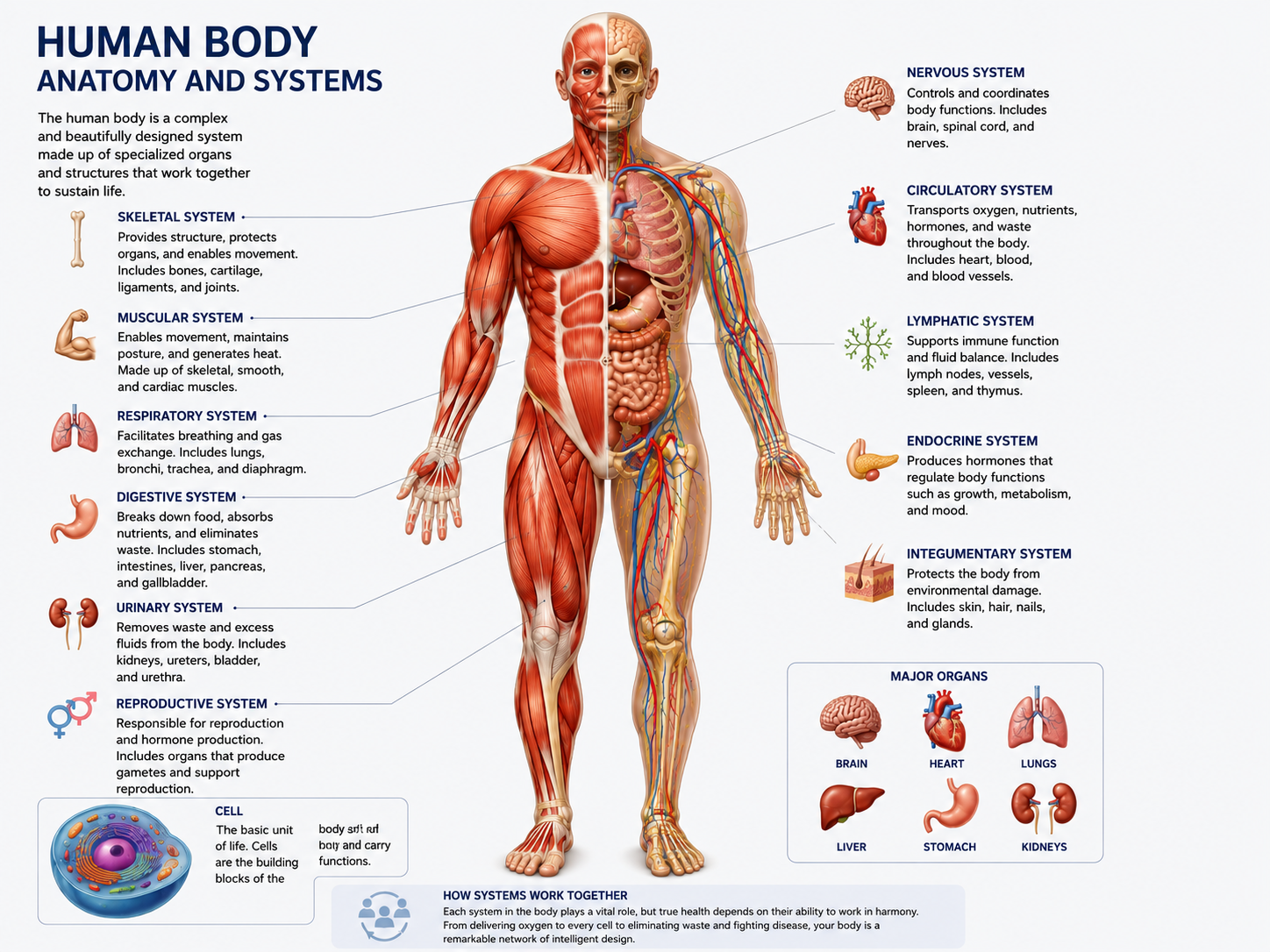
The Evolution of Nutritional Science
For decades, nutrition was often explained in relatively simple terms: consume essential vitamins, minerals, fatty acids, and other nutrients, absorb them through the digestive system, and use them as building blocks and cofactors for normal biological processes.
That foundation remains important. But modern molecular biology has revealed a much more sophisticated picture.
Human cells are not simply passive building blocks waiting to receive nutrients. They are extraordinarily dynamic systems that continuously sense changes in their environment and respond through interconnected biochemical communication networks.
These networks—known broadly as cell-signaling pathways—help regulate processes ranging from energy metabolism and antioxidant defense to inflammation, cellular repair, and adaptation to environmental stress.
This emerging understanding has influenced a new generation of nutritional research: rather than asking only which nutrients does the body require?, scientists are increasingly interested in another question:
Can naturally occurring compounds also influence the signaling pathways that help cells protect and regulate themselves?
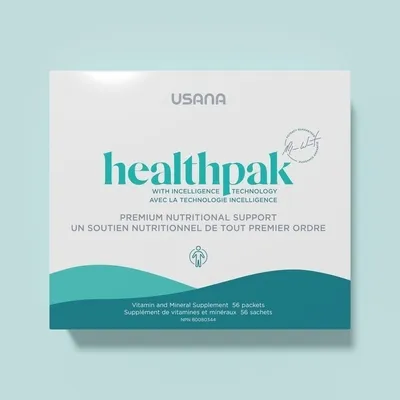
This concept is central to USANA's development of InCelligence Technology, a formulation philosophy combining conventional micronutrition with selected botanical and phytonutrient compounds.
From Supplying Nutrients to Supporting Cellular Signaling
Traditional nutrition and cell-signaling nutrition should not be viewed as competing ideas.
Essential nutrients remain essential.
Vitamin C still participates in collagen synthesis and antioxidant chemistry. B vitamins remain important cofactors in energy metabolism. Minerals such as magnesium, zinc, selenium, copper, and manganese continue to participate in hundreds of biochemical reactions.
The newer concept is that certain plant-derived compounds may do more than simply provide nutritional material.
Phytonutrients—including various polyphenols and flavonoids—are being investigated for their ability to interact with cellular signaling pathways involved in the body's response to oxidative and metabolic stress.
That distinction is important.
The objective is not to "force" cells to behave differently. Rather, nutritional science is exploring how diet-derived compounds interact with regulatory systems that already exist within human biology.
Oxidative Stress: More Than a Simple Antioxidant Equation
Oxidative stress occurs when the production of reactive oxygen species exceeds the body's ability to regulate or neutralize them effectively.
Reactive oxygen species are not inherently abnormal. They are produced naturally during cellular metabolism and can even participate in normal cellular signaling.
Problems can arise when oxidative activity becomes excessive or prolonged.
Environmental exposures, ultraviolet radiation, smoking, poor dietary patterns, inflammation, and other physiological stresses can contribute to oxidative burden.
For many years, nutritional discussions focused heavily on antioxidants obtained directly from food or supplements.
Dietary Antioxidants
Nutrients and plant compounds such as Vitamin C, Vitamin E, carotenoids, and polyphenols can participate in antioxidant networks through several different mechanisms.
The popular description that every antioxidant simply neutralizes one free radical and then disappears is useful as a basic illustration, but human antioxidant biology is considerably more complex.
Antioxidants can interact with one another, participate in recycling systems, influence enzyme activity, and affect cellular signaling.
This leads to an especially interesting area of modern research: the body's endogenous antioxidant defenses.
The Body's Own Antioxidant Systems
Human cells possess sophisticated internal defense systems that include enzymes such as:
- Superoxide dismutase (SOD)
- Catalase
- Glutathione peroxidase
- Glutathione-related antioxidant systems
Unlike the simplistic image of an antioxidant molecule intercepting a single free radical, antioxidant enzymes can participate repeatedly in catalytic reactions.
Their production and activity are tightly regulated by cellular signaling pathways.
One of the most extensively researched is the Nrf2 pathway.
Nrf2: A Cellular Defense Regulator
Nuclear factor erythroid 2-related factor 2—better known as Nrf2—is a transcription factor involved in regulating genes associated with antioxidant defense and cellular responses to stress.
Under appropriate conditions, Nrf2 can influence the expression of numerous protective enzymes and proteins.
This has made Nrf2 an important area of investigation in nutritional biochemistry.
Researchers have studied numerous naturally occurring plant compounds for their potential interactions with Nrf2-related pathways.
These include compounds found in foods and botanical sources such as:
- Green tea
- Grapes and berries
- Citrus fruits
- Onions and other vegetables
- Olives
- Cruciferous vegetables
- Herbs and other polyphenol-rich plants
USANA's InCelligence formulation philosophy incorporates selected botanical compounds within this broader area of cell-signaling nutrition.
The important distinction is that research into an individual botanical compound or cellular pathway does not automatically demonstrate that a finished supplement produces the same biological effect in humans.
Product-specific conclusions should therefore be based on appropriate studies of the actual formulation.
Mitochondria: The Cellular Energy Network
Another major development in cellular science involves our understanding of mitochondria.
Often described as the "powerhouses" of cells, mitochondria help convert energy from food into adenosine triphosphate (ATP), the energy currency used throughout cellular metabolism.
But mitochondria are far more than simple biological batteries.
They participate in metabolic regulation, cellular signaling, oxidative balance, and programmed cell processes.
Because mitochondria operate continuously, they are also subject to wear, damage, and replacement.
Cells therefore possess sophisticated quality-control systems for maintaining a healthy mitochondrial population.
Mitophagy: Cellular Quality Control
One of these processes is called mitophagy, a specialized form of autophagy.
During mitophagy, cells identify mitochondria that have become damaged or dysfunctional and selectively break them down.
Their components can then be removed or recycled as part of normal cellular maintenance.
This process is an active area of longevity and metabolic research because maintaining mitochondrial quality is important for normal cellular function.
Scientists are also investigating the relationship between nutrient sensing, energy status, exercise, fasting, cellular stress, and regulatory pathways associated with mitochondrial maintenance.
Proteins and signaling networks involving AMPK, sirtuins, mTOR, PINK1, Parkin, and other molecular regulators have all become important subjects in this field.
However, it is important to distinguish this fascinating underlying biology from claims about any particular supplement.
Research showing that a molecular pathway participates in mitophagy does not, by itself, establish that a specific nutritional product meaningfully increases mitophagy in people.
The InCelligence Philosophy: Nourish, Protect, Renew
A useful way to understand USANA's InCelligence concept is through three interconnected ideas:
Nourish
Provide the body with essential vitamins, minerals, trace elements, and other nutrients required for normal cellular metabolism.
Good nutrition remains the foundation. Advanced cellular concepts cannot replace an inadequate diet.
Protect
Support the body's normal antioxidant defenses while investigating how selected phytonutrients may interact with cellular pathways associated with responses to oxidative stress.
This combines conventional antioxidant nutrition with the emerging science of cellular signaling.
Renew
Recognize that cellular health involves continuous maintenance, recycling, and renewal.
Processes such as autophagy, mitophagy, protein turnover, mitochondrial biogenesis, and DNA repair demonstrate that the human body is constantly rebuilding itself.
Nutrition is one contributor to this complex biological environment, alongside physical activity, sleep, metabolic health, genetics, and other lifestyle factors.
Why Phytonutrients Matter
One of the most exciting developments in modern nutrition is the growing recognition that plants contain thousands of biologically active compounds beyond traditional vitamins and minerals.
Polyphenols, flavonoids, carotenoids, glucosinolates, and other phytochemicals are being studied for their interactions with human physiology.
This helps explain why nutritional science increasingly emphasizes dietary patterns rich in vegetables, fruits, legumes, whole grains, herbs, spices, nuts, seeds, and other plant foods rather than focusing exclusively on isolated nutrients.
Supplement technology may complement that foundation, but it should not replace it.
That is an important principle for WonderfulLife:
Cellular nutrition begins with good nutrition.
From Cellular Intelligence to Everyday Wellness
The most compelling lesson from modern cellular biology may be that the human body already contains remarkably sophisticated systems for maintaining balance.
Cells sense nutrients.
They respond to stress.
They generate energy.
They communicate.
They repair damage.
They recycle worn cellular components.
And they continually adjust their activity in response to their environment.
Nutrition provides many of the molecular materials required for those processes, while emerging research into phytonutrients is helping scientists understand how components of food may also interact with the signaling networks governing them.
That is the deeper promise of cellular nutrition—not the idea that a supplement can magically control our cells, but that better understanding cellular biology can help us make more informed decisions about how we nourish the body.
USANA's InCelligence Technology represents one commercial application of this broader scientific philosophy.
The science of cellular signaling will continue to evolve. The strongest approach is therefore one that combines curiosity about new discoveries with careful attention to the quality of evidence supporting individual health and product claims.
The WonderfulLife Perspective
At WonderfulLife, we believe nutritional science is most useful when it helps people understand their bodies rather than simply giving them another product to buy.
InCelligence is interesting because it introduces consumers to a much larger scientific story—the rapidly developing study of cellular signaling, oxidative defense, mitochondrial biology, and nutritional biochemistry.
But no technology eliminates the fundamentals.
A nutrient-dense diet, regular physical activity, restorative sleep, appropriate hydration, healthy relationships, stress management, and responsible medical care remain central to long-term wellness.
Supplements should complement those foundations, not replace them.
Understanding the science allows you to decide whether a particular nutritional approach deserves a place within your own wellness strategy.
Credits
Author: WonderfulLife Health Team Scientific Review: Cellular Biochemistry & Molecular Biology Group Published For: WonderfulLife.ca
References & Selected Bibliography
- USANA Health Sciences. Compositions and Methods for Modulating Cell-Signaling Pathways in Human Cells. U.S. Patent No. 10,632,101.
- Dinkova-Kostova, A. T., & Abramov, A. Y. (2015). The emerging role of Nrf2 in mitochondrial function. Free Radical Biology and Medicine, 88, 179–188.
- Palikaras, K., Lionaki, E., & Tavernarakis, N. (2018). Mechanisms of mitophagy in cellular homeostasis, physiology and pathology. Nature Cell Biology, 20(9), 1013–1022.
- Sies, H. (2015). Oxidative Stress: A Concept in Redox Biology and Medicine. Redox Biology, 4, 180–183.
- Wentz, M. W. (2002). Invisible Miracles: The Revolution in Cellular Nutrition. Medicis, S.C.
- Zhang, H., et al. (2016). Mitochondrial autophagy: molecular mechanisms and implications for cardiovascular health. Journal of Molecular and Cellular Cardiology, 95, 28–35.
Medical Disclaimer
The information provided in this article is for educational and informational purposes only and is not intended as medical advice, diagnosis, or treatment.
Research concerning cellular signaling, antioxidants, phytonutrients, autophagy, mitophagy, and other biological mechanisms should not automatically be interpreted as evidence that a particular dietary supplement prevents or treats disease.
Dietary supplements are not intended to diagnose, treat, cure, or prevent disease. Individual nutritional needs vary. Always consult with a qualified healthcare professional before making significant changes to your diet, supplement routine, or medical care.










WonderfulLife Community
Join the Conversation