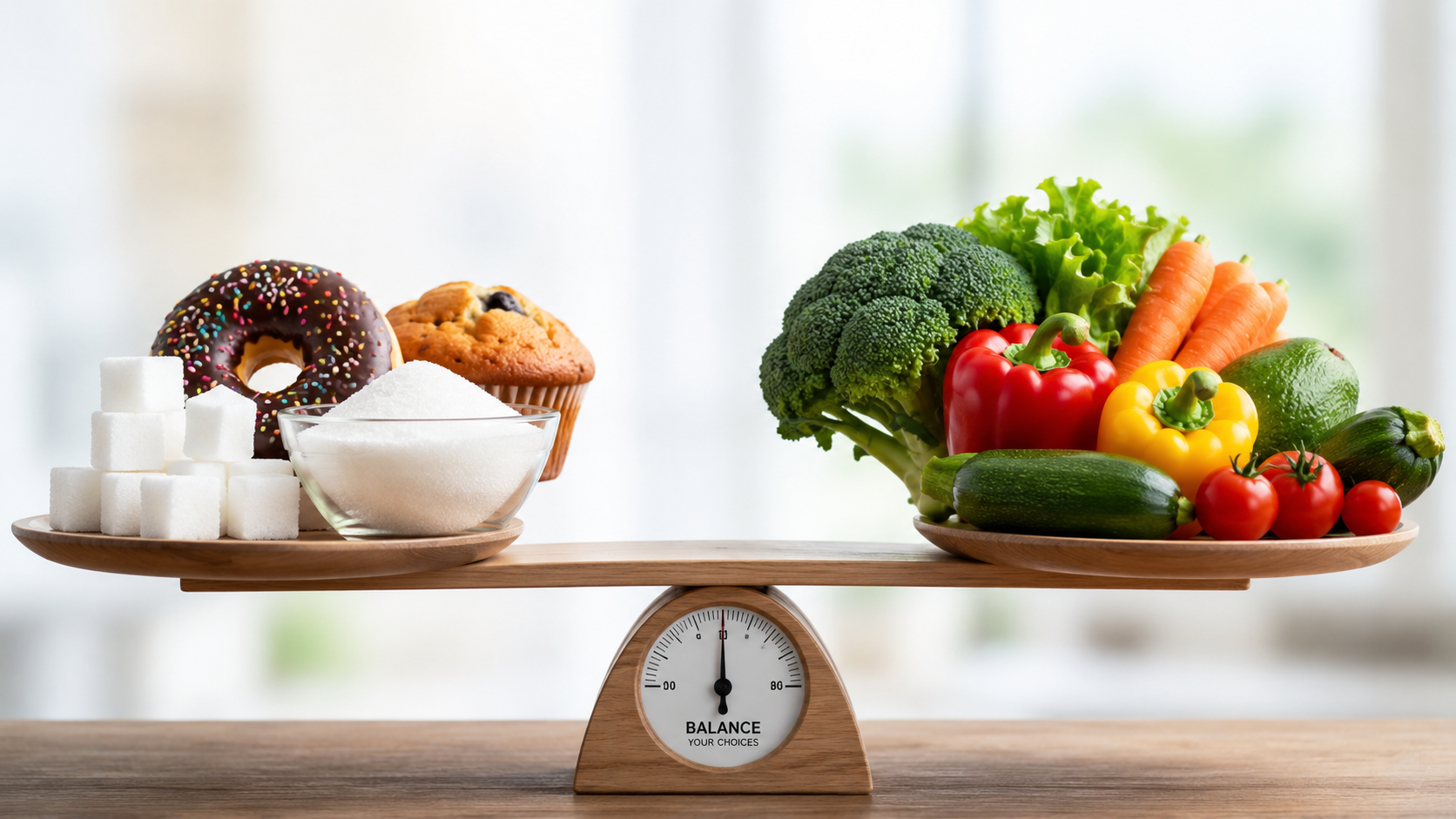
Blood Sugar Resilience: Building a Balanced Plate for Steady Energy
If you have ever reached the middle of the afternoon and suddenly felt tired, unfocused, or tempted by something sweet, you are certainly not alone.
The familiar "3 PM slump" can have many causes—including sleep, circadian rhythms, meal size, hydration, physical activity, stress, and caffeine habits.
But what and how we eat can also influence how we feel after a meal.
In recent years, carbohydrates have often been blamed for fluctuations in energy and blood glucose. Some popular diets go even further, suggesting that eliminating carbohydrates is the key to maintaining steady energy and controlling weight.
The science is more nuanced.
Carbohydrates are an important source of dietary energy, and glucose is a major fuel used throughout the body. Rather than fearing carbohydrates, a more sustainable approach is to choose carbohydrate quality carefully and combine carbohydrate-rich foods with protein, healthy fats, fiber, and minimally processed whole foods.
The goal isn't perfectly flat blood sugar.
Blood glucose is supposed to rise after eating.
The goal is a healthy metabolic response.
What Happens to Carbohydrates After You Eat Them?
Many dietary carbohydrates are broken down during digestion into simple sugars, including glucose.
Glucose enters the bloodstream, causing blood glucose levels to rise.
In response, the pancreas releases insulin, a hormone that helps regulate blood glucose by promoting glucose uptake and storage in insulin-sensitive tissues and influencing glucose production by the liver.
This is normal physiology.
A rise in blood glucose after eating is not automatically a harmful "spike."
The size and duration of that rise can vary considerably depending on:
- The type of carbohydrate
- Degree of food processing
- Fiber content
- Meal composition
- Portion size
- Physical activity
- Individual glucose metabolism
- Sleep and stress
- Insulin sensitivity
This is why two meals containing the same amount of carbohydrate can produce very different metabolic responses.
Beyond the "Glucose Rollercoaster"
Highly refined carbohydrate foods and sugar-sweetened beverages can sometimes produce relatively rapid increases in blood glucose, particularly when consumed alone.
But the popular social-media story—
Sugar spike → huge insulin surge → blood sugar crash → fatigue
—is an oversimplification.
In healthy people, the body normally regulates blood glucose within a relatively narrow range.
Some people can experience post-meal glucose fluctuations or symptoms associated with reactive hypoglycemia, but an afternoon energy slump does not automatically mean blood glucose has "crashed."
A more useful lesson is this:
The composition of your entire meal matters more than simply labeling carbohydrates as good or bad.
Carbohydrate Quality Matters
Not all carbohydrate-rich foods are nutritionally equivalent.
Consider the difference between:
- Lentils and candy
- Oatmeal and a sugary beverage
- Berries and fruit-flavored candy
- Whole-grain bread and highly refined pastries
All contain carbohydrates, but their nutritional profiles are dramatically different.
Whole and minimally processed carbohydrate foods often provide fiber, vitamins, minerals, phytochemicals, and other beneficial compounds in addition to carbohydrate.
That makes carbohydrate quality an important part of a balanced diet.
Four Building Blocks of a Balanced Meal
Instead of eliminating carbohydrates, try building meals around four complementary components.
- High-Quality Carbohydrates: The Fuel
Nutritious carbohydrate sources can include:
- Oats
- Barley
- Quinoa
- Brown rice
- Potatoes and sweet potatoes
- Whole-grain bread
- Beans and lentils
- Fruit
- Other minimally processed grains and starchy vegetables
Fiber-rich carbohydrate foods generally digest differently from highly refined foods and can contribute to greater fullness and better overall diet quality.
Carbohydrates can absolutely belong in a healthy eating pattern.
- Protein: The Anchor
Protein helps provide satiety and supplies amino acids needed for tissue maintenance, repair, enzymes, hormones, and many other biological functions.
Good sources include:
- Eggs
- Fish
- Poultry
- Greek yogurt
- Cottage cheese
- Tofu
- Tempeh
- Beans
- Lentils
- Other minimally processed protein foods
Adding protein to a carbohydrate-containing meal can also alter digestion and the post-meal metabolic response.
- Healthy Fats: Satisfaction and Nutrition
Dietary fat can influence gastric emptying and contribute to satiety.
Nutritious sources include:
- Extra virgin olive oil
- Avocado
- Nuts
- Seeds
- Fatty fish
Healthy fats also provide essential fatty acids and help the body absorb fat-soluble vitamins.
Again, balance matters.
Adding unlimited fat to a meal is not a blood-sugar strategy. It is simply one component of an appropriately portioned, nutritious meal.
- Fiber: The Often-Missing Ingredient
Fiber deserves special attention.
Fiber-rich foods can influence digestion, satiety, bowel health, the gut microbiome, and post-meal glucose responses.
Good sources include:
- Vegetables
- Berries
- Beans
- Lentils
- Oats
- Barley
- Whole grains
- Chia seeds
- Flaxseed
- Nuts
Certain soluble fibers form viscous gels in the digestive tract that can slow nutrient absorption.
But fiber does much more than simply act as a "sponge."
Different types of fiber have different physiological properties, which is another reason dietary variety is valuable.
Think "Balanced Plate," Not "No Carbs"
A simple meal-building strategy can make nutrition much easier.
One useful visual approach is:
½ plate: non-starchy vegetables ¼ plate: protein-rich foods ¼ plate: whole grains or other nutritious carbohydrate-rich foods
Then add an appropriate source of healthy fat.
This isn't a rigid mathematical formula.
It is simply a practical framework for building meals containing vegetables, protein, fiber-rich carbohydrates, and healthy fats.
Three Easy Ways to Build Better Meals
You don't need to overhaul everything you eat.
Small changes can substantially improve the nutritional quality of a meal.
- Turn "Carbs Alone" Into Balanced Combinations
Instead of eliminating carbohydrate foods, combine them with other nutrients.
For example:
Apple → Apple + nuts or yogurt
Toast → Whole-grain toast + egg + avocado
Oatmeal → Oatmeal + Greek yogurt + berries + chia seeds
Rice → Rice + vegetables + tofu or chicken
The goal is not to make carbohydrates "safe."
It is to build a more complete meal.
- Make Vegetables Visible
When eating pasta, rice, potatoes, or another carbohydrate-rich food, add vegetables rather than simply making the carbohydrate portion larger.
For example:
A bowl of pasta can become a more balanced meal with tomatoes, spinach, zucchini, mushrooms, olive oil, and a source of protein.
Rice can be paired with vegetables, beans, tofu, fish, or poultry.
Potatoes can accompany a large salad and a protein source rather than being treated as the entire meal.
- Does Food Order Matter?
An interesting area of research examines whether the order in which foods are eaten affects post-meal glucose.
Some studies have found that eating vegetables and protein before carbohydrate-rich foods can reduce post-meal glucose excursions under specific experimental conditions.
This is intriguing, but it should not become another rigid food rule.
You do not need to dissect every meal into a prescribed sequence.
For most people, what the meal contains overall remains more important than obsessing over which bite comes first.
What About the Glycemic Index?
The glycemic index (GI) ranks carbohydrate-containing foods according to their effect on blood glucose under standardized testing conditions.
It can be useful, but it has limitations.
A person's actual glucose response can vary according to:
- Portion size
- Food preparation
- Ripeness
- Meal composition
- Individual physiology
- What else is eaten with the food
A related concept, glycemic load, also considers the amount of available carbohydrate in a typical portion.
Neither measure should be used to judge a food in isolation from its overall nutritional value.
For example, some nutritious foods may have a moderate or higher glycemic index while still fitting comfortably into a healthy dietary pattern.
Don't Blame Every Afternoon Slump on Blood Sugar
If you regularly become tired in the afternoon, your lunch is worth examining—but so is the rest of your day.
Ask yourself:
- Did I sleep enough?
- Have I been sitting for several hours?
- Did I eat an unusually large lunch?
- Am I adequately hydrated?
- Have I eaten enough overall?
- Am I relying heavily on caffeine?
- Have I had any physical activity today?
- Is this persistent or unusually severe?
A brief walk after a meal can be an especially useful habit.
Physical activity allows skeletal muscle to use glucose and provides benefits extending well beyond blood sugar management.
Persistent fatigue, dizziness, shakiness, confusion, excessive thirst, frequent urination, or other concerning symptoms should not simply be treated with dietary "hacks." They deserve appropriate medical evaluation.
The WonderfulLife Bottom Line
You do not need to fear carbohydrates.
And you do not need to keep your blood glucose perfectly flat.
Your body is designed to manage changing energy demands throughout the day.
A better goal is metabolic resilience—supporting the body's ability to handle meals effectively through good nutrition, movement, sleep, and overall health.
Start with the fundamentals:
Choose minimally processed carbohydrate foods more often. Pair them with protein. Eat plenty of fiber-rich plants. Include healthy fats. Watch portion sizes. Move regularly. Protect your sleep.
Carbohydrates can be part of a nutritious, satisfying diet.
The goal isn't carb elimination.
It's building a better plate.
Scientific References & Sources
- Livesey, G., et al. (2019). Dietary glycemic index and glycemic load and the risk of type 2 diabetes: A systematic review and meta-analysis. Nutrients, 11(6), 1280.
- Shukla, A. P., et al. (2015). Food order has a significant impact on postprandial glucose and insulin levels. Diabetes Care, 38(7), e98–e99.
- Reynolds, A. N., et al. (2019). Dietary fibre and whole grains in diabetes management: Systematic review and meta-analyses. PLOS Medicine, 16(3), e1002753.
Medical & Nutritional Disclaimer
The information provided on WonderfulLife.ca is for educational, informational, and general wellness purposes only and is not intended as medical advice, diagnosis, or treatment.
Blood-glucose responses and carbohydrate needs vary considerably between individuals. People with diabetes, prediabetes, hypoglycemia, metabolic disorders, or those taking glucose-lowering medications may require individualized nutrition and medical guidance.
Do not change prescribed medication or treatment based on information in this article.
Always seek advice from a physician, Registered Dietitian, or other qualified healthcare professional regarding persistent symptoms, blood-glucose concerns, or significant dietary changes.
Credits
Author: WonderfulLife Editorial Team Editorial Assistance: Gemini Published For: WonderfulLife.ca











WonderfulLife Community
Join the Conversation