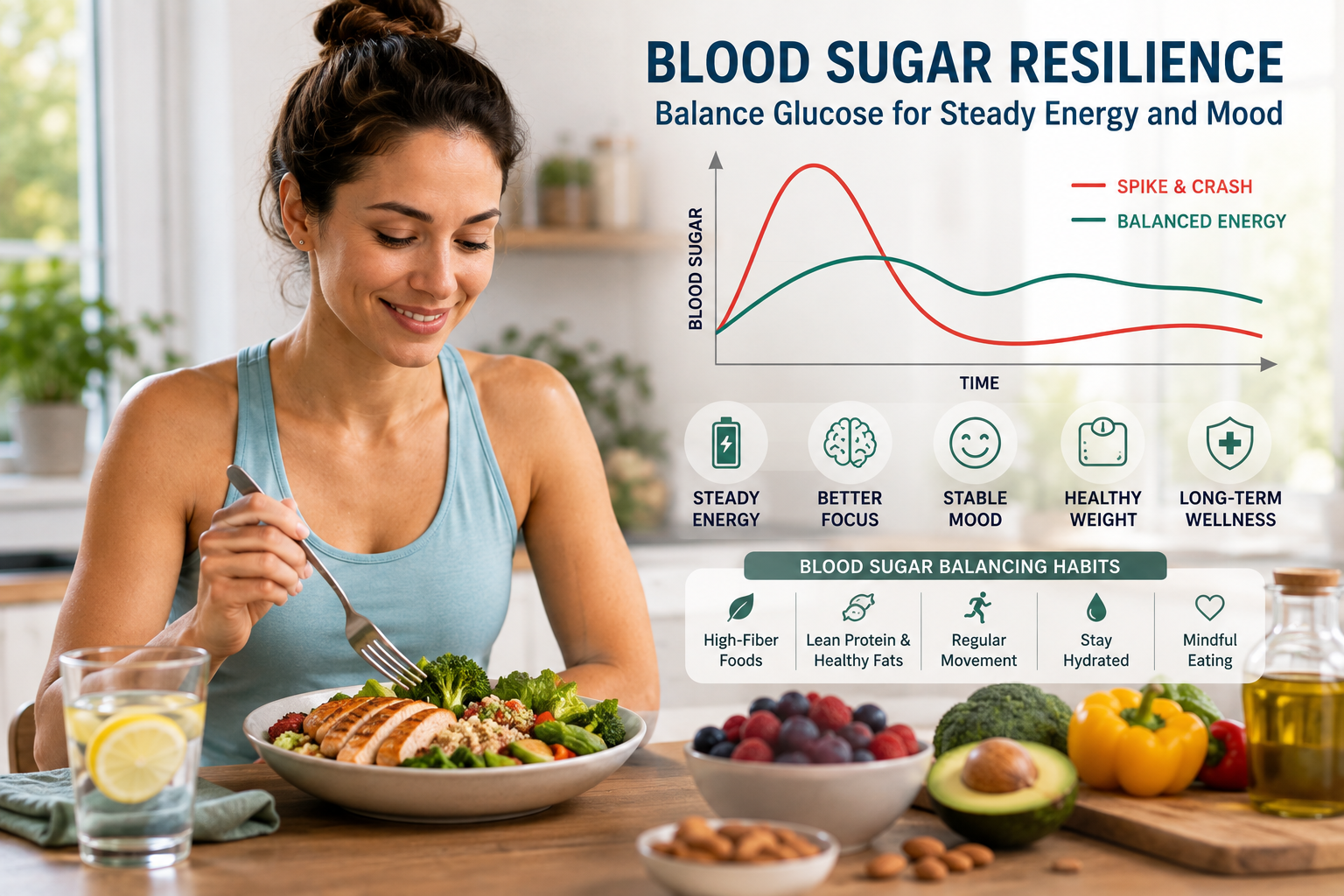
Blood Sugar Resilience: How to Build More Stable Energy Throughout the Day
When people hear the phrase “blood sugar balance,” they often assume it only matters for people living with diabetes or prediabetes.
But glucose regulation is part of normal physiology for everyone.
Every day, the body continuously adjusts blood glucose in response to:
- Food
- Physical activity
- Sleep
- Stress
- Hormones
- Illness
- Individual metabolism
The goal is not to keep blood glucose perfectly flat.
Blood glucose is supposed to rise after eating.
A healthier goal is metabolic resilience—the ability to process meals effectively and return toward baseline without excessive or prolonged disruption.
What Happens After You Eat Carbohydrates?
Many carbohydrate-containing foods are broken down during digestion into simple sugars, including glucose.
Glucose enters the bloodstream, causing blood glucose to rise.
In response, the pancreas releases insulin.
Insulin helps regulate blood glucose by promoting glucose uptake and storage in insulin-sensitive tissues and by influencing glucose production in the liver.
This is normal.
It is not a problem that needs to be prevented.
Not All Carbohydrates Produce the Same Response
The size and duration of a post-meal glucose rise depend on many factors, including:
- Type of carbohydrate
- Degree of processing
- Fiber content
- Portion size
- Protein and fat in the meal
- Physical activity
- Insulin sensitivity
- Sleep and stress
- Individual physiology
Compare:
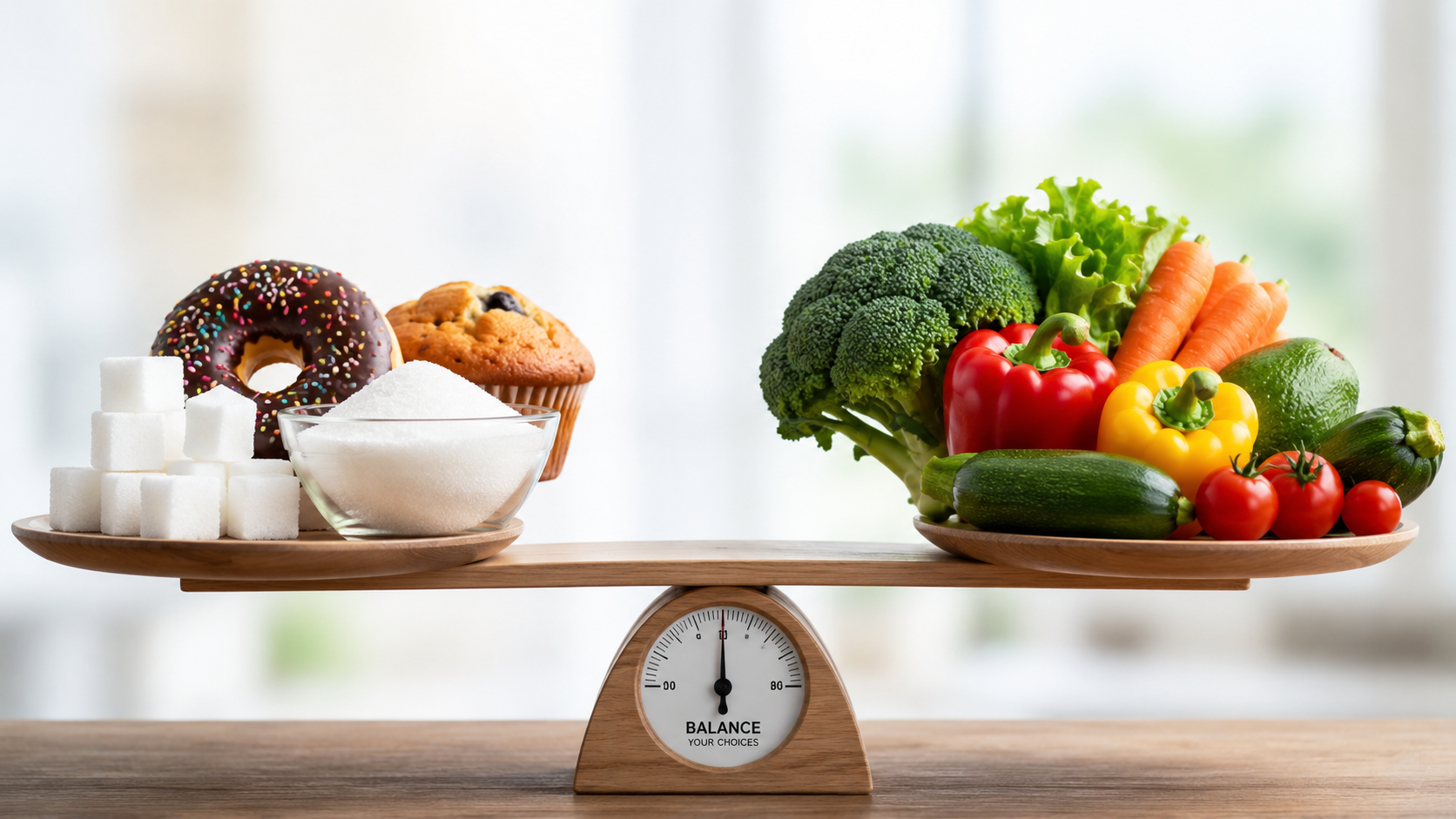
Candy vs. lentils
Soft drink vs. an apple
White bread alone vs. whole-grain toast with eggs and avocado
All contain carbohydrate, but they are metabolically and nutritionally very different.
That is why carbohydrate quality and overall meal composition matter more than simply labeling carbohydrates as “good” or “bad.”
The “Spike and Crash” Story Is Often Oversimplified
You may have heard this explanation:
Refined carbs → huge glucose spike → huge insulin release → blood sugar crash → fatigue
That can happen in certain circumstances, but it is not the universal explanation for ordinary afternoon tiredness.
In healthy people, the body normally keeps blood glucose within a relatively narrow range.
True reactive hypoglycemia can occur, but it is not the cause of every case of:
- Brain fog
- Fatigue
- Irritability
- Food cravings
Those symptoms can also be influenced by:
- Poor sleep
- Circadian rhythms
- Dehydration
- Large meals
- Stress
- Caffeine habits
- Medication effects
- Other medical conditions
The useful lesson is not “avoid every glucose rise.”
It is:
Build meals that support a healthy post-meal response.
Why Repeated Glucose Dysregulation Matters
Persistently elevated glucose and impaired insulin sensitivity can contribute to long-term metabolic disease.
But this develops through a complex combination of factors.
These may include:
- Genetics
- Excess visceral fat
- Physical inactivity
- Sleep loss
- Diet quality
- Chronic illness
- Medications
- Aging
- Other metabolic factors
Insulin resistance is not simply caused by insulin “overworking” its receptors until they become numb.
It involves changes in signaling pathways, muscle and liver metabolism, adipose tissue, inflammation, and other physiological systems.
Oxidative Stress and Glycation
Chronically elevated glucose can contribute to processes involving oxidative stress and glycation.
Glycation occurs when sugars react non-enzymatically with proteins, lipids, or other molecules.
Over time, this can contribute to the formation of advanced glycation end products, or AGEs.
AGE biology is particularly relevant in chronic hyperglycemia and diabetes.
However, a normal rise in glucose after a healthy meal should not be treated as though it is immediately aging your arteries.
Context matters.
Four Practical Ways to Support Healthy Glucose Regulation
- Build a Balanced Plate
Rather than trying to eliminate carbohydrates, combine them with other nutrients.
A balanced meal might include:
- Fiber-rich carbohydrates
- Protein
- Healthy fats
- Vegetables or fruit
Examples:
Oatmeal + Greek yogurt + berries + walnuts
Brown rice + vegetables + tofu + olive oil
Potatoes + salmon + leafy greens
Whole-grain toast + eggs + avocado
The goal is not to “block” carbohydrate absorption.
It is to create a complete meal that supports satiety and a more gradual post-meal response.
- Choose Higher-Fiber Carbohydrates More Often
Fiber can influence digestion, satiety, and post-meal glucose responses.
Useful sources include:
- Oats
- Barley
- Beans
- Lentils
- Whole grains
- Vegetables
- Berries
- Chia seeds
- Flaxseed
- Nuts
Certain soluble fibers form viscous gels in the digestive tract and can slow nutrient absorption.
But fiber does more than reduce glucose peaks.
It also supports bowel health and the gut microbiome.
- Does Meal Order Matter?
Research has examined whether eating vegetables and protein before carbohydrate-rich foods changes the post-meal glucose response.
Some small studies have found lower glucose and insulin excursions when carbohydrate is eaten later in the meal.
That is interesting.
But it should not become another rigid wellness rule.
You do not need to eat every meal in a prescribed sequence.
For most people, the overall meal composition and portion size matter more than obsessing over which bite comes first.
If you enjoy starting with vegetables or protein, it may be a useful strategy.
Just keep it in perspective.
- Take a Walk After Eating
One of the simplest strategies with good physiological logic is light movement after meals.
Skeletal muscle is a major site for glucose uptake.
When muscles contract, glucose uptake can increase through mechanisms that are partly independent of insulin signaling.
A short walk after a meal may help reduce post-meal glucose excursions in some people.
You do not need exactly 10 or 15 minutes.
Even a brief walk can be useful.
The broader principle is:
Move instead of sitting completely still after every meal when practical.
Muscle Is a Powerful Metabolic Asset
Resistance training deserves special attention.
Skeletal muscle:
- Uses glucose
- Stores glycogen
- Responds to insulin
- Adapts to exercise
Maintaining muscle mass and strength can therefore support metabolic health.
A well-rounded plan includes both:
Aerobic movement
and
resistance training.
Sleep Matters More Than Most People Realize
Insufficient sleep can affect:
- Insulin sensitivity
- Appetite
- Food choices
- Physical activity
- Stress regulation
If blood sugar and energy are priorities, sleep deserves the same attention as diet.
A person sleeping poorly may benefit more from improving sleep than from adding another supplement.
Stress Matters Too
Stress can influence glucose regulation through hormonal and behavioral pathways.
But stress does not automatically produce dangerous glucose spikes.
The bigger issue is that chronic stress can affect:
- Sleep
- Eating patterns
- Activity
- Appetite
- Metabolic regulation
Healthy glucose management therefore includes recovery as well as nutrition.
What About Chromium?
Chromium is an essential trace element involved in normal nutrient metabolism.
Chromium supplements are widely marketed for blood sugar control.
However, evidence for routine supplementation in healthy people is limited.
Some studies in people with diabetes have reported modest effects, while others show little benefit.
Chromium should not be treated as a universal insulin-sensitizing supplement.
What About Alpha-Lipoic Acid?
Alpha-lipoic acid is involved in mitochondrial enzyme systems and has antioxidant properties.
It has been studied in metabolic conditions and is also used in some countries for diabetic neuropathy.
Some research suggests possible effects on glucose metabolism.
But alpha-lipoic acid is not a routine requirement for healthy glucose regulation.
It can also lower blood glucose and interact with medications.
People using glucose-lowering drugs should discuss it with a healthcare professional.
What About Magnesium?
Magnesium participates in many enzymes involved in glucose and energy metabolism.
Low magnesium intake or deficiency can be relevant to metabolic health.
Food sources include:
- Nuts
- Seeds
- Beans
- Whole grains
- Leafy greens
Correcting deficiency makes sense.
Taking extra magnesium does not automatically improve glucose regulation in someone who already has adequate status.
Don't Fear Fruit
Fruit sometimes gets caught in discussions about glucose spikes.
Whole fruit contains:
- Natural sugars
- Fiber
- Water
- Vitamins
- Minerals
- Phytochemicals
For most people, whole fruit can be part of a healthy dietary pattern.
An apple does not need to be treated like candy simply because both contain sugar.
If pairing fruit with yogurt or nuts helps you feel fuller, that can be a great choice.
But fruit does not become “unsafe” when eaten alone.
Continuous Glucose Monitors: Useful but Easy to Overinterpret
Continuous glucose monitors, or CGMs, have made glucose curves highly visible.
These devices can be extremely valuable for people with diabetes and other specific clinical needs.
But healthy people should be careful about interpreting every normal post-meal rise as a metabolic problem.
Glucose responses vary from person to person and meal to meal.
A perfectly flat glucose curve is not the goal of human physiology.
Numbers need context.
When Symptoms Deserve Medical Evaluation
Persistent symptoms such as:
- Excessive thirst
- Frequent urination
- Unexplained weight loss
- Recurrent shakiness
- Dizziness
- Confusion
- Persistent fatigue
- Blurred vision
should not simply be managed with meal sequencing or walking.
They may require blood testing and professional evaluation.
The WonderfulLife Bottom Line
Blood sugar health does not require fearing carbohydrates.
And it does not require keeping glucose perfectly flat all day.
The stronger goal is metabolic resilience.
Start with the fundamentals:
Choose high-quality carbohydrates. Eat plenty of fiber. Include protein and healthy fats. Move after meals when practical. Build and maintain muscle. Protect your sleep. Manage stress.
Supplements may have a role in specific circumstances.
They are not the foundation.
Your metabolism is designed to respond to food.
The goal is not to eliminate that response.
It is to support your body's ability to handle it well.
Scientific References & Sources
- Shukla, A. P., et al. (2015). Food order has a significant impact on postprandial glucose and insulin levels. Diabetes Care, 38(7), e98–e99.
- Reynolds, A. N., et al. (2016). Advice to walk after meals is more effective for lowering postprandial glycaemia in type 2 diabetes than advice that does not specify timing: A randomized crossover study. Diabetologia, 59(12), 2572–2578.
- Suksomboon, N., Poolsup, N., & Yuwanakorn, A. (2011). Systematic review and meta-analysis of the efficacy and safety of chromium supplementation in diabetes. Journal of Clinical Pharmacy and Therapeutics, 36(6), 640–647.
- Akbari, M., et al. (2018). The effects of alpha-lipoic acid supplementation on glucose control and lipid profiles among patients with metabolic diseases: A systematic review and meta-analysis of randomized controlled trials. Metabolism, 87, 56–69.
Medical & Nutritional Disclaimer
The information provided on WonderfulLife.ca is for educational, informational, and general wellness purposes only and is not intended as medical advice, diagnosis, or treatment.
Blood-glucose responses vary considerably between individuals.
People with diabetes, prediabetes, hypoglycemia, metabolic disorders, pregnancy, kidney disease, liver disease, or those taking glucose-lowering medication require individualized guidance.
Chromium, alpha-lipoic acid, magnesium, and other supplements can cause side effects or interact with medications and may not be appropriate for everyone.
Do not alter prescribed diabetes medication or treatment based on information in this article.
Always consult with a physician, pharmacist, Registered Dietitian, diabetes educator, or other qualified healthcare professional regarding persistent symptoms, glucose concerns, dietary changes, or supplementation.
Never disregard professional medical advice or delay seeking care because of information you have read on this website.
Credits
Author: WonderfulLife Editorial Team Published For: WonderfulLife.ca










WonderfulLife Community
Join the Conversation