
Adaptogens and Stress Resilience: What the Science Really Says
Modern life gives the human stress-response system plenty to manage.
Work deadlines, financial pressure, caregiving, poor sleep, illness, exercise, social conflict, and constant digital stimulation can all create physical or psychological demands.
When the brain perceives a challenge, several interconnected systems respond.
One of the most important is the hypothalamic-pituitary-adrenal axis, commonly called the HPA axis.
Through a sequence of hormonal signals, the HPA axis helps regulate the release of cortisol, while the sympathetic nervous system participates in the release of catecholamines such as adrenaline.
These responses are not inherently harmful.
They help the body adapt.
The challenge arises when stress is persistent and recovery is inadequate.
Over time, chronic stress can influence:
- Sleep
- Mood
- Appetite
- Digestion
- Concentration
- Physical activity
- Cardiovascular function
- Metabolic health
This has created growing interest in a group of botanical products commonly called adaptogens.
What Is an Adaptogen?
The term adaptogen originated in research on plant-derived substances that appeared to influence the body's response to stress.
Historically, proposed characteristics of an adaptogen included the ability to:
- Increase resistance to different types of stress
- Support normal physiological function
- Produce relatively low toxicity at typical doses
However, there is an important distinction.
“Adaptogen” is not a universal regulatory or medical classification with one standardized clinical definition.
Different researchers, herbal traditions, supplement companies, and regulatory systems may use the term somewhat differently.
For consumers, the more useful question is:
What evidence exists for this particular botanical, extract, dose, and health outcome?
Adaptogens Don't Simply “Balance Cortisol”
One of the most common marketing claims is that adaptogens automatically normalize cortisol.
If cortisol is high, they supposedly lower it.
If cortisol is low, they supposedly raise it.
Human biology is not that simple.
Cortisol naturally varies throughout the day and changes according to:
- Sleep
- Circadian timing
- Exercise
- Illness
- Psychological stress
- Medications
- Individual physiology
Some botanical extracts have been studied for their effects on stress symptoms or cortisol measurements.
But that is very different from proving that they act as an automatic hormonal thermostat.
A more accurate description is:
Certain botanicals may influence physiological pathways involved in the stress response, but their effects depend on the specific product and individual.
- Ashwagandha: The Most Studied of the Group
Ashwagandha (Withania somnifera) has a long history of use in Ayurvedic traditions.
Its roots contain compounds known as withanolides, and standardized ashwagandha extracts have been investigated in clinical trials involving stress, anxiety, sleep, and other outcomes.
Some randomized trials have reported improvements in self-reported stress measures and changes in cortisol among adults experiencing elevated stress.
That makes ashwagandha one of the more interesting botanicals in this category.
But the evidence does not justify saying that it universally:
- Repairs the HPA axis
- Guarantees lower cortisol
- Prevents burnout
- Restores sleep architecture
- Produces emotional stability
Different formulations may contain different concentrations of active compounds, and results from one standardized extract should not automatically be applied to every ashwagandha product.
Ashwagandha Safety Matters
“Natural” does not mean risk-free.
Ashwagandha may cause:
- Gastrointestinal upset
- Drowsiness
- Headache
- Other side effects
There have also been rare reports of liver injury associated with ashwagandha-containing products.
It may influence thyroid function and can potentially interact with:
- Thyroid medications
- Sedatives
- Immunosuppressive drugs
- Blood-pressure medications
- Blood-glucose-lowering drugs
Ashwagandha is generally not recommended during pregnancy unless specifically directed by an appropriate healthcare professional.
People with thyroid disease, autoimmune conditions, liver disease, or those taking prescription medications should seek professional guidance before using it.
- Rhodiola Rosea: Stress and Mental Fatigue
Rhodiola rosea grows naturally in cold and mountainous environments and has a long history of traditional use.
Its commonly studied compounds include:
- Rosavins
- Salidroside
Some clinical studies have investigated standardized rhodiola extracts for:
- Stress-related fatigue
- Mental performance under demanding conditions
- Subjective well-being
Early findings have been encouraging in certain populations.
However, many studies are relatively small, and formulations vary.
It is therefore too strong to say that rhodiola directly:
- Prevents burnout
- Boosts neural ATP
- Guarantees sharper focus
- Improves performance without side effects
A more appropriate conclusion is that rhodiola is a promising botanical being studied for stress-related fatigue and cognitive performance, but stronger and more consistent clinical evidence is still useful.
Rhodiola Safety
Rhodiola is generally tolerated by many adults, but possible side effects can include:
- Dizziness
- Dry mouth
- Headache
- Restlessness
- Sleep disturbance
Because it may influence neurotransmitter or stimulant-related pathways, people taking psychiatric medications or other drugs affecting the nervous system should discuss its use with a healthcare professional.
- Holy Basil: Traditional Use Meets Emerging Research
Holy basil, also called tulsi or Ocimum tenuiflorum, has a long history in traditional Ayurvedic practice.
It contains numerous plant compounds and has been studied for possible effects involving:
- Stress
- Metabolic markers
- Oxidative balance
- General well-being
Some small clinical trials have reported encouraging findings.
But research remains less developed than marketing sometimes suggests.
It would be too strong to claim that holy basil reliably:
- Controls blood sugar
- Treats stress-related digestive problems
- Regulates cortisol
- Restores metabolic balance
These remain areas of investigation.
Adaptogens Are Not Substitutes for Recovery
This is perhaps the most important point.
Stress resilience is not built primarily through supplements.
The strongest foundations remain:
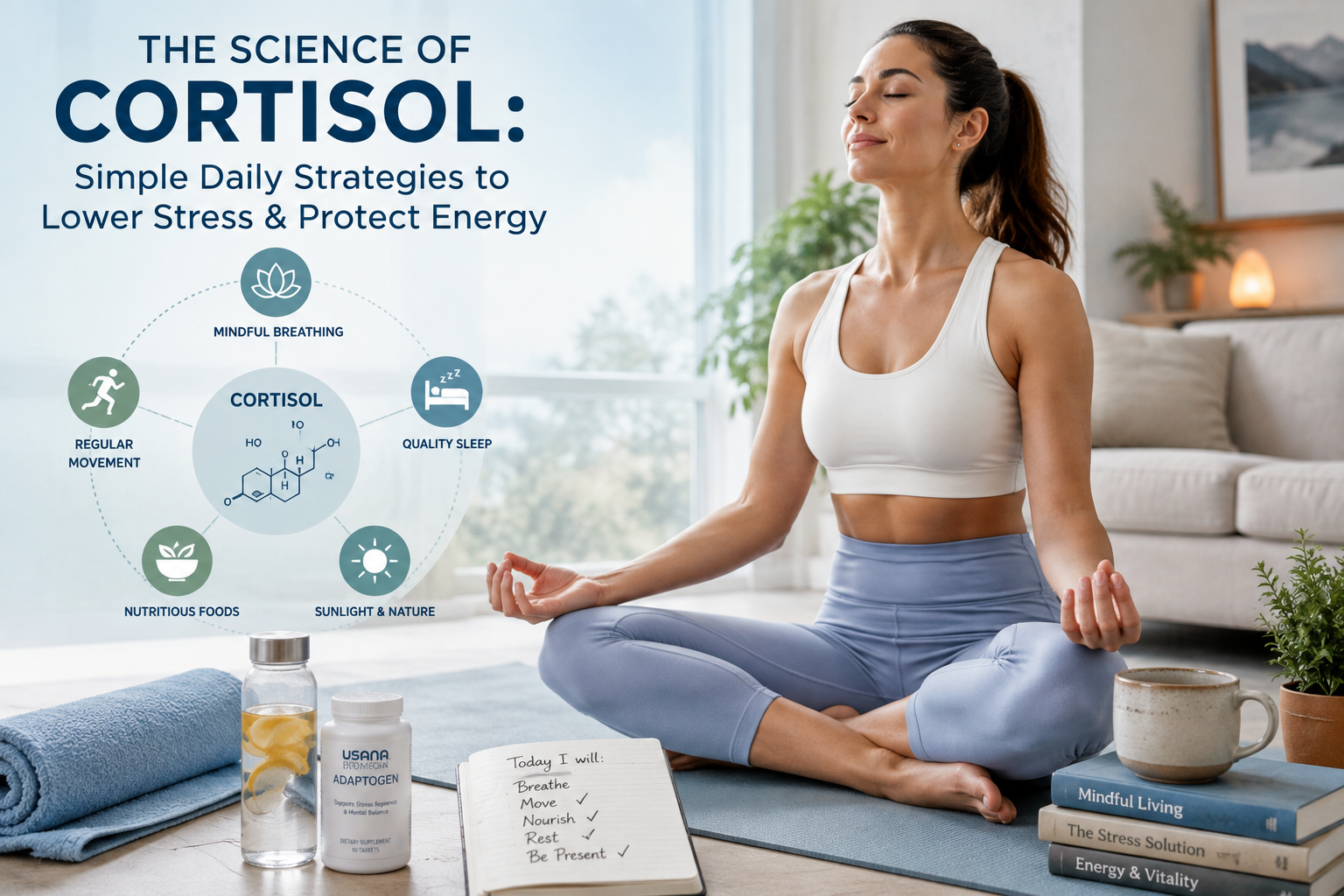
- Adequate sleep
- Regular physical activity
- Social connection
- Time away from work
- Nutritious food
- Appropriate medical care
- Realistic workload
- Psychological support when needed
If someone's stress comes from sleeping five hours a night, working 70 hours a week, and never taking a break, an herbal capsule cannot solve the underlying problem.
Supplements may complement a healthy lifestyle.
They cannot replace one.
What About B-Complex Vitamins?
B vitamins participate in:
- Energy metabolism
- Nervous-system function
- Red blood-cell formation
- Numerous enzymatic reactions
Deficiencies can absolutely affect health.
But taking large amounts of B vitamins does not automatically increase stress resilience in someone who is already nutritionally adequate.
The better approach is:
Meet nutritional needs and correct deficiencies when they exist.
What About Vitamin C?
Vitamin C is an essential nutrient involved in:
- Collagen formation
- Antioxidant biology
- Immune function
- Several enzymatic reactions
The adrenal glands contain relatively high concentrations of vitamin C, which has led to considerable interest in its role in stress physiology.
But this does not mean high-dose vitamin C supplementation is necessary for normal adrenal function.
Most people should begin with vitamin-C-rich foods such as:
- Citrus fruit
- Kiwi
- Berries
- Bell peppers
- Broccoli
- Tomatoes
What About Magnesium?
Magnesium is essential for normal nerve, muscle, and energy metabolism.
Low magnesium intake should be corrected.
Some studies have explored magnesium supplementation for stress and anxiety, with mixed results.
Magnesium should therefore not be marketed as an “adrenal support” nutrient or direct cortisol regulator.
Food sources include:
- Pumpkin seeds
- Almonds
- Beans
- Whole grains
- Leafy greens
- Dark chocolate
“Adrenal Support” Is a Marketing Term
The phrase adrenal support appears frequently on supplement labels.
It sounds scientific, but it can be misleading.
The adrenal glands do not generally need to be “strengthened” by supplements in healthy people.
True adrenal disorders exist—including adrenal insufficiency—and require medical diagnosis and treatment.
Persistent symptoms such as:
- Severe fatigue
- Dizziness
- Unexplained weight changes
- Low blood pressure
- Muscle weakness
should not be self-diagnosed as “adrenal fatigue.”
Adrenal fatigue is not a recognized medical diagnosis.
Should Adaptogens Be Taken Every Day?
There is no universal rule.
Research protocols differ according to:
- Botanical
- Extract
- Dose
- Duration
- Study population
The claim that adaptogens must always “build up for several weeks” is too broad.
Some studies investigate repeated use, while others examine acute effects.
Follow evidence for the specific product rather than assuming all adaptogens work the same way.
Morning vs. Evening Use
You may see recommendations such as:
Rhodiola in the morning.
Ashwagandha at night.
These can be practical starting points for some people, but they are not biological laws.
Individual responses vary.
Some people find certain botanicals stimulating.
Others find them sedating.
Product instructions and professional guidance are more useful than assigning every adaptogen a universal time of day.
How to Evaluate an Adaptogen Supplement
If you choose to use one, look beyond the word adaptogen on the front of the bottle.
Consider:
Botanical Identity
The label should clearly identify the plant species.
Plant Part
Root, leaf, and other plant parts may contain different compounds.
Standardized Extract
If research involved a specific standardized extract, look for a product that provides comparable information.
Dose
The amount should be clearly stated.
Quality Testing
Look for reputable manufacturing and appropriate testing for:
- Identity
- Purity
- Heavy metals
- Microbial contamination
- Adulterants
Avoid Proprietary Mystery Blends
If a label lists a long “adaptogenic complex” without telling you how much of each ingredient it contains, it becomes difficult to judge whether the dose resembles anything studied clinically.
The Bigger Question: What Is Causing the Stress?
Before reaching for a supplement, ask:
What is creating the stress load?
Is it:
- Insufficient sleep?
- Work overload?
- Financial pressure?
- Caregiving?
- Constant notifications?
- Relationship conflict?
- Poor recovery?
- Lack of movement?
- An untreated mental-health condition?
An herbal product may modestly influence how someone feels.
But identifying the actual stressor may be much more powerful.
The WonderfulLife Bottom Line
Adaptogens are an intriguing category of botanical supplements.
Ashwagandha, rhodiola, holy basil, and other herbs contain biologically active compounds and deserve serious scientific study.
Some clinical evidence is encouraging.
But adaptogens should not be presented as magical substances that “normalize” every stress hormone or prevent the body from becoming exhausted.
A healthier perspective is:
Reduce unnecessary stress where possible. Create opportunities for recovery. Protect sleep. Move regularly. Eat well. Stay connected to other people. Use supplements thoughtfully when the evidence and your individual circumstances support them.
Stress is part of life.
The goal is not to become biologically immune to it.
The goal is to build enough recovery and resilience to meet life's demands without allowing those demands to consume everything else.
Scientific References & Sources
- Panossian, A., & Wikman, G. (2010). Effects of adaptogens on the central nervous system and the molecular mechanisms associated with their stress-protective activity. Pharmaceuticals, 3(1), 188–224.
- Chandrasekhar, K., Kapoor, J., & Anishetty, S. (2012). A prospective, randomized double-blind, placebo-controlled study of safety and efficacy of a high-concentration full-spectrum extract of ashwagandha root in reducing stress and anxiety in adults. Indian Journal of Psychological Medicine, 34(3), 255–262.
- Darbinyan, V., et al. (2000). Rhodiola rosea in stress-induced fatigue: A double-blind cross-over study of a standardized extract SHR-5 with a repeated low-dose regimen on the mental performance of healthy physicians during night duty. Phytomedicine, 7(5), 365–371.
- Panossian, A., & Wagner, H. (2005). Stimulating effect of adaptogens: An overview with particular reference to their efficacy following single-dose administration. Phytotherapy Research, 19(10), 819–838.
Medical & Botanical Supplement Disclaimer
The information provided on WonderfulLife.ca is for educational, informational, and general wellness purposes only and is not intended as medical advice, diagnosis, or treatment.
Adaptogenic herbs and botanical supplements are biologically active substances and may cause side effects, interact with medications, or be inappropriate for certain medical conditions.
Ashwagandha, rhodiola, holy basil, magnesium, and other supplements should not be used as substitutes for appropriate medical or mental-health treatment.
People who are pregnant or breastfeeding, have thyroid, liver, autoimmune, cardiovascular, psychiatric, endocrine, or other medical conditions, or take prescription medications should consult with a physician, pharmacist, Registered Dietitian, or other qualified healthcare professional before using adaptogenic supplements.
Persistent anxiety, fatigue, sleep disturbance, depression, or other significant stress-related symptoms deserve appropriate professional evaluation.
Never disregard professional medical advice or delay seeking care because of information you have read on this website.
Credits
Author: WonderfulLife Editorial Team Editorial Assistance: Gemini Published For: WonderfulLife.ca






WonderfulLife Community
Join the Conversation