
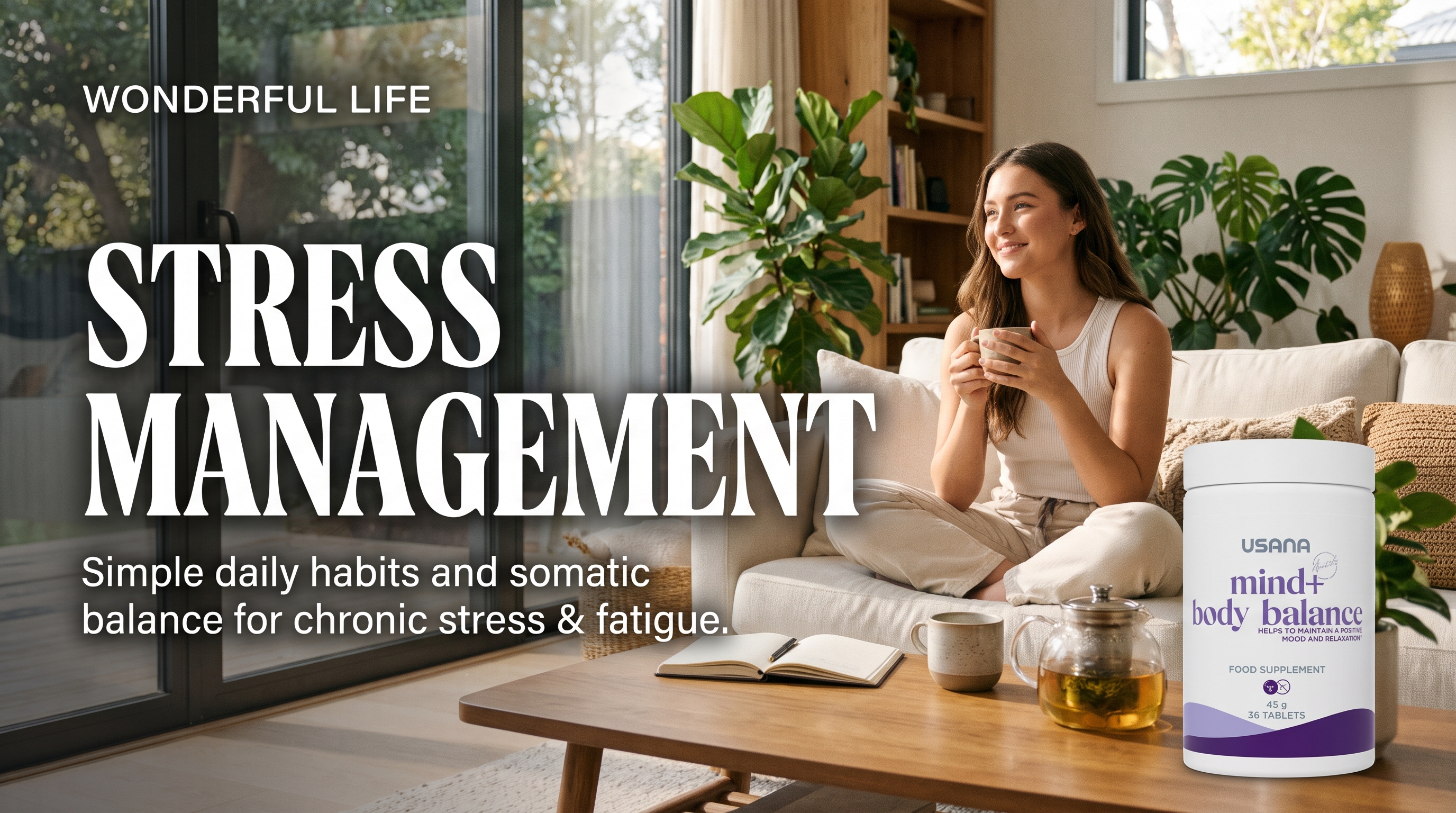
Discover how chronic stress affects your nervous system—and how mindful routines, restorative breathing, and targeted nutritional support may help you build everyday resilience.
Category: Wellness | Stress Management | Mind–Body Health Reading time: 8 minutes Published by: WonderfulLife Wellness Editorial
#
Understanding the Body's Natural Stress Response
Human biology possesses an extraordinary defense system.
When immediate danger strikes, the brain activates a coordinated stress response involving the sympathetic nervous system and the hypothalamic–pituitary–adrenal (HPA) axis.
Adrenaline and other stress hormones prepare the body for action. Heart rate increases, energy becomes more readily available, and resources shift toward meeting the immediate challenge.
This is the familiar fight-or-flight response—an essential survival mechanism.
In situations of acute danger, this response can be lifesaving. Once the threat passes, the body can gradually return toward its normal physiological state.
But modern stress is rarely so straightforward.
Financial responsibilities, demanding schedules, workplace pressures, constant notifications, and personal obligations can repeatedly activate stress-response systems—even when no immediate physical danger exists.
Although the brain can distinguish many forms of physical and psychological threat, both can activate overlapping biological stress pathways.
The challenge is not simply experiencing stress. It is experiencing stress without sufficient opportunities for recovery.
The goal of effective stress management is not to eliminate every challenge. It is to strengthen the body's capacity to respond, recover, and restore balance.
#
The Anatomy of Burnout: Understanding Allostatic Load
Neuroendocrinologist Dr. Bruce McEwen helped establish the concept of allostatic load—the cumulative physiological burden associated with repeated or prolonged adaptation to stress.
Your body is designed to adjust continuously to changing demands. This process, known as allostasis, helps maintain stability through change.
However, when stress is frequent, intense, or prolonged—and recovery is inadequate—the biological cost can accumulate.
#
Two Essential Branches of the Autonomic Nervous System
1. The Sympathetic Nervous System — Your Biological Accelerator
This system helps prepare the body for activity, concentration, exertion, and rapid responses to challenging situations.
During activation, heart rate may rise, breathing can accelerate, and energy resources are mobilized.
2. The Parasympathetic Nervous System — Your Recovery System
This system contributes to functions such as digestion, energy conservation, and regulation of heart rate.
The vagus nerve plays an important role in many parasympathetic processes.
These systems are not simply opposing switches. They work together dynamically to regulate bodily functions across different circumstances.
#
What Happens When Recovery Falls Behind?
Prolonged stress can contribute to changes in:
- Sleep quality: Difficulty falling asleep, staying asleep, or waking refreshed.
- Digestive function: Changes in appetite, gastrointestinal discomfort, or altered bowel habits.
- Mental clarity: Difficulty concentrating, remembering details, or making decisions.
- Emotional well-being: Increased irritability, worry, or feelings of overwhelm.
- Physical health: Changes in cardiovascular, metabolic, and immune regulation.
Stress responses vary considerably between individuals. Nevertheless, the central principle remains consistent:
Recovery is not a luxury. It is an essential part of healthy physiological regulation.
#
Three Foundational Pillars for Daily Decompression
Building resilience begins with manageable daily habits.
Rather than attempting to transform your entire lifestyle overnight, focus on small, repeatable actions that reduce unnecessary demands and support recovery.
#
01. Protect Your Attention
Constant interruptions and frequent task-switching can increase mental fatigue.
Create short periods throughout your day when you disconnect from notifications, emails, and unnecessary digital stimulation.
Try this: Take a five-minute screen-free break between demanding tasks. Walk, stretch, or simply sit quietly without checking your phone.
#
02. Support Metabolic Steadiness
Nutrition plays an important role in maintaining energy, concentration, and overall well-being.
Balanced meals containing protein, fiber-rich carbohydrates, and healthy fats can support more consistent energy levels throughout the day.
Try this: Build meals around vegetables, whole grains, legumes, lean proteins, and healthy fats. Avoid routinely skipping meals when it leaves you feeling depleted.
#
03. Focus on What You Can Control
Uncertainty can intensify feelings of stress, especially when attention remains fixed on circumstances outside your influence.
Redirecting energy toward practical, achievable actions may help reduce unproductive worry.
Try this: At the beginning of each day, identify three meaningful actions within your control. Give those actions priority over concerns you cannot immediately resolve.
#
Somatic Grounding: Using the Body to Support the Mind
Stress management is often approached as a purely mental exercise.
We tell ourselves to relax, think positively, or stop worrying.
But stress involves the entire body.
The nervous system continually processes signals from internal organs, muscles, breathing patterns, and the surrounding environment.
A substantial proportion of vagal nerve fibers carry sensory information from the body toward the brain.
This two-way communication helps explain why physical practices can influence emotional experience.
#
The Physiological Sigh: A Simple Breathing Technique
One accessible technique is known as the physiological sigh.
It involves a double inhalation followed by a longer, gentle exhalation.
How to practice:
- Inhale comfortably through your nose.
- Take a second, smaller inhalation to gently top up the breath.
- Exhale slowly and comfortably through your mouth.
- Return to normal breathing and repeat gently as comfortable.
A 2023 study published in Cell Reports Medicine found that five minutes of daily structured breathing, particularly exhale-focused cyclic sighing, improved mood and reduced physiological arousal among participants.
The findings are encouraging, although they do not establish breathing exercises as a treatment for every stress-related condition.
WonderfulLife Tip: Begin with a few comfortable breaths. Avoid forcing deep inhalations or continuing if you feel dizzy or uncomfortable.
#
Neuromuscular Release: Letting Go of Physical Tension
Stress can also appear as muscular tension.
Clenched jaws, elevated shoulders, tight neck muscles, and shallow breathing may accompany periods of sustained pressure.
Gentle movement practices can help interrupt these patterns.
Consider incorporating:
- Gentle stretching
- Tai Chi
- Progressive muscle relaxation
- Mindful walking
- Restorative yoga
These activities provide opportunities to notice physical tension and practice releasing it.
#
Targeted Nutritional Support: USANA Stress Relief Mind + Body Balance
<em>Supporting everyday resilience through a balanced wellness routine.</em>
Healthy routines, restorative sleep, balanced nutrition, and regular movement remain the foundation of stress management.
Some individuals also choose botanical supplements as part of their broader wellness practices.
USANA Stress Relief Mind + Body Balance is a botanical supplement designed to support stress-related wellness needs.
Its featured ingredients include botanicals that have attracted scientific interest for their potential roles in mood, relaxation, and perceived stress.
#
Ashwagandha (Withania somnifera)
Ashwagandha has a long history of traditional use in Ayurvedic practices.
Some clinical studies suggest that particular ashwagandha extracts may help reduce perceived stress and certain stress-related measurements in adults.
However, results depend on the extract, dosage, duration, and population studied. Findings from one preparation cannot automatically be applied to every supplement containing ashwagandha.
#
Saffron Extract
Saffron has been investigated for its potential effects on mood and emotional well-being.
Some small clinical trials report promising results, although larger and more rigorous studies are needed to clarify its effectiveness and appropriate use.
#
Lemon Balm (Melissa officinalis)
Lemon balm is traditionally associated with relaxation and calmness.
Preliminary studies have explored its potential effects on stress, mood, and sleep, but evidence remains limited and varies by preparation.
#
A Complementary Approach to Wellness
Botanical supplements should be considered optional additions to a healthy routine—not substitutes for adequate sleep, nourishing food, physical activity, or appropriate medical care.
Individual responses may vary, and product-specific benefits should be evaluated against the evidence for the actual formulation.
#
Recommended Usage
Follow the directions on your current USANA Stress Relief Mind + Body Balance product label.
Check the product's ingredients, recommended serving, precautions, and suitability before use.
Consult a qualified healthcare professional before taking this supplement if you are pregnant, breastfeeding, managing a medical condition, or taking medications. Ashwagandha may interact with certain medicines and may not be appropriate for people with some thyroid, autoimmune, or liver conditions.
#
Restoring the Natural Cycle: From Stress to Recovery
A resilient life is not defined by the absence of pressure.
It is defined, in part, by the ability to respond to challenges while making adequate room for recovery.
Your nervous system is designed to adapt.
When you create healthier boundaries, nourish your body, practice restorative breathing, and prioritize sleep, you support the physiological processes involved in everyday regulation.
The most sustainable approach combines small actions that can be repeated consistently.
You do not need a stress-free life to begin feeling more balanced. You need a routine that makes recovery a priority.
For those interested in exploring additional botanical support, USANA Stress Relief Mind + Body Balance may be considered alongside these foundational habits.
#
Explore Mind + Body Balance at WonderfulLife
Discover USANA Stress Relief Mind + Body Balance and explore how it may fit into your personal wellness routine.
Visit the WonderfulLife Shop
Product availability and information may vary by region. Review the current product label and official manufacturer information before purchasing.
#
Scientific References & Further Reading
1. McEwen, B. S. (1998). Stress, adaptation, and disease: Allostasis and allostatic load. Annals of the New York Academy of Sciences, 840, 33–44. https://doi.org/10.1111/j.1749-6632.1998.tb09546.x
2. Balban, M. Y., Neri, E., Kogon, M. M., et al. (2023). Brief structured respiration practices enhance mood and reduce physiological arousal. Cell Reports Medicine, 4(1), 100895. https://doi.org/10.1016/j.xcrm.2022.100895
3. Porges, S. W. (2009). The polyvagal theory: New insights into adaptive reactions of the autonomic nervous system. Cleveland Clinic Journal of Medicine, 76(Suppl. 2), S86–S90. https://doi.org/10.3949/ccjm.76.s2.17
4. Chandrasekhar, K., Kapoor, J., & Anishetty, S. (2012). A prospective, randomized double-blind, placebo-controlled study of safety and efficacy of a high-concentration full-spectrum extract of ashwagandha root in reducing stress and anxiety in adults. Indian Journal of Psychological Medicine, 34(3), 255–262. https://doi.org/10.4103/0253-7176.106022
#
Important Wellness Disclaimer
This article is provided for general educational purposes and is not intended to diagnose, treat, cure, or prevent any disease. Nutritional supplements are not replacements for professional medical advice, diagnosis, or treatment. Always consult a qualified healthcare professional regarding health concerns, medication interactions, or the suitability of a supplement for your individual needs.
© WonderfulLife.ca — Wellness, Nutrition & Inspired Living.


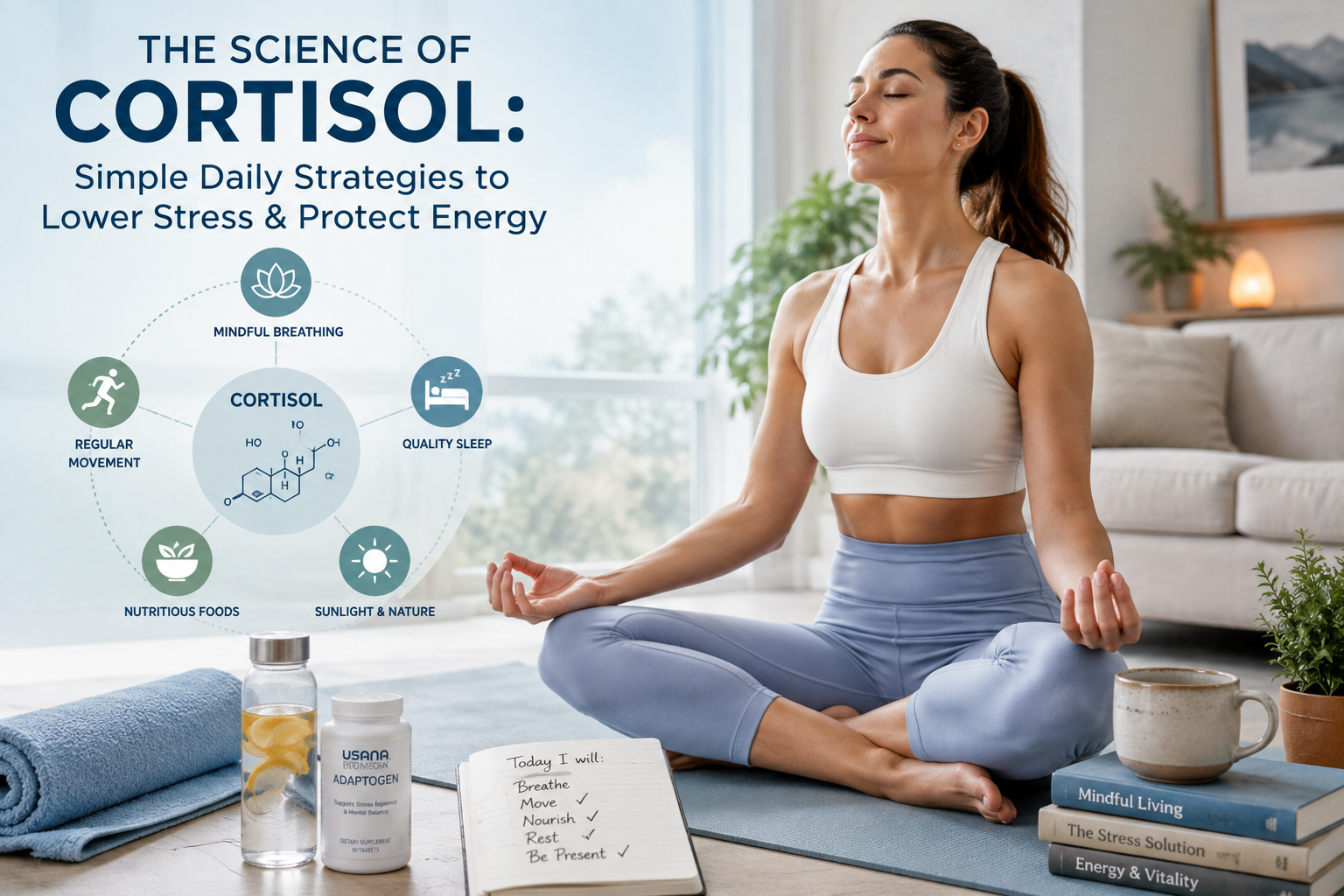









WonderfulLife Community
Join the Conversation