When Health Turns Toxic: The Rise of "Wellness Fatigue" and Over-Optimization Anxiety Introduction: The Burden of the "Perfect" Routine
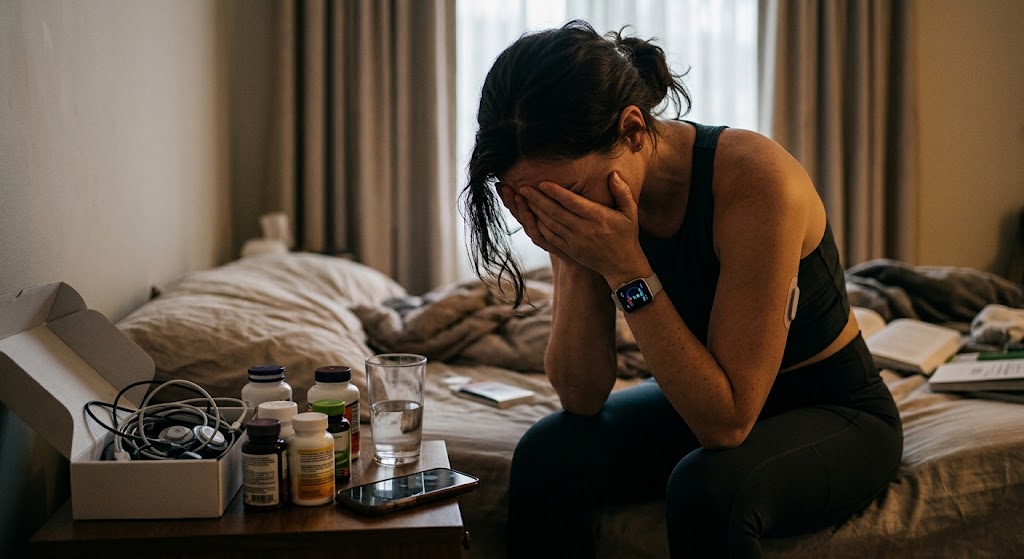
At 6:15 AM, the alarm sounds. Before getting out of bed, you check your sleep score: 64 out of 100 — Suboptimal. Despite feeling relatively rested upon waking, a wave of dread sets in. You glance at your wrist monitor to inspect your Heart Rate Variability (HRV), strap on a continuous glucose monitor (CGM) to evaluate your fasting blood sugar, swallow a stack of twelve targeted supplements, and mentally calculate your morning macro ratios.
What began as an intentional pursuit of vitality has quietly metastasized into an exhausting, high-stakes operational routine.
This growing behavioral phenomenon is known clinically and culturally as "wellness fatigue" and over-optimization anxiety. As health tech democratizes clinical-grade biometric data and social media algorithms promote rigid, multi-step morning regimens, an increasing number of healthy individuals find themselves burnt out by the very tools designed to restore them.
The Architecture of Over-Optimization
To understand why health optimization frequently collapses into distress, researchers point to the convergence of three primary psychological and cultural mechanisms:
- "Orthosomnia" and Data-Induced Insomnia
In 2017, researchers from Rush University Medical Center and Northwestern University Feinberg School of Medicine coined the term orthosomnia in the Journal of Clinical Sleep Medicine. Derived from ortho (straight or correct) and somnia (sleep), orthosomnia describes an unhealthy preoccupation with achieving a flawless sleep tracker score.
Researchers documented patients who arrived at sleep clinics with insomnia actively worsened by the devices they bought to treat it. When sleep—a physiological state that requires the withdrawal of conscious control—is treated as a performance to be graded, pre-bed performance anxiety naturally spikes.
- The Algorithmic Nocebo Effect and Cyberchondria
Digital wearables measure non-specific fluctuations in bodily processes—such as transient shifts in resting heart rate, recovery scores, or skin temperature. In clinical settings, these natural variances are acknowledged as standard homeostatic flux.
However, consumer applications often translate complex physiological data into simplistic red, amber, or green warnings. This frequently creates a digital nocebo effect: a user wakes up feeling energized, views an amber "strained" recovery score on their app, and within an hour reports subjective brain fog and lethargy.
Studies published in Circulation: Cardiovascular Quality and Outcomes have similarly demonstrated that hyper-vigilant wearable tracking in healthy adults significantly increases symptom preoccupation, informal clinic messaging, and unwarranted diagnostic visits.
- Behavioral Decision Fatigue & Orthorexia Spectrum Behaviors
When simple human needs—eating, walking, resting, and sunlight exposure—are converted into mathematical formulas, the brain experiences chronic decision fatigue.
This dynamic closely parallels orthorexia nervosa, a condition characterized by an obsessive fixation on righteous or "pure" eating habits. In over-optimization anxiety, this rigidity expands beyond food into cold plunge protocols, light exposure schedules, posture tracking, and supplement sequencing.
Deviation from the self-imposed protocol produces intense feelings of failure and somatic vulnerability.
Key Clinical Signs of Wellness Fatigue
How do you differentiate healthy awareness from over-optimization anxiety?
Behavioral psychologists emphasize evaluating the emotional cost of your health habits:
Behavior Healthy Awareness Over-Optimization Anxiety Morning Routine Uses metrics as a loose reference point. Trusts app score over direct bodily sensations (interoception). Dietary Tracking Prioritizes nutrient density and variety. Experiences guilt or panic if a meal’s glucose curve or macros cannot be calculated. Habit Disruption Adapts fluidly if a supplement or workout is skipped. Feels the entire day is compromised if an optimization habit is missed. Social Life Integrates social connection with healthy habits. Avoids dinners, gatherings, or travel to protect strict recovery or biometric protocols. Reclaiming Autonomy: 4 Evidence-Based Antidotes
Recovering from optimization burnout does not require discarding scientific habits; it requires shifting from an external feedback loop back to an internal one:
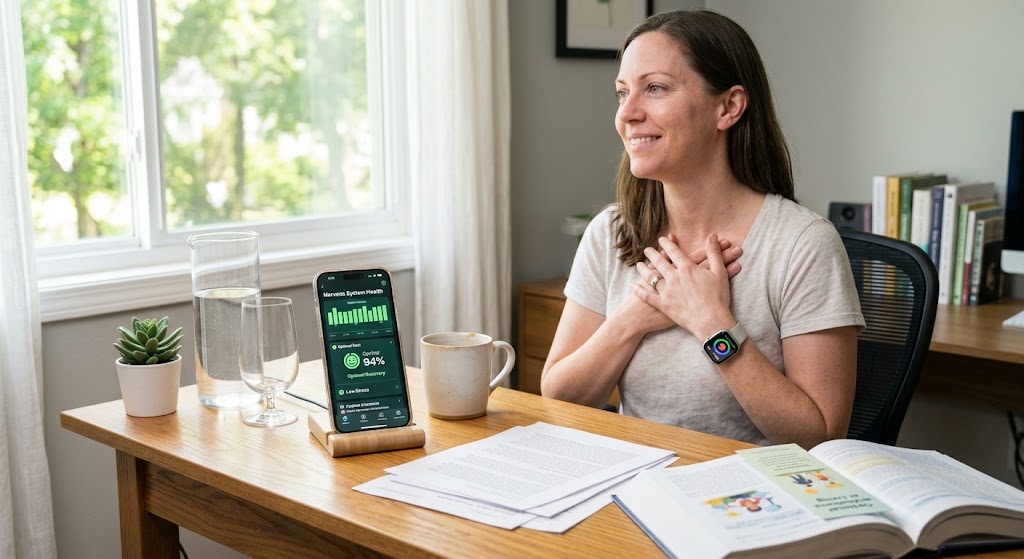
- Conduct a "Tech-Free Biometric Fast"
Try taking off smart rings, watches, or continuous monitors for 7 to 14 days.
Without daily grades, practice journaling your baseline energy, mood, and sleep quality based purely on internal somatic cues (interoception).
- Shift Focus from Single Nights to Long-Term Trends
Human biology is cyclical, not linear.
A single night of fragmented sleep or a temporary glucose spike after an enjoyable meal with friends has negligible impact on long-term health span.
Look at multi-week or monthly averages rather than treating every morning as a test score.
- Practice the "80% Sufficiency Principle"
In behavioral economics and health psychology, diminishing returns occur when the effort to capture the final 5% of biological efficiency creates more physiological stress (via elevated cortisol and autonomic tension) than the intervention delivers in benefit.
Strive for "good enough" consistency over perfection.
- Prioritize Social Baseline Theory
Human nervous systems are co-regulatory.
High-quality human connection, laughter, unstructured play, and shared meals often trigger a more potent parasympathetic state than solitary biohacks like infrared saunas or cold showers.
References & Scientific Literature Baron, K. G., Abbott, S., Jao, N., Manalo, N., & Mullen, R. (2017). Orthosomnia: Are Some Patients Taking the Quantified Self Too Far? Journal of Clinical Sleep Medicine, 13(2), 351–354. Rosman, L., et al. (2021/2024). Wearable Devices and Psychological Wellbeing: Are We Creating Health Anxiety? Circulation: Cardiovascular Quality and Outcomes, 14(8), e008169. Dunn, J., Runge, R., & Snyder, M. (2018). Wearables and the Medical Revolution: Balancing Continuous Monitoring with Psychological Impact. Personalized Medicine, 15(5), 429–440. Donini, L. M., et al. (2022). Orthorexia Nervosa: A Review of the Condition and Proposed Diagnostic Criteria. Eating and Weight Disorders - Studies on Anorexia, Bulimia and Obesity, 27, 2995–3011. Kooiman, T. J., et al. (2018). Reliability and Validity of Ten Consumer Activity Trackers. Cogent Medicine, 5(1), 1478201. Medical & Professional Disclaimer
This article is published strictly for informational, educational, and journalistic purposes. It is not intended to be a substitute for professional medical advice, clinical diagnosis, or medical treatment.
Always consult with a qualified physician, psychologist, or registered healthcare practitioner regarding any symptoms, sleep disturbances, anxiety, or dietary modifications.
Never disregard professional medical advice or delay seeking care because of biometric data derived from consumer wearables or information read in this article.









WonderfulLife Community
Join the Conversation