
Hydration Beyond Water: Why Electrolytes Matter
Most of us have heard some version of the advice:
“Drink eight glasses of water a day.”
It is a simple reminder, but hydration is more individual than that.
Fluid needs vary according to body size, climate, activity level, diet, pregnancy, illness, medications, and how much water is lost through sweat.
For most healthy people, plain water is an excellent source of hydration. But water does not work alone.
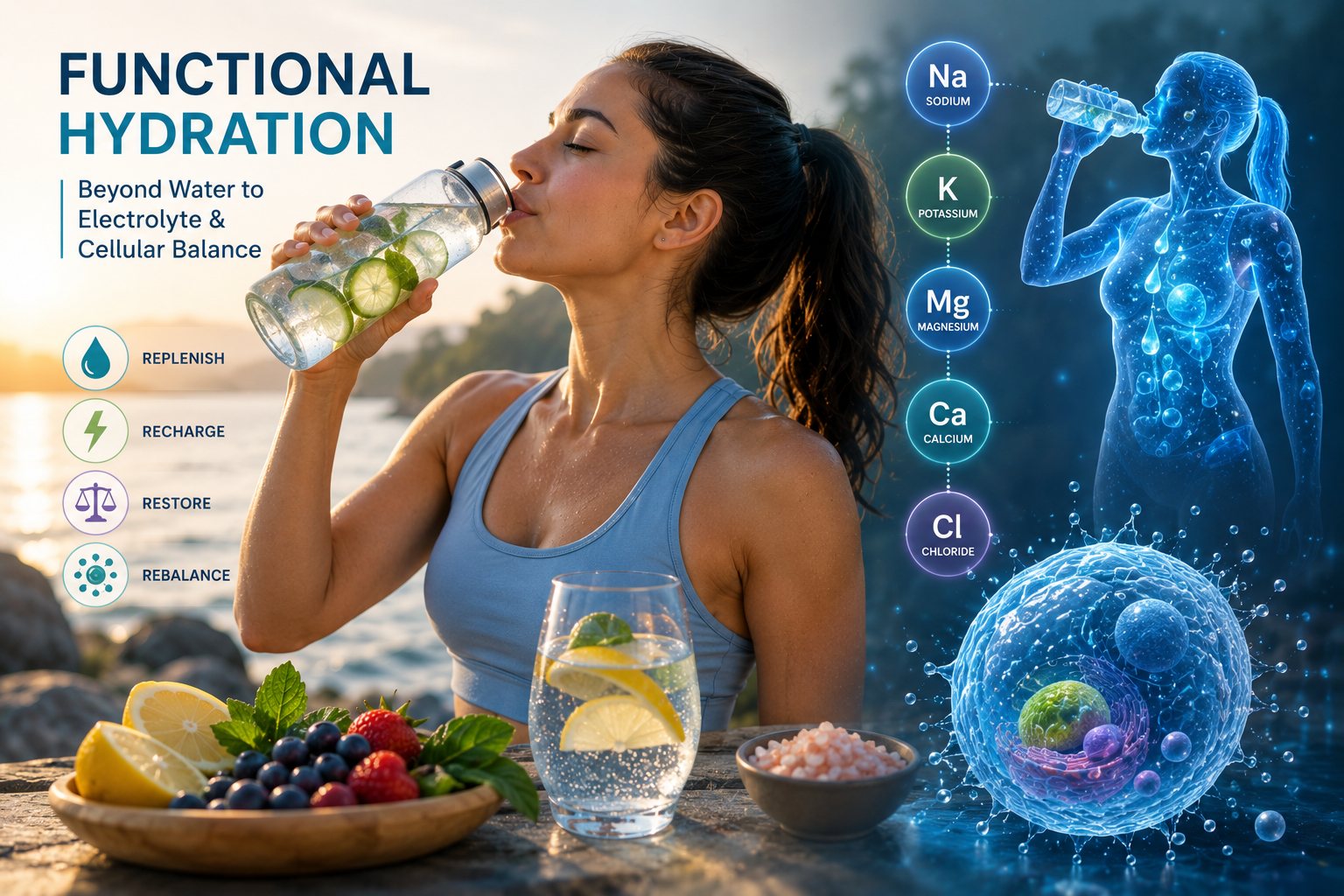
The body also depends on electrolytes—minerals that help regulate fluid balance, nerve signaling, muscle function, and other essential physiological processes.
That becomes especially important during prolonged exercise, heavy sweating, hot weather, vomiting, diarrhea, or other situations in which both water and electrolytes are being lost.
What Are Electrolytes?
Electrolytes are minerals that carry an electrical charge when dissolved in body fluids.
Important electrolytes include:
- Sodium
- Potassium
- Magnesium
- Chloride
- Calcium
- Phosphate
These minerals help the body maintain the proper distribution of water inside and outside cells.
They also support normal nerve impulses, muscle contraction, heart function, and acid-base balance.
Hydration therefore involves more than simply drinking liquid.
It depends on the body maintaining an appropriate balance between water and dissolved minerals.
The Three Minerals Most People Associate With Hydration
Three electrolytes are especially relevant when discussing everyday hydration.
- Potassium: Supporting Fluid Balance Inside Cells
Potassium is the major positively charged electrolyte found inside cells.
It plays an important role in:
- Normal fluid balance
- Nerve transmission
- Muscle contraction
- Heart function
Good dietary sources of potassium include:
- Potatoes and sweet potatoes
- Beans and lentils
- Spinach and other leafy greens
- Avocados
- Bananas
- Yogurt
- Tomatoes
- Some fruits and vegetables
Most people benefit more from obtaining potassium through a varied diet than from adding potassium supplements without professional guidance.
- Sodium: Essential, but Balance Matters
Sodium is the major positively charged electrolyte in fluid outside cells.
It helps maintain blood volume and fluid balance and is essential for normal nerve and muscle function.
During prolonged physical activity or heavy sweating, sodium losses can become significant.
That is one reason athletes exercising for extended periods—particularly in hot environments—may benefit from replacing both fluid and sodium.
For everyday life, however, most people already consume ample sodium through food.
The goal is not to add salt indiscriminately.
It is to maintain an appropriate balance based on individual needs and circumstances.
- Magnesium: An Important Metabolic Mineral
Magnesium participates in hundreds of biochemical reactions throughout the body.
It contributes to:
- Normal muscle function
- Nerve function
- Energy metabolism
- Protein synthesis
- Bone health
- Electrolyte balance
Good food sources include:
- Pumpkin seeds
- Almonds
- Cashews
- Beans
- Whole grains
- Leafy green vegetables
- Dark chocolate with a high cocoa content
Magnesium is important for normal physiology, but it should not be viewed as a direct cure for muscle cramps, poor sleep, or stress. Those symptoms can have many different causes.
Can Drinking Too Much Plain Water Be a Problem?
Under normal circumstances, drinking water is safe and beneficial.
However, consuming extremely large amounts of water in a short period—especially while replacing heavy sweat losses without replacing sodium—can dilute the sodium concentration in the blood.
This condition is known as hyponatremia.
It is relatively uncommon in everyday life but is a recognized risk during prolonged endurance events and other circumstances involving excessive water intake.
The lesson is not to fear plain water.
It is simply to recognize that hydration involves balance.
Three Whole-Food Ways to Support Daily Hydration
Most people do not need specialty hydration products throughout the day.
Water combined with a nutritious diet usually provides an excellent foundation.
Here are three simple ways to support hydration naturally.
- Add Citrus for Flavor
Adding lemon, lime, orange, cucumber, or fresh herbs to water can make it more enjoyable to drink.
Citrus fruit contributes small amounts of nutrients and can encourage people to drink more water simply because they enjoy the taste.
A small amount of salt may be useful in specific circumstances involving prolonged sweating, but it is not necessary in every glass of water.
And while unrefined sea salt may contain trace minerals, those amounts are generally too small to make it a meaningful source of micronutrients.
- Eat More Water-Rich Foods
Food contributes a meaningful portion of daily water intake.
Water-rich foods include:
- Cucumbers
- Watermelon
- Strawberries
- Oranges
- Tomatoes
- Celery
- Bell peppers
- Soups
- Yogurt
These foods provide water along with vitamins, minerals, fiber, and other nutrients.
This is one reason hydration and nutrition are closely connected.
- Choose Unsweetened Beverages When You Want Variety
Plain water does not have to be your only source of fluid.
Other options can include:
- Unsweetened herbal tea
- Sparkling water
- Milk or fortified alternatives
- Broth-based soups
- Coconut water
Coconut water naturally contains potassium and some other electrolytes, although it is not automatically necessary or superior to water for routine hydration.
For intense or prolonged exercise, a properly formulated sports beverage may sometimes be more appropriate than plain water because it can provide carbohydrate and sodium along with fluid.
When Electrolyte Drinks Make the Most Sense
Electrolyte replacement becomes more relevant when fluid and mineral losses are substantial.
Examples include:
- Long-duration exercise
- Heavy sweating
- Hot and humid conditions
- Endurance events
- Repeated vomiting or diarrhea
- Certain medical situations under professional guidance
For normal daily activity, most healthy adults can usually maintain hydration with water and a balanced diet.
What About Fatigue, Brain Fog, Dry Skin, and Muscle Cramps?
These symptoms are often blamed on dehydration, but they are not specific to hydration status.
Fatigue, poor concentration, cramps, and dry skin can also be influenced by:
- Sleep
- Calorie intake
- Medications
- Illness
- Stress
- Iron status
- Blood glucose
- Environmental conditions
- Skin-care practices
- Exercise load
- Other health factors
Hydration is important, but it should not become a catch-all explanation for every symptom.
Persistent or significant symptoms deserve appropriate medical evaluation.
The WonderfulLife Bottom Line
Hydration is not simply about chasing an arbitrary number of glasses each day.
It is about maintaining an appropriate balance of fluid and electrolytes for your body, environment, and activity level.
For most people, the fundamentals are simple:
Drink water regularly. Eat plenty of fruits and vegetables. Include mineral-rich whole foods. Replace additional fluid and electrolytes when heavy sweating makes it necessary. Let thirst, activity, climate, and individual needs guide you.
Good hydration supports normal circulation, temperature regulation, digestion, physical performance, and cellular function.
But more is not always better.
The goal is balance—not excessive water, excessive salt, or unnecessary supplementation.
Scientific References & Sources
- Shirreffs, S. M., & Sawka, M. N. (2011). Fluid and electrolyte needs for training, competition, and recovery. Journal of Sports Sciences, 29(sup1), S39–S46.
- Popkin, B. M., D'Anci, K. E., & Rosenberg, I. H. (2010). Water, hydration, and health. Nutrition Reviews, 68(8), 439–458.
- Sawka, M. N., et al. (2007). American College of Sports Medicine position stand: Exercise and fluid replacement. Medicine & Science in Sports & Exercise, 39(2), 377–390.
Medical & Nutritional Disclaimer
The information provided on WonderfulLife.ca is for educational, informational, and general wellness purposes only and is not intended as medical advice, diagnosis, or treatment.
Fluid and electrolyte needs can vary considerably between individuals, especially in people with kidney disease, heart disease, endocrine disorders, or those taking certain medications.
Always seek advice from a physician, Registered Dietitian, or other qualified healthcare professional if you have questions about hydration, electrolyte intake, or a medical condition.
Never disregard professional medical advice or delay seeking care because of information you have read on this website.
Credits
Author: WonderfulLife Editorial Team Editorial Assistance: Gemini Published For: WonderfulLife.ca










WonderfulLife Community
Join the Conversation