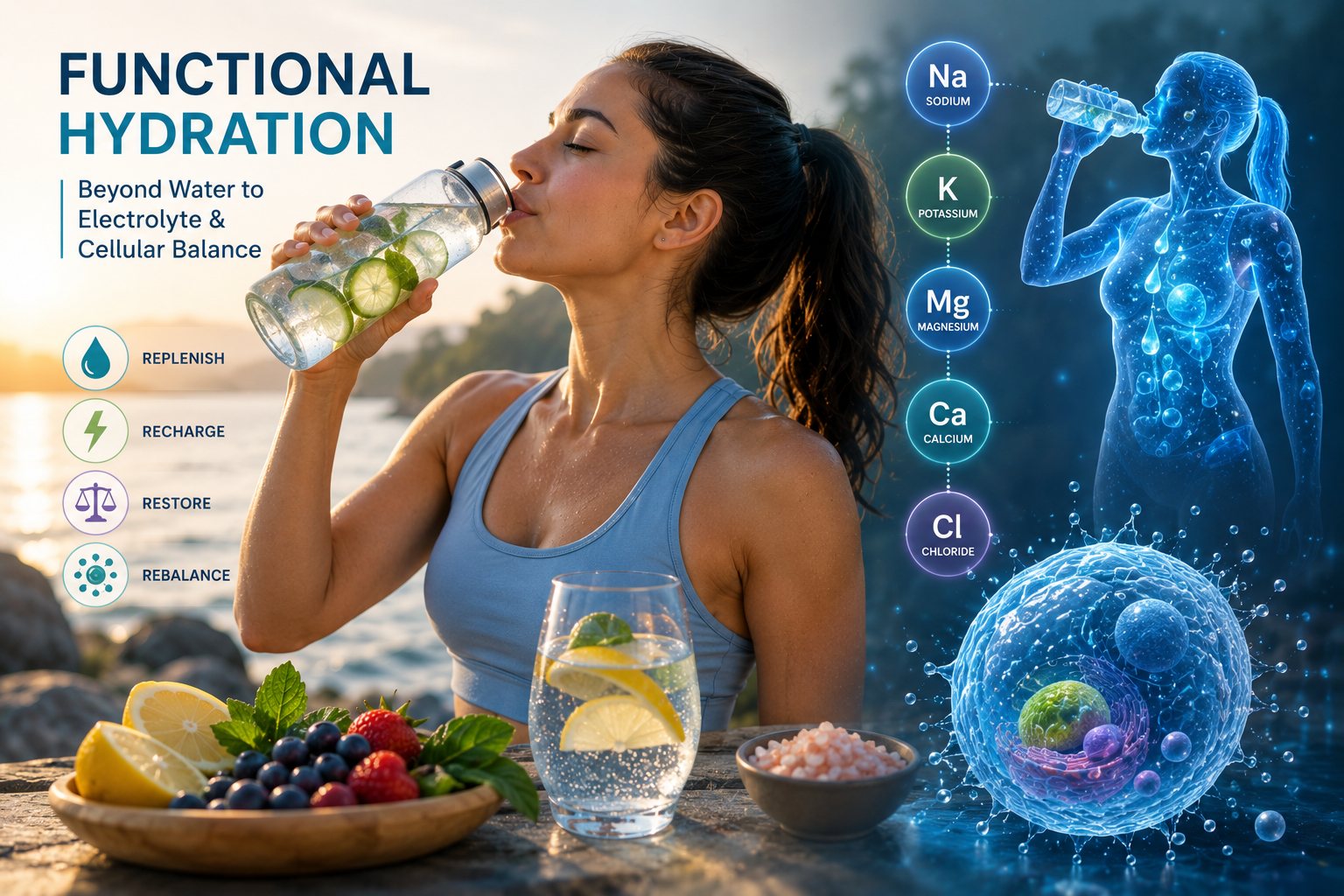
Hydration Beyond Water: Understanding Fluids, Electrolytes and Cellular Balance
Water is essential to virtually every system in the human body.
It helps regulate body temperature, transport nutrients, support digestion, maintain blood volume, lubricate tissues, and provide the fluid environment in which thousands of biochemical reactions occur.
But hydration is not simply a matter of drinking as much water as possible.
The body carefully regulates both water and electrolytes to maintain the concentration of fluids inside and outside our cells.
For most healthy people, plain water and a balanced diet provide everything needed for normal day-to-day hydration.
During prolonged exercise, heavy sweating, hot weather, illness, or other situations involving substantial fluid loss, however, electrolytes become increasingly important.
What Does “Cellular Hydration” Actually Mean?
Approximately half or more of an adult's body weight consists of water, although the percentage varies with age, sex, and body composition.
That water is distributed primarily between two compartments:
- Intracellular fluid — water inside cells
- Extracellular fluid — water outside cells, including blood plasma and fluid surrounding tissues
The body continuously regulates movement between these compartments.
One of the major forces governing that movement is osmosis—the movement of water across cell membranes in response to differences in the concentration of dissolved substances.
Electrolytes are central to this process.
What Are Electrolytes?
Electrolytes are minerals that carry an electrical charge when dissolved in body fluids.
Important electrolytes include:
- Sodium
- Potassium
- Magnesium
- Calcium
- Chloride
- Phosphate
- Bicarbonate
These minerals participate in much more than hydration.
They are involved in:
- Nerve signaling
- Muscle contraction
- Heart rhythm
- Blood volume
- Acid-base balance
- Enzyme activity
- Movement of nutrients across cell membranes
Your kidneys, hormones, digestive system, and nervous system work together continuously to maintain electrolyte concentrations within remarkably narrow ranges.
- Sodium: Regulating Extracellular Fluid
Sodium is the major positively charged ion in extracellular fluid.
It plays an important role in:
- Maintaining blood volume
- Regulating fluid balance
- Nerve transmission
- Muscle function
- Nutrient transport
Sodium also helps drive intestinal transport systems involved in absorbing glucose and certain amino acids.
This is one reason oral rehydration solutions containing both sodium and glucose can be extremely effective during significant fluid loss.
But more sodium is not automatically better.
Most people consuming a typical Western diet already obtain ample sodium from food.
The need for additional sodium depends heavily on factors such as:
- Sweat rate
- Exercise duration
- Environmental temperature
- Diet
- Health status
- Potassium: The Major Intracellular Electrolyte
While sodium is concentrated primarily outside cells, potassium is concentrated primarily inside them.
This difference is maintained partly by an important cellular protein called the:
Sodium-potassium pump (Na+/K+-ATPase).
The pump uses ATP to move sodium and potassium across cell membranes.
Maintaining these concentration gradients is essential for:
- Nerve impulses
- Muscle contraction
- Normal electrical activity of the heart
- Cellular function
Excellent dietary sources of potassium include:
- Potatoes
- Beans
- Lentils
- Leafy greens
- Avocados
- Bananas
- Yogurt
- Squash
- Tomatoes
For most people, obtaining potassium through food is preferable to casually adding high-dose potassium supplements.
- Magnesium: Much More Than a “Relaxation Mineral”
Magnesium participates in hundreds of enzymatic reactions.
It contributes to:
- Normal muscle and nerve function
- Energy metabolism
- Protein synthesis
- Bone health
- Normal heart rhythm
Magnesium is sometimes marketed as the answer to muscle cramps.
The reality is more complicated.
Exercise-associated muscle cramps can involve multiple factors, including:
- Neuromuscular fatigue
- Exercise intensity
- Conditioning
- Previous cramping history
- Fluid and electrolyte losses in some circumstances
A cramp does not automatically mean you are magnesium deficient.
Good food sources include:
- Pumpkin seeds
- Almonds
- Beans
- Whole grains
- Leafy greens
- Calcium and Chloride
Calcium is famous for its role in bone health, but it is also essential for:
- Muscle contraction
- Nerve signaling
- Blood clotting
- Cellular communication
Chloride commonly accompanies sodium in extracellular fluid and contributes to:
- Fluid balance
- Acid-base regulation
- Normal digestive physiology
Together, electrolytes operate as an integrated system rather than as isolated “hydration minerals.”
Can Drinking Too Much Water Be Dangerous?
Yes—but context matters.
Drinking very large amounts of water relative to the body's ability to excrete it can dilute blood sodium concentrations.
This condition is called hyponatremia.
Exercise-associated hyponatremia has occurred particularly during prolonged endurance events when individuals consume excessive amounts of low-sodium fluid.
Symptoms can include:
- Headache
- Nausea
- Confusion
- Weakness
- Vomiting
Severe hyponatremia is a medical emergency and can cause seizures, coma, and other life-threatening complications.
But this should not make the average person afraid of drinking plain water.
Normal water consumption does not routinely wash electrolytes out of a healthy body.
The kidneys are remarkably effective at regulating water and electrolyte balance.
The problem generally arises when water intake greatly exceeds physiological requirements or when medical conditions or medications interfere with normal fluid regulation.
Do You Need Electrolytes Every Day?
Probably not.
For normal activities such as:
- Working at a desk
- Walking
- Shopping
- Light exercise
- Household activities
plain water combined with a balanced diet is generally sufficient for healthy adults.
Electrolyte replacement becomes more relevant when fluid and sodium losses become substantial.
Examples can include:
- Prolonged endurance exercise
- Heavy sweating
- Vigorous activity in hot or humid weather
- Physically demanding outdoor work
- Extended heat exposure
- Vomiting or diarrhea
Individual sweat rates vary tremendously, so there is no single electrolyte formula appropriate for everyone.
What About a 45- to 60-Minute Workout?
Exercise duration alone does not determine whether you need electrolytes.
A gentle 60-minute walk in cool weather is very different from running hard for 60 minutes in summer heat.
Consider:
Intensity + temperature + humidity + sweat rate + duration.
For many recreational workouts lasting around an hour, water is sufficient.
Longer or particularly sweaty sessions may justify replacing sodium and other electrolytes.
Should You Put Sea Salt in Your Morning Water?
You don't need to.
Adding a pinch of salt to water has become a popular wellness ritual, but there is little reason for most healthy adults eating a normal diet to deliberately salt their morning water.
Unrefined sea salt is still predominantly sodium chloride.
Although it may contain trace amounts of other minerals, those quantities are generally too small to make sea salt an important source of magnesium, potassium, or other micronutrients.
If you enjoy lightly salted water after substantial sweating, that is different.
But it isn't necessary for ordinary morning hydration.
What About Lemon Water?
Lemon water can be an enjoyable way to drink more fluid.
It provides flavor and small amounts of nutrients.
But lemon does not transform water into a specialized cellular hydration solution.
Drink it because you enjoy it—not because ordinary water is somehow incapable of hydrating your cells.
Hydration From Food Counts Too
Not all of our water comes from beverages.
Foods can contribute meaningfully to total fluid intake.
Water-rich choices include:
- Cucumbers
- Watermelon
- Strawberries
- Oranges
- Tomatoes
- Celery
- Lettuce
- Soups
- Yogurt
These foods also provide useful nutrients such as potassium, vitamins, fiber, and phytochemicals.
Is “Structured Water” More Hydrating?
Claims about “structured,” “hexagonal,” “cellular,” or specially “bound” water are common in wellness marketing.
There is not convincing clinical evidence that people need specially structured water for superior cellular hydration.
Water naturally interacts with proteins, carbohydrates, minerals, and other molecules inside foods and living tissues.
That does not establish a special category of dietary water with clinically superior hydration properties.
Water-rich whole foods are excellent choices—but because they provide water and nutrients, not because their water possesses a magical molecular structure.
Three Practical Hydration Strategies
- Let Your Day Determine Your Needs
Hydration requirements change.
Consider:
- Activity
- Temperature
- Humidity
- Body size
- Pregnancy or breastfeeding
- Illness
- Diet
- Medications
There is no universal requirement that every person must drink exactly eight glasses of water each day.
- Hydrate Before, During and After Demanding Activity
If you know you will be exercising or working in significant heat, begin reasonably hydrated.
During prolonged activity, drink according to your needs rather than forcing excessive amounts of fluid.
After heavy sweating, replace both fluid and lost electrolytes through food, beverages, or an appropriate electrolyte solution.
- Eat Your Electrolytes
A balanced diet is one of the simplest hydration strategies available.
Combine water with foods such as:
Potassium: potatoes, beans, bananas, avocado, leafy greens
Magnesium: nuts, seeds, legumes, whole grains
Calcium: dairy foods, fortified alternatives, tofu, certain leafy greens
Sodium and chloride: generally abundant in normal diets
Your plate and your water bottle work together.
Be Careful With “More Electrolytes Is Better”
Electrolytes are essential.
That does not mean consuming large amounts is beneficial.
Excessive sodium may be inappropriate for people with certain cardiovascular, kidney, or blood-pressure conditions.
Potassium supplementation can be dangerous for people with impaired kidney function or those taking certain medications.
Magnesium supplements can cause gastrointestinal effects and may interact with medications.
Electrolyte products should therefore be used for a reason—not simply because the word “electrolyte” sounds healthier than water.
The WonderfulLife Bottom Line
Hydration doesn't need to be complicated.
Your body has extraordinarily sophisticated systems for maintaining fluid and electrolyte balance.
For everyday life, the foundation is simple:
Drink water. Eat a balanced, nutrient-rich diet. Include fruits and vegetables. Pay attention to thirst and activity. Replace additional fluids and electrolytes when substantial sweating or fluid loss makes it necessary.
You don't need expensive hydration powders for sitting at your desk.
And you don't need to “mineralize” every glass of water.
During demanding exercise or significant heat exposure, however, electrolytes—particularly sodium—can become an important part of an appropriate hydration strategy.
The goal isn't to drink the most water.
The goal is to give your body the right amount of fluid for the conditions you're actually experiencing.
Scientific References & Sources
- Shirreffs, S. M., & Sawka, M. N. (2011). Fluid and electrolyte needs for training, competition, and recovery. Journal of Sports Sciences, 29(Suppl 1), S39–S46.
- Maughan, R. J., & Shirreffs, S. M. (2019). Muscle cramping during exercise: Causes, solutions, and questions remaining. Sports Medicine, 49(Suppl 2), 115–124.
- Evans, G. H., et al. (2016). A randomized trial to assess the potential of different beverages to affect hydration status: Development of a beverage hydration index. The American Journal of Clinical Nutrition, 103(3), 717–723.
- Sawka, M. N., et al. (2007). American College of Sports Medicine position stand: Exercise and fluid replacement. Medicine & Science in Sports & Exercise, 39(2), 377–390.
Medical & Hydration Disclaimer
The information provided on WonderfulLife.ca is for educational, informational, and general wellness purposes only and is not intended as medical advice, diagnosis, treatment, or an individualized hydration prescription.
Fluid and electrolyte requirements can vary considerably according to exercise intensity, environmental conditions, sweat rate, medical conditions, medications, age, pregnancy, and other individual factors.
People with kidney disease, heart disease, hypertension, diabetes, endocrine disorders, or conditions affecting fluid or electrolyte balance should consult with a qualified healthcare professional before deliberately increasing water, sodium, potassium, magnesium, or electrolyte intake.
Symptoms such as severe headache, confusion, persistent vomiting, seizures, fainting, or significant changes in mental status during or following prolonged exercise or excessive fluid consumption require urgent medical attention.
Always consult with a physician, pharmacist, Registered Dietitian, or other qualified healthcare professional regarding significant changes to your hydration or supplement routine.
Credits
Author: WonderfulLife Editorial Team Published For: WonderfulLife.ca











WonderfulLife Community
Join the Conversation