
The Roots of a Scientific Life The journey toward modern cellular nutrition did not begin with commercial marketing trends, trendy superfoods, or shelf-space competition. It began decades earlier in sterile biological research laboratories, driven by an exacting standard of microscopic analysis and an uncompromising commitment to human health.
Dr. Myron Wentz was born in Napoleon, North Dakota, into a family grounded in practical hard work and community values. Early in life, however, he witnessed the devastating impact of chronic degenerative disease firsthand. His father passed away from heart disease at the young age of 57, and other close family members later succumbed to cancer and other lifestyle-related illnesses. These personal tragedies left an indelible impression on the young scientist, sparking a lifelong curiosity about why human bodies break down prematurely and how true biological resilience might be achieved.
Pursuing higher education with intense focus, Dr. Wentz completed his undergraduate degree in biology at North Central College in Naperville, Illinois, followed by a Master’s degree in microbiology from the University of North Dakota. He then earned his Ph.D. in microbiology and immunology from the University of Utah in 1 9 7
- His academic training immersed him in the intricate, high-stakes discipline of virology, immunology, and the fundamental mechanics of cellular survival.
The Precision of Gull Laboratories Immediately following the completion of his doctorate in 1974, Dr. Wentz launched Gull Laboratories in Salt Lake City, Utah. The primary mission was singular and urgent: develop advanced medical diagnostic test kits capable of rapidly identifying viral infections in clinical settings.
At the time, diagnostic virology was still an emerging frontier. Medical facilities routinely struggled with slow, imprecise diagnostic methods while patients waited days or weeks for confirmation of severe viral illnesses. Dr. Wentz recognized that accurate diagnosis required pristine, highly sensitive biological reagents.
In 1977, Dr. Wentz achieved a major medical breakthrough when the U.S. Food and Drug Administration (FDA) approved his diagnostic test kit for the Epstein-Barr virus (EBV)—the pathogen responsible for infectious mononucleosis and implicated in various immune system complications. It was the very first commercially available test kit of its kind in the world.
Over the subsequent two decades, Gull Laboratories expanded dramatically. Dr. Wentz and his research team developed dozens of cutting-edge assays for infectious diseases, manufacturing reliable test systems used daily in hospitals, commercial laboratories, and research institutions worldwide.
The Secret Behind Successful Cell Culture Behind the commercial success of Gull Laboratories was a foundational, highly demanding scientific discipline: cell culture.
To manufacture viral diagnostic kits, researchers cannot simply test inert chemicals. They must propagate living viruses. Because viruses cannot replicate on their own, they require living host cells. Day in and day out for nearly twenty years, Dr. Wentz and his team had to keep human cell lines alive, vigorous, and biochemically pristine in artificial laboratory environments.
Under the microscope, human cells are acutely sensitive. Outside the protection of the human body, isolated cells have no internal buffer against poor nutrition or environmental toxins. If their liquid growth medium lacks any essential micronutrient—or if the proportions of vitamins, minerals, trace elements, and antioxidants are even slightly unbalanced—the cells show visible signs of distress:
Cell membranes become porous and fragile.
Mitochondria fail to produce adequate energy.
Toxic byproducts and free radicals accumulate, damaging intracellular structures.
Cellular replication slows, degrades, and eventually ceases entirely.
Conversely, Dr. Wentz discovered that when human cells receive an exact, highly bioavailable spectrum of balanced nutrients, something extraordinary happens: the cells remain vibrant, structurally sound, and biologically active for decades without degenerative breakdown.
The Turning Point: Diagnosis Versus Prevention By the late 1980s, Dr. Wentz found himself reflecting deeply on the broader trajectory of human health and modern medicine.
Gull Laboratories was a global leader in diagnosing disease, but a nagging paradox began to trouble its founder. Medicine was dedicating massive intellectual and financial resources to developing sophisticated tools that told people what disease they already had, often after irreversible cellular damage had already occurred.
At the same time, Dr. Wentz observed the broader population suffering from escalating rates of chronic degenerative conditions—cardiovascular disease, metabolic dysfunction, and immune decline.
When Dr. Wentz looked closely at the nutritional landscape of the time, he noticed two critical flaws:
The RDA Flaw: Standard Recommended Dietary Allowances (RDAs) were established during wartime crises to prevent acute nutritional deficiencies, such as scurvy (vitamin C deficiency), rickets (vitamin D deficiency), or beriberi (thiamine deficiency). However, the baseline amount of a nutrient required to prevent acute disease is drastically lower than the amount required to fuel optimal cellular repair and longevity.
The Formulation Problem: The retail multivitamins on supermarket shelves were built for price points and shelf stability rather than biological potency. They frequently contained low-grade chemical forms with poor absorption rates, improper nutrient ratios, and negligible antioxidant protection.
Dr. Wentz concluded that the world did not merely need more diagnostic tools to confirm when people were sick; it needed advanced cellular nutrition to help people build resilience and maintain vibrant health long before disease could take hold.
1992: The Founding of USANA Health Sciences In 1992, Dr. Wentz made a courageous life choice. He sold his controlling interest in Gull Laboratories—a thriving, internationally respected enterprise—and redirected his entire life's work toward preventive cellular nutrition.
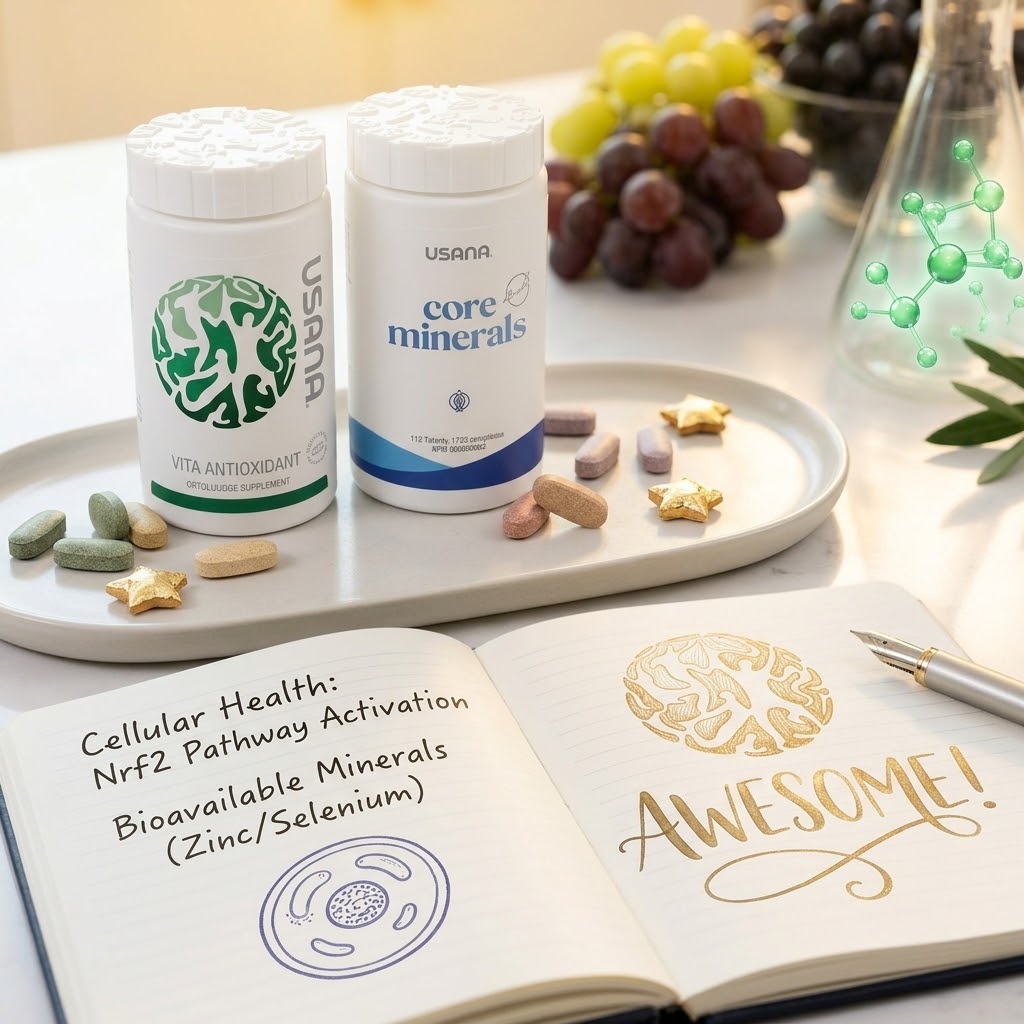
He established USANA Health Sciences in Salt Lake City with a simple, uncompromising scientific premise: apply the rigorous standards of human cell culture and pharmaceutical manufacturing to daily nutritional supplementation.
Instead of accepting food-grade manufacturing standards, which allow for wide margins of error in potency and purity, USANA adopted voluntary compliance with pharmaceutical Good Manufacturing Practices (GMP). This guaranteed that every tablet produced would meet strict criteria for ingredient identity, exact potency, rapid dissolution, and total freedom from contaminants.
A Vision of a World Free from Pain and Suffering Dr. Wentz’s philosophy extends far beyond standard dietary supplementation. It is rooted in a comprehensive worldview that views the cell as the fundamental building block of all human vitality. When cells are provided with the right raw materials, protected from oxidative damage, and supported in their natural self-renewal mechanisms, the human body demonstrates an extraordinary capacity for sustained wellness.
His vision is captured in a statement that has guided the organization for more than three decades:
"I dream of a world free from pain and suffering. I dream of a world free from disease. The USANA family will be the healthiest family on earth. Share my vision. Love life and live it to its fullest in happiness and health."
Today, this scientific foundation continues to guide researchers, nutritionists, and wellness advocates around the globe, demonstrating that proactive cellular health remains the true cornerstone of a long, energetic life.
Medical Disclaimer The information provided in this article is for educational and informational purposes only and is not intended as medical advice, diagnosis, or treatment. Always consult with a qualified healthcare provider before making changes to your dietary or supplement routine.
References & Selected Bibliography Wentz, M. W. (2002). Invisible Miracles: The Revolution in Cellular Nutrition. Medicis, S.C.
Wentz, M. W., & Wentz, D. (2011). The Healthy Home: Simple Truths to Protect Your Family from Hidden Household Dangers. Vanguard Press.
Wentz, M. W. (2004). A Mouth Full of Poison: The Truth About Mercury Amalgam Fillings. Medicis, S.C.
USANA Health Sciences. Dr. Myron Wentz: Scientist, Visionary, and Founder. Corporate Science & Research Archive.
Gull Laboratories Historical Records. Development and FDA Clearance of Epstein-Barr Virus Diagnostic Assays (1977–1992). Salt Lake City, UT.
Albert Einstein Award for Outstanding Achievement in the Life Sciences. (2007). Honoring Pioneering Work in Human Cell Culture and Diagnostic Virology. Jerusalem, Israel.
National Institutes of Health (NIH) / Office of Dietary Supplements. Nutrient Recommendations and Dietary Reference Intakes (DRI/RDA). U.S. Department of Health and Human Services. WonderfulLife Health Team with Gemini









WonderfulLife Community
Join the Conversation