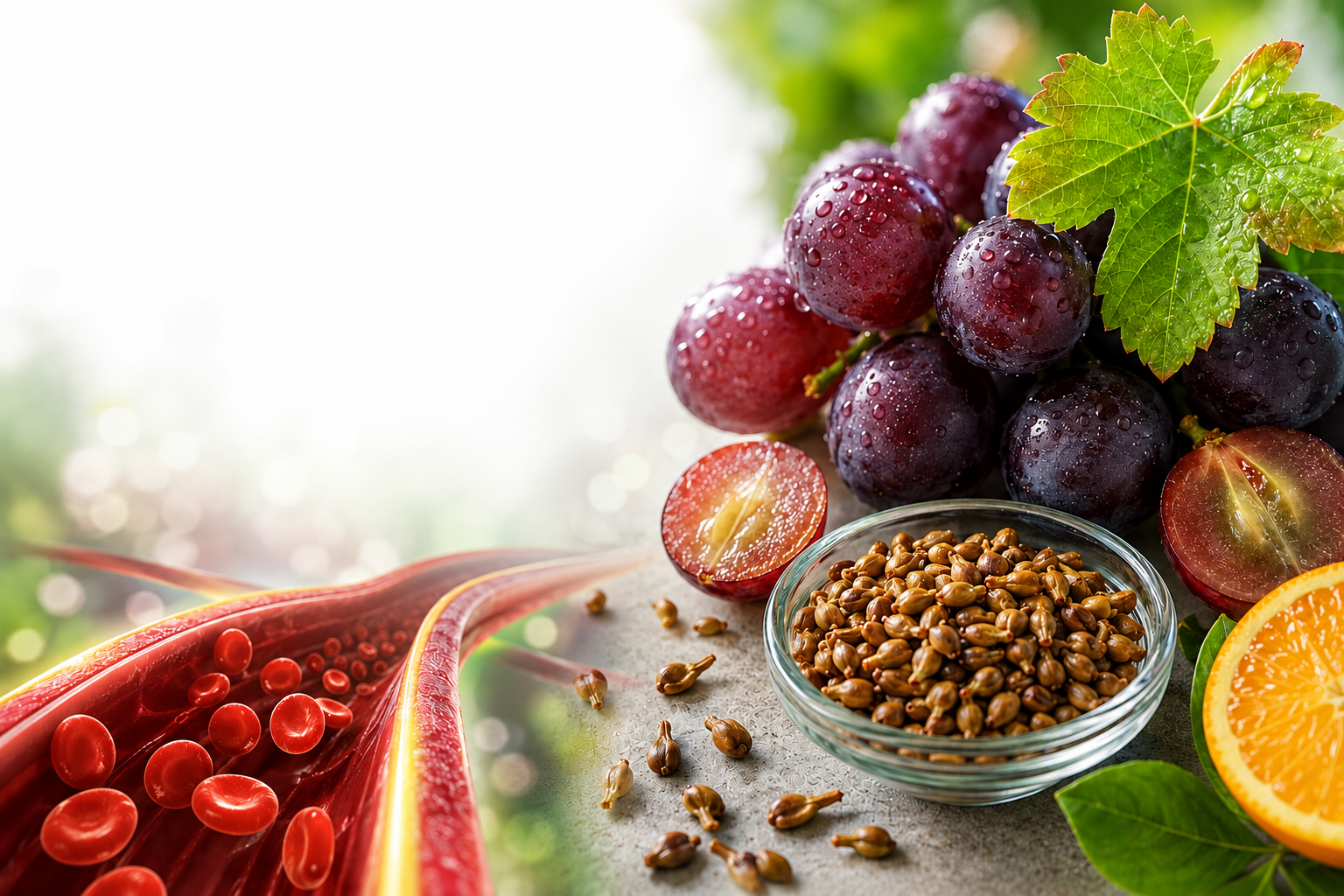
Bioflavonoids, Grape Seed Extract, and Vascular Health
Your circulatory system is an extraordinary transport network.
Arteries, veins, and tiny capillaries continuously deliver oxygen and nutrients throughout the body while carrying metabolic waste away from tissues.
At the center of this system is the vascular endothelium—the thin layer of cells lining the inside of blood vessels.
Healthy blood vessels must be able to respond appropriately to changes in blood flow, pressure, activity, temperature, and metabolic demand.
Over time, vascular function can be influenced by many factors, including:
- Blood pressure
- Blood glucose
- Smoking
- Physical inactivity
- Diet
- Oxidative stress
- Inflammation
- Cholesterol levels
- Aging
- Genetics
This is why cardiovascular health is best supported through an overall lifestyle rather than a single nutrient or supplement.
What Are Bioflavonoids?
Bioflavonoids—more commonly called flavonoids—are a large family of naturally occurring plant compounds.
They are found in foods such as:
- Berries
- Citrus fruits
- Grapes
- Apples
- Tea
- Cocoa
- Herbs
- Many vegetables
Plants use these compounds for functions including pigmentation, signaling, and protection from environmental stress.
In human nutrition, flavonoids have attracted considerable research interest because they can interact with antioxidant, inflammatory, vascular, and cell-signaling pathways.
It is important, however, not to describe them simply as tiny antioxidants circulating through the bloodstream neutralizing free radicals one by one.
Their biological effects are much more complex.
What Are Proanthocyanidins?
One important subgroup of flavonoids is the proanthocyanidins.
These compounds are found in foods including:
- Grapes
- Berries
- Cocoa
- Apples
- Certain nuts
Grape seeds are particularly rich in proanthocyanidins, which is why standardized grape seed extract is commonly used in dietary supplements.
Some preparations contain compounds often referred to as oligomeric proanthocyanidins, or OPCs.
Researchers have investigated grape seed extracts for possible effects on cardiovascular physiology, oxidative stress, and vascular function.
Results are interesting, but they should be interpreted carefully.
The Endothelium: Your Blood Vessels' Active Lining
Blood vessels are not simply passive pipes.
The endothelial cells lining them actively participate in regulating vascular tone, inflammation, clotting, and blood flow.
One important signaling molecule produced by the endothelium is nitric oxide.
Nitric oxide helps blood vessels relax when appropriate, supporting normal vascular function.
Factors such as smoking, high blood pressure, diabetes, aging, and poor metabolic health can impair endothelial function.
Diet and physical activity can help support the environment in which normal endothelial signaling occurs.
Grape Seed Extract and Vascular Function
Several human studies have investigated whether grape seed extract may influence blood pressure or other markers of vascular health.
Some trials and reviews have reported modest improvements in certain measures, particularly in specific populations or at particular doses.
However, the evidence is not strong enough to say that grape seed extract universally:
- Lowers blood pressure
- Restores arterial elasticity
- Repairs damaged blood vessels
- Prevents cardiovascular disease
A more accurate conclusion is:
Grape seed-derived proanthocyanidins are biologically active plant compounds being studied for possible cardiovascular and vascular effects.
That is promising without overstating what has been proven.
What About Collagen and Elastin?
Blood-vessel walls contain structural proteins, including collagen and elastin.
Collagen contributes strength.
Elastin contributes flexibility.
Laboratory research has explored interactions between proanthocyanidins and connective-tissue proteins.
But this does not mean that taking grape seed extract has been proven to directly strengthen arterial collagen or prevent elastin breakdown in people.
Those claims move beyond what most clinical evidence can establish.
A better approach is to recognize that vascular structure depends on many factors, including:
- Blood pressure control
- Nutrition
- Physical activity
- Smoking status
- Metabolic health
- Genetics
- Aging
No single antioxidant can replace those foundations.
Vitamin C and Vascular Health
Vitamin C is an essential nutrient with several important physiological roles.
One of its best-established functions is its involvement in collagen synthesis.
Vitamin C is required for enzymes involved in stabilizing collagen structure.
It also participates in antioxidant chemistry and can help regenerate other antioxidant molecules under certain conditions.
Good food sources include:
- Citrus fruits
- Kiwi
- Berries
- Bell peppers
- Broccoli
- Tomatoes
- Brussels sprouts
Adequate vitamin C is important for normal connective-tissue health.
But taking very large doses does not automatically create stronger blood vessels.
The goal is nutritional adequacy, not megadosing.
Do Vitamin C and Grape Seed Extract Work Better Together?
You may see claims that vitamin C and grape seed extract form a uniquely powerful antioxidant combination.
There is a reasonable biological basis for studying combinations of antioxidants and polyphenols because antioxidant systems interact with one another.
However, evidence supporting a specific clinically meaningful synergy between vitamin C and grape seed extract in humans is limited.
It is therefore better to say:
Vitamin C and grape-derived polyphenols participate in different but potentially complementary biological pathways.
That is more scientifically defensible than claiming that grape seed compounds routinely "recycle" vitamin C in a way that delivers superior vascular protection.
Antioxidants: More Than Free-Radical Scavengers
Oxidative stress occurs when reactive molecules and antioxidant defenses become imbalanced.
Historically, antioxidants were often described as molecules that simply neutralize free radicals.
Modern biology has revealed a more complicated picture.
Plant polyphenols may influence:
- Cell signaling
- Gene expression
- Enzyme activity
- Inflammatory pathways
- Endothelial signaling
Some of their effects may occur at concentrations too low for them to function primarily as direct free-radical scavengers.
This is one reason whole foods rich in plant compounds remain so interesting.
Their benefits may arise from complex biological interactions rather than one simple antioxidant mechanism.
Supporting Microvascular Health
The smallest blood vessels—capillaries and other microvessels—play important roles in exchanging oxygen, nutrients, hormones, and metabolic products between blood and tissues.
Microvascular health is influenced by many of the same factors that affect larger blood vessels.
Important foundations include:
- Regular physical activity
- Healthy blood pressure
- Blood-glucose control
- Avoiding smoking
- Good sleep
- Nutrient-dense foods
- Cardiovascular risk management
Some plant polyphenols may influence vascular signaling, but supplements should not be presented as substitutes for these fundamentals.
Three Practical Ways to Support Vascular Health
The most effective cardiovascular strategies are often surprisingly familiar.
- Eat More Flavonoid-Rich Foods
Instead of thinking only about grape seed supplements, start with food.
Include:
- Blueberries
- Blackberries
- Raspberries
- Grapes
- Citrus fruits
- Apples
- Leafy greens
- Green or black tea
- Cocoa-rich foods in appropriate portions
These foods provide flavonoids alongside fiber, vitamins, minerals, and other phytochemicals.
- Move Every Day
Regular physical activity supports vascular function through multiple pathways.
Aerobic activities can include:
- Walking
- Cycling
- Swimming
- Hiking
- Dancing
Resistance training is valuable too.
Exercise influences blood pressure, insulin sensitivity, endothelial signaling, cardiovascular fitness, and overall metabolic health.
Movement remains one of the most powerful evidence-based strategies for cardiovascular health.
- Know Your Major Cardiovascular Risk Factors
Supplements often receive more attention than the factors that matter most.
Know your:
- Blood pressure
- Blood lipids
- Blood glucose
- Smoking status
- Physical activity level
- Family history
If these factors are abnormal, addressing them with appropriate lifestyle and medical care is much more important than relying on an antioxidant supplement.
What About Grape Seed Supplements?
A standardized grape seed extract may be a reasonable nutritional supplement for some adults.
But supplement quality and formulation matter.
If considering one, look for:
- Clearly identified grape seed extract
- Standardization information
- Transparent dosing
- Reputable manufacturing
- Appropriate third-party quality testing where available
Avoid products promising to:
- Reverse cardiovascular disease
- Clean arteries
- Repair damaged blood vessels
- Cure hypertension
- Replace cardiovascular medication
Those claims are not responsible.
Important Medication Considerations
Botanical supplements can interact with medications.
People taking:
- Anticoagulants
- Antiplatelet medications
- Blood-pressure medications
- Multiple cardiovascular drugs
should discuss grape seed extract or other concentrated botanical supplements with a qualified healthcare professional before using them.
Pregnant or breastfeeding individuals and people preparing for surgery should also seek professional guidance.
The WonderfulLife Bottom Line
Flavonoids and proanthocyanidins are fascinating components of plant nutrition.
Grape seed extract has attracted legitimate scientific interest because of its high concentration of proanthocyanidins and possible interactions with vascular physiology.
Vitamin C also plays a well-established role in normal collagen formation and antioxidant biology.
But vascular health is not created by one supplement.
The strongest foundations remain:
Eat a plant-rich diet. Move regularly. Maintain healthy blood pressure. Protect metabolic health. Avoid smoking. Sleep well. Know your cardiovascular risk factors.
Supplements can complement those foundations when appropriate.
They should never distract from them.
The real goal is not simply stronger arteries.
It is preserving healthy circulation so every part of the body continues receiving the oxygen and nutrients it needs throughout life.
Scientific References & Sources
- Bagchi, D., et al. (2000). Free radicals and grape seed proanthocyanidin extract: Importance in human health and disease prevention. Toxicology, 148(2–3), 187–197.
- Carr, A. C., & Maggini, S. (2017). Vitamin C and immune function. Nutrients, 9(11), 1211.
- Sano, A., et al. (2007). Proanthocyanidin-rich grape seed extract lowers blood pressure and heart rate in healthy subjects. Journal of Nutritional Science and Vitaminology, 53(2), 174–182.
4. Vinson, J. A., et al. (2002). Vascular effects of wine and grape seed proanthocyanidins. *Bio
Factors*, 17(1–4), 203–207.
Medical & Nutritional Disclaimer
The information provided on WonderfulLife.ca is for educational, informational, and general wellness purposes only and is not intended as medical advice, diagnosis, or treatment.
Cardiovascular disease, hypertension, circulation problems, and vascular disorders require appropriate professional evaluation and treatment.
Dietary supplements, including grape seed extract, should not be used as substitutes for prescribed cardiovascular medications or medical care.
Botanical supplements may interact with anticoagulant, antiplatelet, blood-pressure, and other medications.
Always consult with a physician, pharmacist, Registered Dietitian, or other qualified healthcare professional before beginning a new supplement, particularly if you have cardiovascular disease, take medication, are pregnant or breastfeeding, or are preparing for surgery.
Never disregard professional medical advice or delay seeking care because of information you have read on this website.
Credits
Author: WonderfulLife Editorial Team Editorial Assistance: Gemini Published For: WonderfulLife.ca




WonderfulLife Community
Join the Conversation