
Movement for Longevity: Protecting Joint Health and Mobility Beyond 50
One of the greatest benefits of staying healthy as we age is something remarkably practical:
The freedom to move.
Walking comfortably, climbing stairs, gardening, traveling, exercising, playing with grandchildren, and simply getting up from a chair all depend on a remarkably complex musculoskeletal system.
At the center of that system are our joints.
Where bones meet, structures including articular cartilage, synovial fluid, ligaments, tendons, muscles, and underlying bone work together to provide stability while allowing movement.
Protecting those structures becomes increasingly important as we get older.
But healthy aging does not mean protecting our joints by using them less.
In most cases, the opposite is true.
Regular, appropriately scaled movement is one of the most powerful tools we have for preserving mobility.
What Actually Happens to Joints as We Age?
It is tempting to think of joints like mechanical hinges that simply wear out with use.
Human joints are much more sophisticated.
Cartilage is living tissue, and the entire joint responds continually to:
- Mechanical loading
- Physical activity
- Injury
- Muscle strength
- Body composition
- Inflammation
- Genetics
- Metabolic health
- Aging
Age-related changes can occur in cartilage, connective tissue, bone, muscle, and other joint structures.
But aging alone does not guarantee severe joint degeneration or chronic pain.
Many people remain remarkably mobile throughout later life.
Osteoarthritis Is More Than “Worn-Out Cartilage”
Osteoarthritis is sometimes described as simple “wear and tear.”
Modern research paints a more complex picture.
Osteoarthritis can involve changes in:
- Articular cartilage
- Subchondral bone
- Synovium
- Ligaments
- Muscles
- Other structures surrounding the joint
Previous injury, genetics, body weight, muscle weakness, joint mechanics, age, and other factors can influence risk.
This matters because it changes how we think about prevention.
The goal is not simply to prevent cartilage from being “used up.”
The goal is to maintain a strong, capable musculoskeletal system.
Three Pillars of Long-Term Joint Health
For most adults, maintaining mobility beyond 50 rests on three broad foundations:
Movement. Strength. Recovery and nutrition.
- Keep Moving
One unusual feature of articular cartilage is that it does not contain its own network of blood vessels.
Instead, movement and mechanical loading contribute to the exchange of fluid and nutrients within the cartilage environment.
This is one reason complete inactivity is not a good strategy for protecting healthy joints.
Appropriate movement also supports:
- Muscle strength
- Balance
- Coordination
- Bone health
- Cardiovascular fitness
- Metabolic health
- Confidence in everyday movement
The best activity is one you can perform consistently and comfortably.
Low-Impact Cardiovascular Exercise
People with joint discomfort sometimes assume they should avoid cardiovascular exercise.
Often, activities can simply be modified.
Joint-friendly options may include:
- Walking
- Cycling
- Swimming
- Water exercise
- Elliptical training
- Rowing, when appropriate
“Low impact” does not mean “low benefit.”
These activities can provide meaningful cardiovascular conditioning while allowing exercise intensity to be adjusted to individual ability.
Strength Training May Be Even More Important
Strong muscles help support and control joints.
For example, muscles surrounding the hips and knees contribute to:
- Stability
- Balance
- Shock absorption
- Movement control
- Everyday functional capacity
Useful strength exercises can include:
- Sit-to-stands
- Squats adapted to ability
- Step-ups
- Hip hinges
- Calf raises
- Rows
- Resistance-band exercises
- Weight training
The appropriate exercise depends on health, experience, mobility, and any existing joint condition.
The objective is not to lift the heaviest weight possible.
It is to remain strong enough for life.
Progressive Loading Matters
Muscles adapt when they are challenged.
Doing exactly the same easy exercise indefinitely may eventually provide less stimulus.
Progression might mean:
- Adding a small amount of resistance
- Performing another repetition
- Improving range of motion
- Increasing walking distance
- Improving movement control
- Gradually increasing exercise difficulty
Progress should be gradual.
Pain is not a requirement for progress.
- Support the Structures Around Your Joints
Healthy joints do not work alone.
Muscles, tendons, ligaments, and bones all contribute to movement.
That means joint health also depends on overall nutritional adequacy.
Important nutritional foundations include:
- Adequate protein
- Fruits and vegetables
- Whole grains
- Healthy fats
- Appropriate calcium intake
- Adequate vitamin D
- Sufficient overall energy intake
No single “joint nutrient” can compensate for an otherwise poor diet.
Protein and Musculoskeletal Health
Protein provides amino acids used throughout the musculoskeletal system.
Maintaining adequate protein intake becomes particularly important as we age because preserving muscle helps maintain:
- Strength
- Balance
- Mobility
- Physical independence
Good protein sources include:
- Fish
- Eggs
- Poultry
- Greek yogurt
- Cottage cheese
- Tofu
- Beans
- Lentils
- Other protein-rich foods
The combination of adequate protein and resistance exercise is especially important for maintaining muscle.
What About Collagen?
Collagen is an important structural protein found in cartilage, tendons, ligaments, skin, and bone.
Hydrolyzed collagen supplements provide amino acids and peptides derived from collagen.
Research has investigated collagen peptides for exercise-related joint discomfort and osteoarthritis symptoms.
Some studies have reported improvements in certain measures of joint discomfort or function.
However, it is important to keep the claim in perspective.
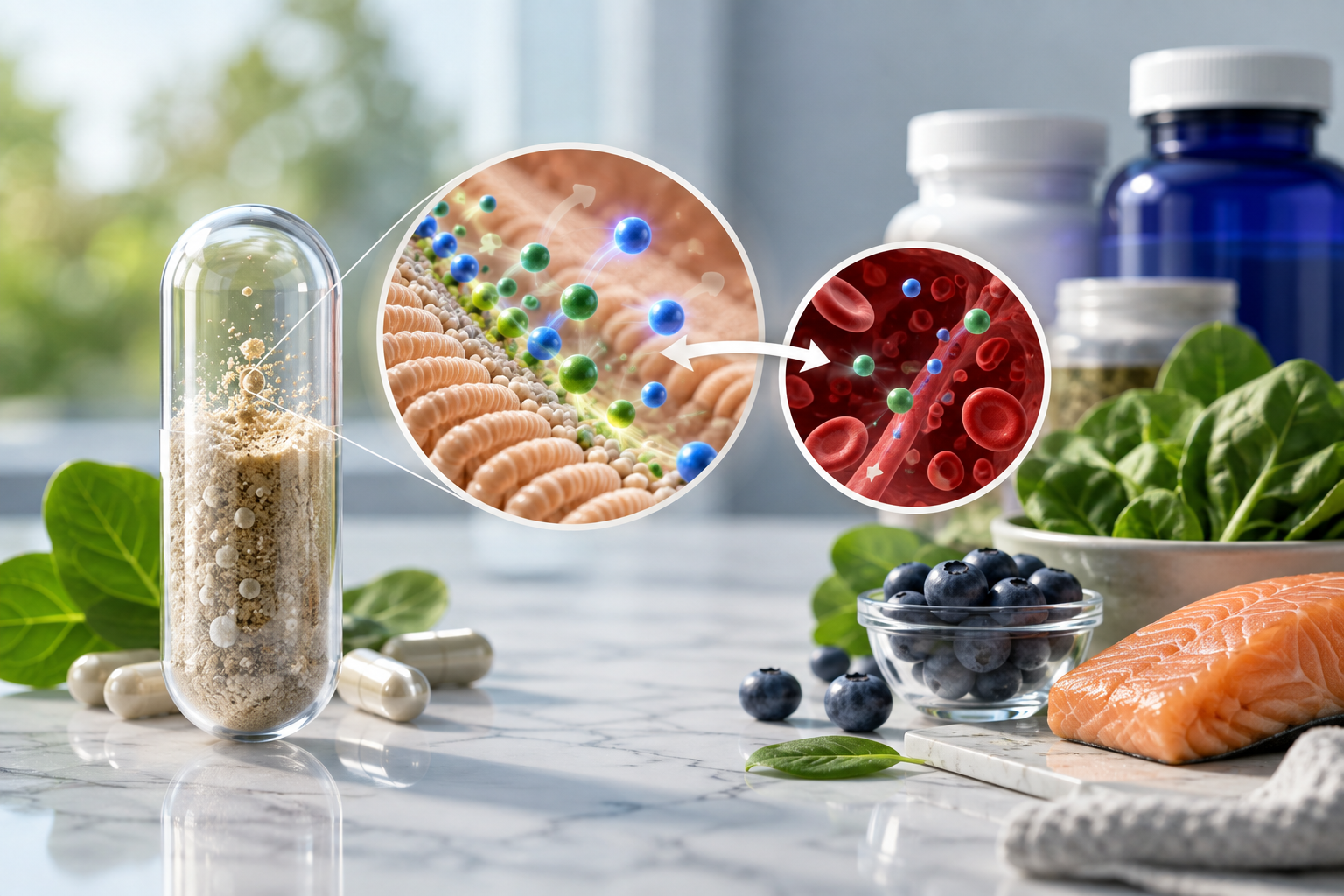
Taking collagen does not mean collagen travels directly from the digestive system into the knee and rebuilds damaged cartilage.
Dietary collagen is digested and processed like other proteins, although certain collagen-derived peptides may have biological activity.
Research remains active.
Collagen supplements may be reasonable for some people, but they should be viewed as a potential adjunct—not a replacement for exercise, rehabilitation, adequate protein, or medical treatment.
What About Glucosamine and Chondroitin?
Glucosamine and chondroitin are among the most widely marketed joint supplements.
Both are related to compounds naturally present in cartilage and connective tissue.
Clinical trials, however, have produced mixed results.
Some people with osteoarthritis report symptom improvement.
Other studies have found little or no meaningful benefit.
Differences may depend on:
- Product formulation
- Dose
- Study population
- Severity of osteoarthritis
- Outcome measured
They should therefore not be presented as proven cartilage-rebuilding treatments.
If someone chooses to try them, expectations should be realistic.
What About Curcumin?
Curcumin is a group of compounds found in turmeric.
Clinical studies have investigated standardized curcumin preparations for osteoarthritis-related symptoms.
Some systematic reviews suggest certain formulations may help reduce pain and improve function in some people.
But curcumin is not a cure for arthritis and has not been proven to regenerate damaged cartilage.
Another important consideration is formulation.
Curcumin has relatively low natural bioavailability, and commercial products vary substantially.
It can also interact with medications and may not be appropriate for everyone.
What About Boswellia?
Extracts of Boswellia serrata have also been studied for osteoarthritis symptoms.
Some clinical trials are encouraging, but the evidence base is smaller than for established treatments such as exercise and physical rehabilitation.
Boswellia should therefore be viewed as an optional supplement with emerging evidence rather than a foundational joint-health treatment.
What About Omega-3 Fatty Acids?
EPA and DHA omega-3 fatty acids participate in inflammatory signaling and have well-established nutritional roles.
Food sources include:
- Salmon
- Sardines
- Mackerel
- Herring
- Trout
Omega-3s have been investigated in several inflammatory conditions.
But evidence for routine omega-3 supplementation specifically to prevent ordinary age-related joint degeneration is less certain.
Include omega-3-rich foods as part of a balanced dietary pattern rather than viewing fish oil as a universal joint treatment.
- Maintain Mobility, Balance, and Movement Confidence
Strength is important.
But so are mobility and balance.
A well-rounded movement routine can include:
Strength
Resistance training approximately two or more days each week, adjusted for individual ability.
Aerobic Activity
Walking, cycling, swimming, or another activity you enjoy.
Balance
Exercises such as:
- Single-leg stands when safe
- Heel-to-toe walking
- Tai chi
- Controlled stepping patterns
Mobility
Gentle movement through comfortable ranges of motion.
The objective is not extreme flexibility.
It is maintaining enough mobility to move comfortably through everyday life.
Warm Up Before Demanding Activity
A warm-up can prepare muscles and joints for more demanding movement.
Five to ten minutes might include:
- Easy walking
- Gentle cycling
- Arm circles
- Controlled leg swings
- Bodyweight movements
- Practice repetitions of the activity you are about to perform
Rather than thinking of a warm-up as “forcing synovial fluid into the joints,” think of it as gradually preparing your entire neuromuscular system for greater effort.
Does Hydration Lubricate Your Joints?
Water is essential for normal physiology, and cartilage and synovial fluid contain substantial amounts of water.
Maintaining normal hydration is therefore part of overall health.
But claims that drinking extra water directly “lubricates the joints” or restores depleted synovial fluid are too simplistic.
Your body regulates fluid distribution through complex physiological mechanisms.
Drink enough to maintain normal hydration—especially during exercise and hot weather—but do not expect extra water to treat joint degeneration.
Body Weight and Joint Loading
For people carrying excess body weight, weight management can sometimes meaningfully reduce stress on weight-bearing joints such as the knees.
But this should be approached without shame or oversimplification.
Joint health is influenced by far more than body weight.
Exercise can provide important benefits even without major weight loss.
For someone with knee osteoarthritis and overweight or obesity, combining appropriate exercise with medically appropriate weight management may improve pain and function.
Joint Pain Does Not Always Mean Damage
This is another important concept.
Pain is real.
But the amount of pain someone experiences does not always correspond directly to the amount of structural change visible on an X-ray or MRI.
Pain is influenced by:
- Tissue condition
- Inflammation
- Previous injury
- Nervous-system sensitivity
- Sleep
- Stress
- Muscle strength
- Activity level
- Many other factors
That means experiencing joint pain does not automatically mean movement is causing further damage.
In many musculoskeletal conditions, appropriately prescribed exercise is part of treatment.
When Joint Pain Should Be Evaluated
Seek professional assessment for:
- Significant swelling
- Redness or warmth
- Sudden severe pain
- Inability to bear weight
- Joint locking
- Major instability
- Pain following significant trauma
- Fever accompanying joint symptoms
- Persistent pain that continues to worsen
- Unexplained loss of mobility
These symptoms should not simply be treated with supplements.
A Simple Joint-Healthy Day
Joint care does not have to be complicated.
Morning
Spend a few minutes walking and gently moving after waking.
During the Day
Avoid sitting completely still for many hours.
Stand, walk, or change position periodically.
Exercise
Include a combination of aerobic movement and progressive strength training appropriate for your ability.
Nutrition
Build meals around protein, vegetables, fruit, whole foods, and healthy fats.
Evening
Allow adequate recovery and prioritize sleep.
Then repeat.
The benefits come from consistency.
The WonderfulLife Bottom Line
The goal of joint health is not simply to protect cartilage.
It is to protect your ability to live independently and confidently.
That means maintaining:
Strong muscles. Healthy bones. Capable joints. Good balance. Useful mobility. Cardiovascular fitness. Confidence in movement.
Supplements such as collagen, glucosamine, chondroitin, curcumin, Boswellia, and omega-3s may have a role for some individuals.
But none replaces the foundations.
Move regularly. Build strength. Eat well. Recover properly. Maintain a healthy body composition when appropriate. Address injuries and persistent pain rather than ignoring them.
Getting older does not mean becoming fragile.
Your body remains capable of adapting to movement and training throughout life.
The goal is not simply to add years to life.
It is to preserve the strength and mobility that allow you to enjoy those years.
Scientific References & Sources
- Henrotin, Y., Lambert, C., & Couchourel, D. (2011). Nutraceuticals: Do they represent a new era in the management of osteoarthritis? Annals of the Rheumatic Diseases, 70(1), 29–35.
- Zdzieblik, D., et al. Research examining specific collagen peptides and activity-related knee-joint discomfort. Applied Physiology, Nutrition, and Metabolism.
- Messier, S. P., et al. (2013). Effects of intensive diet and exercise on knee joint loads, inflammation, and clinical outcomes among overweight and obese adults with knee osteoarthritis: The IDEA randomized clinical trial. JAMA, 310(12), 1263–1273.
- Daily, J. W., Yang, M., & Park, S. (2016). Efficacy of turmeric extracts and curcumin for alleviating the symptoms of joint arthritis: A systematic review and meta-analysis of randomized clinical trials. Journal of Medicinal Food, 19(8), 717–729.
Medical & Exercise Disclaimer
The information provided on WonderfulLife.ca is for educational, informational, and general wellness purposes only and is not intended as medical advice, diagnosis, treatment, physical therapy, or individualized exercise advice.
Joint pain and reduced mobility can have many causes, including osteoarthritis, inflammatory arthritis, injury, infection, neurological conditions, and other medical problems.
Exercise recommendations should be adapted to individual health, physical ability, previous injuries, and existing medical conditions.
Dietary supplements including glucosamine, chondroitin, collagen, curcumin, Boswellia, and omega-3 products can cause side effects or interact with medications and may not be appropriate for everyone.
Always consult with a physician, physiotherapist, pharmacist, Registered Dietitian, or other qualified healthcare professional regarding persistent joint symptoms or before beginning a new exercise or supplement program when you have an existing medical condition.
Never disregard professional medical advice or delay seeking care because of information you have read on this website.
Credits
Author: WonderfulLife Editorial Team Editorial Assistance: Gemini Published For: WonderfulLife.ca










WonderfulLife Community
Join the Conversation