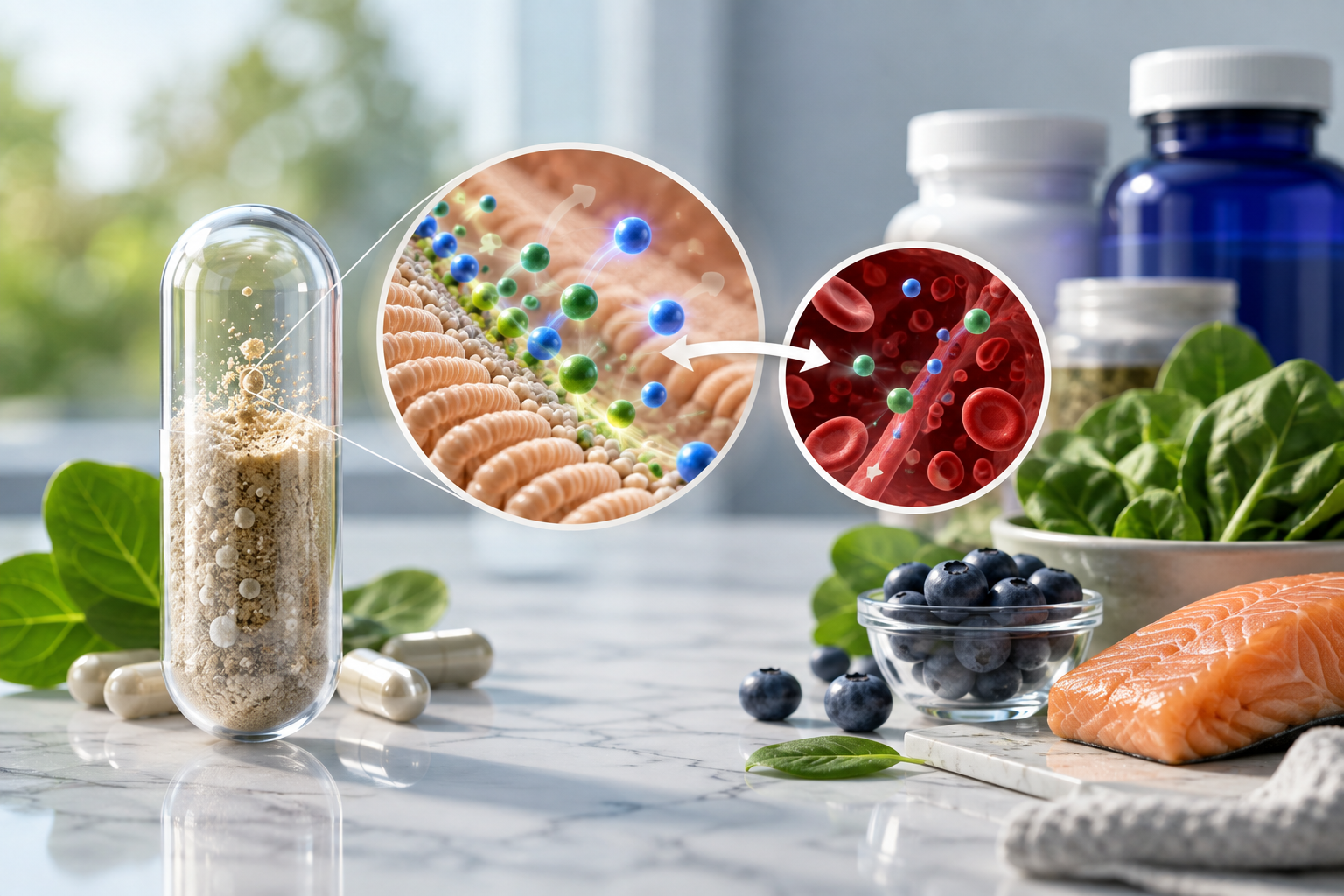
Nutrient Bioavailability: Why Supplement Form and Quality Matter
A familiar saying in nutrition is:
“You are what you eat.”
But from a nutritional-science perspective, the story is more complicated.
What matters is not only what you consume, but also:
- How well a nutrient is released from food or a supplement
- How effectively it is absorbed
- How it is transported
- How it is metabolized
- Whether tissues can use it appropriately
This broader concept is often described through the idea of bioavailability.
What Is Bioavailability?
Bioavailability generally refers to the proportion of a nutrient or compound that becomes available for absorption and physiological use.
That means the number printed on a supplement label tells only part of the story.
Two products may contain the same labeled dose but differ in:
- Chemical form
- Solubility
- Formulation
- Food interactions
- Delivery system
- Manufacturing quality
- Individual absorption
At the same time, higher bioavailability does not automatically mean a supplement is clinically superior.
A product still needs to provide an appropriate nutrient, at an appropriate dose, for a person who actually needs it.
Absorption Is Only One Step
Even after a nutrient is absorbed, several additional processes matter.
The body may:
- Transport it in the bloodstream
- Convert it into another form
- Store it
- Excrete excess amounts
- Direct it toward specific tissues
- Regulate its activity
This is why the phrase “more absorbed = always better” can be misleading.
The best supplement is not necessarily the one that produces the highest blood concentration.
The better question is:
Does the form and dose support the intended nutritional need safely and effectively?
Three Important Factors That Influence Bioavailability
Several variables can affect how well nutrients become available to the body.
- Chemical Form
Many nutrients exist in more than one chemical form.
These forms can differ in solubility, stability, tolerance, metabolism, and absorption.
Minerals
Minerals are commonly provided as salts or complexes.
Examples include:
- Magnesium oxide
- Magnesium citrate
- Magnesium glycinate
- Zinc oxide
- Zinc citrate
- Calcium carbonate
- Calcium citrate
Different forms can behave differently.
For example, magnesium oxide contains a relatively high percentage of elemental magnesium but may have lower fractional absorption than some other magnesium forms.
However, this does not make magnesium oxide useless.
Its suitability depends on:
- Dose
- Intended purpose
- Digestive tolerance
- Formulation
- Cost
- Individual need
Likewise, forms such as citrate or glycinate may offer advantages in certain circumstances, but they should not automatically be described as universally superior.
What Are Chelated Minerals?
Chelated minerals are bound to an organic molecule, often an amino acid or related compound.
This can affect:
- Solubility
- Stability
- Gastrointestinal tolerance
- Absorption
But the term “chelated” by itself does not prove that a product will work better.
The specific mineral, ligand, dose, and evidence all matter.
Vitamins Also Come in Different Forms
Vitamins may also exist in multiple chemical forms.
Examples include:
- Folic acid
- 5-methyltetrahydrofolate (5-MTHF)
- Cyanocobalamin
- Methylcobalamin
- Various forms of vitamin E
These forms may differ in metabolism and stability.
Are “Active” Vitamins Always Better?
Not necessarily.
Terms such as active, methylated, or coenzyme form are often used in supplement marketing.
Some vitamin forms are indeed closer to compounds used directly in metabolism.
But the body also possesses sophisticated systems for converting many common dietary vitamin forms into biologically useful compounds.
For example, folic acid and 5-MTHF differ in metabolism, but that does not mean everyone requires 5-MTHF.
Similarly, methylcobalamin is a physiologically relevant form of vitamin B12, but other forms of B12 can also be effective.
The most appropriate form depends on:
- Nutritional status
- Medical history
- Genetics
- Medication use
- Dose
- Clinical purpose
Genetics and Nutrient Metabolism
Genetic differences can influence nutrient metabolism.
One commonly discussed example involves variants in the MTHFR gene, which participates in folate metabolism.
However, social-media claims about MTHFR often go far beyond the evidence.
Having a common MTHFR variant does not automatically mean someone cannot use folic acid or must take methylated supplements.
Genetic information should be interpreted in appropriate clinical context.
- Food, Fat, and Nutrient Interactions
Nutrients do not enter the body in isolation.
What you eat with a nutrient can influence absorption.
Fat-Soluble Vitamins
Vitamins:
- A
- D
- E
- K
are fat-soluble.
Their absorption depends in part on normal digestion and the formation of lipid-containing structures in the small intestine.
Consuming these nutrients with a meal containing some dietary fat can improve absorption in many circumstances.
This does not mean every vitamin D or vitamin K supplement must be delivered in an oil-filled softgel.
Different formulations can be effective.
Coenzyme Q10
Coenzyme Q10 is a lipid-soluble compound involved in mitochondrial electron transport.
Its absorption can also be influenced by formulation and dietary fat.
Various delivery systems are used to improve its solubility and uptake.
Again, the important point is not that one delivery format is always superior.
It is that formulation can matter for compounds with limited water solubility.
Nutrients Can Influence One Another
Certain nutrients interact during absorption or metabolism.
Examples include:
Vitamin C and Iron
Vitamin C can improve absorption of non-heme iron from plant foods.
Vitamin D and Calcium
Vitamin D plays an important role in calcium absorption and calcium homeostasis.
Minerals Competing for Absorption
High doses of some minerals can interfere with absorption of others under certain conditions.
This is one reason megadosing individual nutrients without a clear reason can sometimes create unintended consequences.
Vitamin K2 and Calcium: A More Nuanced View
You may hear that vitamin K2 “directs calcium into bones and away from arteries.”
That is an appealing explanation, but it oversimplifies the biology.
Vitamin K is required for the activation of several vitamin-K-dependent proteins involved in:
- Blood clotting
- Bone metabolism
- Other physiological processes
Research continues into whether specific forms of vitamin K influence cardiovascular calcification or bone outcomes.
The evidence is still developing.
It is therefore more accurate to say that vitamin K participates in proteins involved in calcium-related physiology rather than claiming it acts like a traffic controller for calcium.
- Disintegration and Dissolution
For many tablets and capsules, the nutrient must first be released from the dosage form before it can be absorbed.
Disintegration
Disintegration refers to the physical breakdown of a tablet or capsule.
Dissolution
Dissolution refers to the process by which compounds go into solution.
These are important quality characteristics because a dosage form that fails to release its ingredients appropriately may not perform as intended.
However, disintegration and dissolution do not automatically equal bioavailability.
A tablet can dissolve appropriately and still contain a nutrient form that is poorly absorbed.
Conversely, some nutrients do not require rapid dissolution to be nutritionally useful.
Do Tablets Pass Through the Body Intact?
Claims that poorly made supplements routinely pass through the digestive tract completely intact are often exaggerated.
Manufacturing problems can occur, which is why appropriate disintegration and dissolution testing matter.
But consumers should not assume that tablets in general fail to break down.
A properly manufactured product should meet appropriate specifications for its dosage form.
Quality Starts With Manufacturing
Bioavailability is only one aspect of supplement quality.
Consumers should also care about:
- Identity
- Purity
- Potency
- Contaminant control
- Stability
- Label accuracy
- Batch consistency
- Traceability
A theoretically highly bioavailable nutrient provides little value if the product is contaminated or does not contain what the label claims.
Current Good Manufacturing Practices
Dietary supplements in regulated markets are subject to manufacturing requirements.
In the United States, dietary-supplement manufacturers operate under Current Good Manufacturing Practice requirements in 21 CFR Part 111.
These rules address areas including:
- Ingredient identity
- Specifications
- Manufacturing controls
- Quality-control procedures
- Packaging
- Labeling
- Records
Some companies may voluntarily adopt additional quality systems or procedures used in pharmaceutical manufacturing.
But terms such as “pharmaceutical-grade supplement” should be interpreted carefully.
It is not a universal regulatory category guaranteeing superior health outcomes.
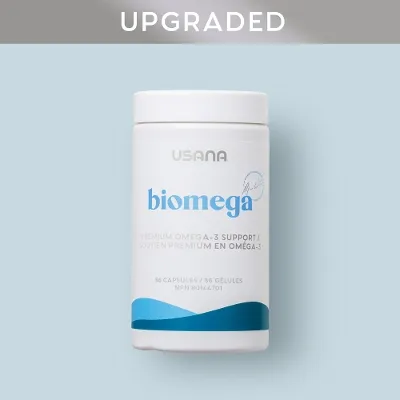
Omega-3 Purification: What Matters
Omega-3 oils deserve special attention because they can contain environmental contaminants and are susceptible to oxidation.
Manufacturers may use several purification techniques.
Molecular distillation is one possible method.
But it is not the only acceptable purification process.
The important questions are:
- Is the raw material appropriately sourced?
- Is the oil tested for heavy metals?
- Is it tested for PCBs and other contaminants?
- Is oxidation controlled?
- Does the finished product meet appropriate purity specifications?
Testing matters more than a single marketing phrase.
Freshness Matters for Oils
Polyunsaturated fatty acids can oxidize.
That is why high-quality omega-3 products require careful:
- Processing
- Packaging
- Storage
- Antioxidant protection
- Shelf-life evaluation
A quality omega-3 supplement should be evaluated for oxidation as well as contaminant levels.
What Does Third-Party Testing Actually Mean?
Third-party testing can provide valuable independent verification.
But not all programs test the same things.
A third-party laboratory may evaluate:
- Identity
- Potency
- Purity
- Contaminants
- Microbiology
- Disintegration
- Other specifications
The presence of an independent test is useful only if you understand what was actually tested.
USP Standards
The United States Pharmacopeia develops standards for medicines, dietary supplements, and ingredients.
USP standards can address:
- Identity
- Strength
- Quality
- Purity
- Performance characteristics
Some products also participate in specific USP verification programs.
It is important to distinguish between:
using a USP analytical standard
and
being independently verified through a USP program.
They are not the same thing.
ISO 17025 Accreditation
ISO/IEC 17025 applies to the competence of testing and calibration laboratories.
An ISO 17025-accredited laboratory has demonstrated competence for specified testing activities.
But laboratory accreditation does not automatically guarantee that every supplement tested by that laboratory is superior.
It tells you something about the laboratory—not necessarily everything about the finished product.
Stability Through Expiration
A high-quality manufacturer should understand how a product changes over time.
Stability programs can help determine whether a supplement remains within specifications during its labeled shelf life when stored as directed.
This can involve evaluating:
- Potency
- Moisture
- Physical appearance
- Microbiological quality
- Other product-specific characteristics
Some formulations use justified overages to account for predictable nutrient degradation.
But consumers should avoid interpreting any single certification as an automatic guarantee of potency through expiration.
The manufacturer's own stability program remains important.
How to Evaluate a Supplement More Intelligently
Instead of asking only:
“How many milligrams does this contain?”
ask a broader set of questions.
- What Form Is the Nutrient?
Is the form clearly identified?
Does evidence support that form for the intended use?
- What Is the Actual Dose?
Does the label specify the active nutrient rather than only the total weight of a blend?
- Is the Manufacturer Transparent?
Can you identify:
- Ingredients
- Dose
- Manufacturing information
- Quality standards
- Testing practices
- Is There Independent Verification?
If a certification appears on the label, find out what it actually verifies.
- Does the Supplement Solve a Real Need?
This may be the most important question of all.
A beautifully formulated supplement is unnecessary if you already obtain enough of that nutrient and have no clinical reason to take more.
Food Bioavailability Matters Too
Bioavailability is not just a supplement issue.
Foods also influence nutrient absorption.
For example:
- Vitamin C can improve iron absorption from plant foods.
- Dietary fat can improve carotenoid absorption from vegetables.
- Cooking can increase the bioavailability of some compounds while decreasing others.
- Phytates and oxalates can reduce absorption of certain minerals.
This is one reason nutrition cannot be reduced to numbers on labels.
The food matrix matters.
More Bioavailable Is Not Always Better
Suppose one formulation produces twice the blood concentration of another.
Does that automatically mean it is twice as healthy?
No.
Nutrients often have regulated concentration ranges.
Very high exposure may provide no additional benefit and, for some nutrients, can increase risk.
The correct objective is:
Enough of the right nutrient in an appropriate form—not the maximum possible absorption.
The WonderfulLife Bottom Line
Supplement quality is more sophisticated than comparing milligrams.
A useful supplement should bring together several things:
Appropriate nutrient form. Appropriate dose. Reliable manufacturing. Purity. Potency. Stability. Evidence. A genuine nutritional need.
Bioavailability matters.
But it belongs within a larger quality picture.
The best supplement is not necessarily the one with the most exotic chemistry, the most impressive marketing term, or the highest dose.
It is the one that delivers what it claims, in a form your body can use, at a dose appropriate for you.
And whenever possible, supplements should complement—not replace—the nutrient-rich foods that form the foundation of good nutrition.
Scientific References & Sources
- Liu, Z., et al. (2022). Bioavailability and delivery systems for fat-soluble vitamins and bioactive lipids. Critical Reviews in Food Science and Nutrition, 62(15), 4120–4135.
- Evidence concerning magnesium salt and chelate absorption varies by formulation, dose, population, and study design. Claims of universal superiority should be interpreted cautiously.
- United States Pharmacopeia. Dietary supplement quality, disintegration, dissolution, identity, and performance standards, including relevant USP–NF chapters.
- Scaglione, F., & Panzavolta, G. (2014). Folate, folic acid and 5-methyltetrahydrofolate: Are they identical? Xenobiotica, 44(5), 480–488.
Medical & Nutritional Disclaimer
The information provided on WonderfulLife.ca is for educational, informational, and general wellness purposes only and is not intended as medical advice, diagnosis, or treatment.
Supplement needs vary considerably between individuals.
Certain nutrients can interact with medications or become harmful at excessive doses.
People with kidney disease, liver disease, malabsorption disorders, pregnancy, gastrointestinal conditions, genetic disorders affecting nutrient metabolism, or those taking prescription medications may require individualized guidance.
Always consult with a physician, pharmacist, Registered Dietitian, or other qualified healthcare professional before beginning a new supplement or substantially changing your supplement routine.
Never disregard professional medical advice or delay seeking care because of information you have read on this website.
Credits
Author: WonderfulLife Editorial Team Published For: WonderfulLife.ca









WonderfulLife Community
Join the Conversation