
Mitochondrial Health: How Your Cells Produce Energy and Adapt With Age
At the heart of human physiology is a fundamental requirement:
Energy.
Every heartbeat, muscle contraction, nerve impulse, repair process, and metabolic reaction depends on a continuous supply of usable cellular energy.
Much of that energy is produced inside structures called mitochondria.
Often described as the “powerhouses of the cell,” mitochondria convert energy from nutrients into adenosine triphosphate (ATP), the chemical energy currency used throughout the body.
But mitochondria do far more than generate ATP.
They also participate in:
- Cellular signaling
- Calcium regulation
- Oxidative balance
- Programmed cell death
- Metabolic adaptation
- Responses to exercise and stress
That makes mitochondrial health an important part of healthy aging.
What Mitochondria Actually Do
Mitochondria take energy derived from carbohydrates, fats, and amino acids and help convert it into ATP.
This process depends on a coordinated sequence of metabolic pathways.
Inside the inner mitochondrial membrane is a group of protein complexes known as the electron transport chain.
Electrons are transferred through this chain, creating a proton gradient.
That gradient drives an enzyme called ATP synthase, which produces ATP.
It is one of the most elegant energy-conversion systems in biology.
Mitochondria and Aging
Mitochondrial function changes with age.
Researchers have identified mitochondrial dysfunction as one of the biological processes associated with aging.
Age-related changes may involve:
- Reduced mitochondrial efficiency
- Changes in mitochondrial number
- Altered quality control
- Changes in mitochondrial DNA
- Reduced ability to respond to stress
- Changes in biogenesis and turnover
But mitochondrial aging does not occur in isolation.
Healthy aging is influenced by many interconnected processes involving:
- Genetics
- Physical activity
- Nutrition
- Cardiovascular health
- Hormonal regulation
- Sleep
- Immune function
- Metabolic health
It is therefore too simplistic to blame ordinary fatigue or reduced stamina on “weak mitochondria.”
Those symptoms can have many possible causes.
Three Foundations of Mitochondrial Function
- ATP Production and the Electron Transport Chain
The electron transport chain depends on numerous proteins, enzymes, vitamins, minerals, and cofactors.
Several B vitamins play important roles because they are required to form molecules used in energy metabolism.
For example:
- Riboflavin contributes to FAD
- Niacin contributes to NAD
- Thiamine participates in carbohydrate metabolism
- Pantothenic acid contributes to coenzyme A
Coenzyme Q10 also plays a central role.
Coenzyme Q10
CoQ10 functions as an electron carrier within the inner mitochondrial membrane.
It helps transfer electrons between components of the electron transport chain.
The body normally produces CoQ10 on its own.
CoQ10 is therefore biologically essential, but that does not mean everyone needs to supplement it.
Supplementation may be useful in certain situations, but the evidence depends on the condition, dose, and individual.
- Reactive Oxygen Species and Oxidative Balance
Mitochondria naturally generate reactive oxygen species, or ROS.
ROS are often portrayed as purely harmful.
That is inaccurate.
At normal levels, reactive oxygen species can act as signaling molecules involved in:
- Cellular adaptation
- Exercise responses
- Immune function
- Gene expression
Problems arise when oxidative activity overwhelms the body's ability to regulate it.
This condition is known as oxidative stress.
Excessive oxidative stress can damage:
- Lipids
- Proteins
- DNA
- Mitochondrial structures
But the solution is not to eliminate all ROS.
Healthy biology depends on balance.
The Body Has Its Own Antioxidant Systems
Cells contain powerful internal antioxidant systems.
These include enzymes such as:
- Superoxide dismutase
- Catalase
- Glutathione peroxidase
These systems work continuously to regulate oxidative activity.
Dietary nutrients also contribute to this environment.
A diet rich in vegetables, fruits, nuts, seeds, whole grains, and other whole foods provides vitamins, minerals, and phytochemicals that support normal antioxidant physiology.
- Mitochondrial Quality Control
Mitochondria are not permanent structures.
Cells continually remodel their mitochondrial networks.
Several processes are involved.
Mitochondrial Biogenesis
Mitochondrial biogenesis refers to the creation of new mitochondrial components and expansion of mitochondrial capacity.
Exercise is one of the most powerful known physiological stimuli for this process.
Mitophagy
Mitophagy is a specialized form of autophagy that helps cells identify and remove dysfunctional mitochondria.
This is part of the cell's quality-control system.
Mitochondrial Fusion and Fission
Mitochondria also continuously merge and divide.
These processes—called fusion and fission—help maintain mitochondrial structure, function, and quality.
Healthy mitochondrial biology depends on a dynamic balance among all of these processes.
Four Practical Ways to Support Mitochondrial Health
The strongest strategies are not exotic.
They are familiar lifestyle habits supported by decades of physiology research.
- Exercise Regularly
Physical activity is one of the most reliable ways to stimulate mitochondrial adaptation.
Aerobic exercise can increase mitochondrial enzyme activity and mitochondrial capacity in skeletal muscle.
Useful activities include:
- Walking
- Cycling
- Swimming
- Running
- Rowing
- Hiking
The intensity does not need to be extreme.
Consistency matters.
What About Zone 2?
Zone 2 training has become popular because moderate-intensity aerobic exercise places substantial demand on oxidative metabolism.
A practical version is exercise at a pace where conversation remains possible.
Zone 2 can be useful for:
- Aerobic conditioning
- Mitochondrial adaptations
- Metabolic health
But it is not uniquely magical.
A well-rounded exercise routine can include:
- Easy aerobic activity
- Moderate-intensity exercise
- Higher-intensity intervals when appropriate
- Resistance training
Different training styles create different adaptations.
- Build and Preserve Muscle
Resistance training is also important for mitochondrial and metabolic health.
Strength training helps:
- Preserve muscle mass
- Improve glucose handling
- Support physical independence
- Maintain metabolic capacity
Muscle is one of the body's major metabolic tissues.
A strong mitochondrial strategy therefore includes both:
Aerobic fitness
and
muscular strength.
- Give the Body Regular Recovery
Recovery is essential for adaptation.
That includes:
- Adequate sleep
- Enough calories
- Sufficient protein
- Hydration
- Rest between challenging exercise sessions
Training is the stimulus.
Recovery is where adaptation takes place.
What About Fasting?
Fasting can influence nutrient-sensing pathways such as:
- AMPK
- mTOR
- insulin signaling
These pathways are connected with cellular metabolism and autophagy.
But it is too strong to say that a 12- to 14-hour overnight fast reliably “switches on mitophagy” in humans.
Most direct mechanistic evidence comes from laboratory and animal studies.
For many healthy adults, a normal overnight period without eating happens naturally.
For example:
Dinner at 7 PM → breakfast at 7 AM
already provides a 12-hour interval.
There is no need to extend fasting aggressively in the name of mitochondrial health.
Who Should Be Careful With Fasting?
Fasting may not be appropriate for:
- Pregnant or breastfeeding individuals
- People with diabetes using glucose-lowering medication
- People with eating disorders
- Underweight individuals
- People recovering from illness
- Anyone taking medications that require food
Individual context matters.
What About Sauna?
Heat exposure through sauna has been studied for cardiovascular and other health effects.
Heat stress also activates cellular stress-response pathways, including heat-shock proteins.
This is biologically interesting.
However, sauna should not be presented as a proven method for “building mitochondria” or reversing mitochondrial aging.
It may be a useful wellness practice for some people.
It is not essential.
What About Cold Exposure?
Cold exposure can influence:
- Sympathetic nervous-system activity
- Thermogenesis
- Brown adipose tissue
- Metabolic signaling
But evidence that cold showers meaningfully improve mitochondrial longevity in healthy humans is limited.
Cold exposure can also be uncomfortable or unsafe for certain people, especially those with cardiovascular conditions.
You do not need cold plunges to have healthy mitochondria.
Nutrition for Mitochondrial Function
Mitochondria require normal nutritional adequacy.
That includes:
- B vitamins
- Iron
- Magnesium
- Protein
- Essential fatty acids
- Other micronutrients
But nutrient sufficiency is different from supplementation.
If your diet already provides adequate amounts, taking extra does not automatically increase ATP production.
CoQ10
CoQ10 is essential to the electron transport chain.
Supplementation has been studied in:
- Heart failure
- Statin-associated muscle symptoms
- Mitochondrial disorders
- Other clinical settings
Results vary.
CoQ10 can be useful in specific circumstances, but it should not be marketed as a universal “energy supplement.”
Alpha-Lipoic Acid
Alpha-lipoic acid is involved in mitochondrial enzyme systems and has antioxidant properties.
It is also used medically in some regions for specific conditions.
But supplemental alpha-lipoic acid is not required for normal mitochondrial function in healthy people.
It can affect blood glucose and interact with medications.
Use should be individualized.
B-Complex Vitamins
B vitamins are crucial for energy metabolism.
Deficiencies can impair normal physiology.
But B-complex supplements do not automatically provide more energy if your nutritional status is already adequate.
The best approach is:
Correct deficiency when present.
Not:
Take more because mitochondria use B vitamins.
Mitochondrial Health and Food
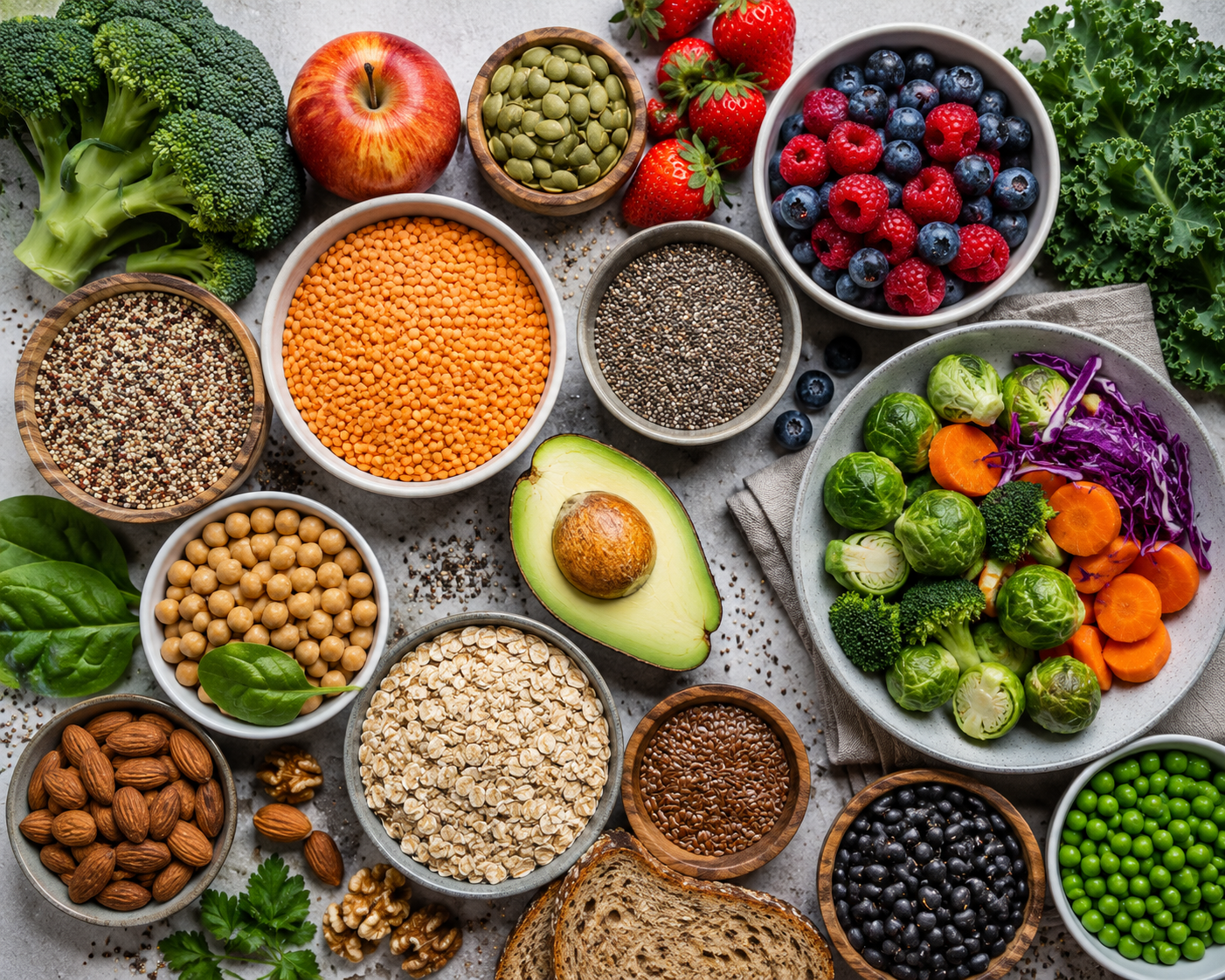
A nutrient-dense dietary pattern can support mitochondrial function through overall metabolic health.
Useful foods include:
- Vegetables
- Fruits
- Whole grains
- Legumes
- Nuts
- Seeds
- Fish
- Eggs
- Dairy or fortified alternatives
- Other quality protein sources
No single “mitochondrial superfood” exists.
The benefit comes from the overall pattern.
Sleep and Mitochondria
Sleep deserves attention too.
Poor sleep can affect:
- Glucose metabolism
- Hormonal regulation
- Exercise performance
- Recovery
- Appetite
A person chasing mitochondrial supplements while sleeping five hours a night is probably focusing on the wrong lever.
The fundamentals matter more.
Don't Blame Every Energy Problem on Mitochondria
Persistent fatigue should not automatically be interpreted as mitochondrial dysfunction.
Fatigue can also result from:
- Anemia
- Thyroid disorders
- Sleep apnea
- Depression
- Medication effects
- Infection
- Nutritional deficiencies
- Cardiovascular disease
- Other medical conditions
If fatigue is persistent or worsening, it deserves appropriate evaluation.
The WonderfulLife Bottom Line
Mitochondria are central to life.
They help turn nutrients into ATP.
They participate in signaling.
They adapt to exercise.
They undergo repair, recycling, and renewal.
But mitochondrial health is not built through one supplement, one fasting window, or one cold shower.
The strongest foundations remain:
Move regularly. Build muscle. Eat a nutrient-dense diet. Sleep enough. Recover properly. Protect cardiovascular and metabolic health.
Supplements may have a role when they address a genuine need.
They should not distract from the habits with the strongest evidence.
The goal is not to “hack” your mitochondria.
It is to create a lifestyle that gives them a reason to stay capable and adaptable throughout life.
Scientific References & Sources
- Sun, N., Youle, R. J., & Finkel, T. (2016). The mitochondrial basis of aging. Molecular Cell, 61(5), 654–666.
- López-Otín, C., et al. (2023). Hallmarks of aging: An expanding universe. Cell, 186(2), 243–278.
- Hood, D. A., et al. (2019). Maintenance of skeletal muscle mitochondria in health, exercise, and aging. Annual Review of Physiology, 81, 19–41.
- Hargreaves, I. P. (2014). Coenzyme Q10 as a therapy for mitochondrial disease. The International Journal of Biochemistry & Cell Biology, 49, 105–111.
Medical, Nutritional & Exercise Disclaimer
The information provided on WonderfulLife.ca is for educational, informational, and general wellness purposes only and is not intended as medical advice, diagnosis, treatment, or an individualized nutrition or exercise prescription.
Persistent fatigue, weakness, exercise intolerance, neurological symptoms, or other unexplained changes in health can have many causes and should not be assumed to result from mitochondrial dysfunction.
Fasting, sauna use, cold exposure, CoQ10, alpha-lipoic acid, and other supplements may not be appropriate for everyone and can interact with medications or medical conditions.
People with cardiovascular disease, diabetes, eating disorders, pregnancy, neurological disorders, mitochondrial disease, kidney or liver disease, or those taking prescription medications should seek individualized professional guidance before adopting significant fasting, thermal-exposure, supplement, or exercise protocols.
Always consult with a physician, pharmacist, Registered Dietitian, or qualified exercise professional before making significant changes to your health routine.
Never disregard professional medical advice or delay seeking care because of information you have read on this website.
Credits
Author: WonderfulLife Editorial Team Editorial Assistance: Gemini Published For: WonderfulLife.ca











WonderfulLife Community
Join the Conversation