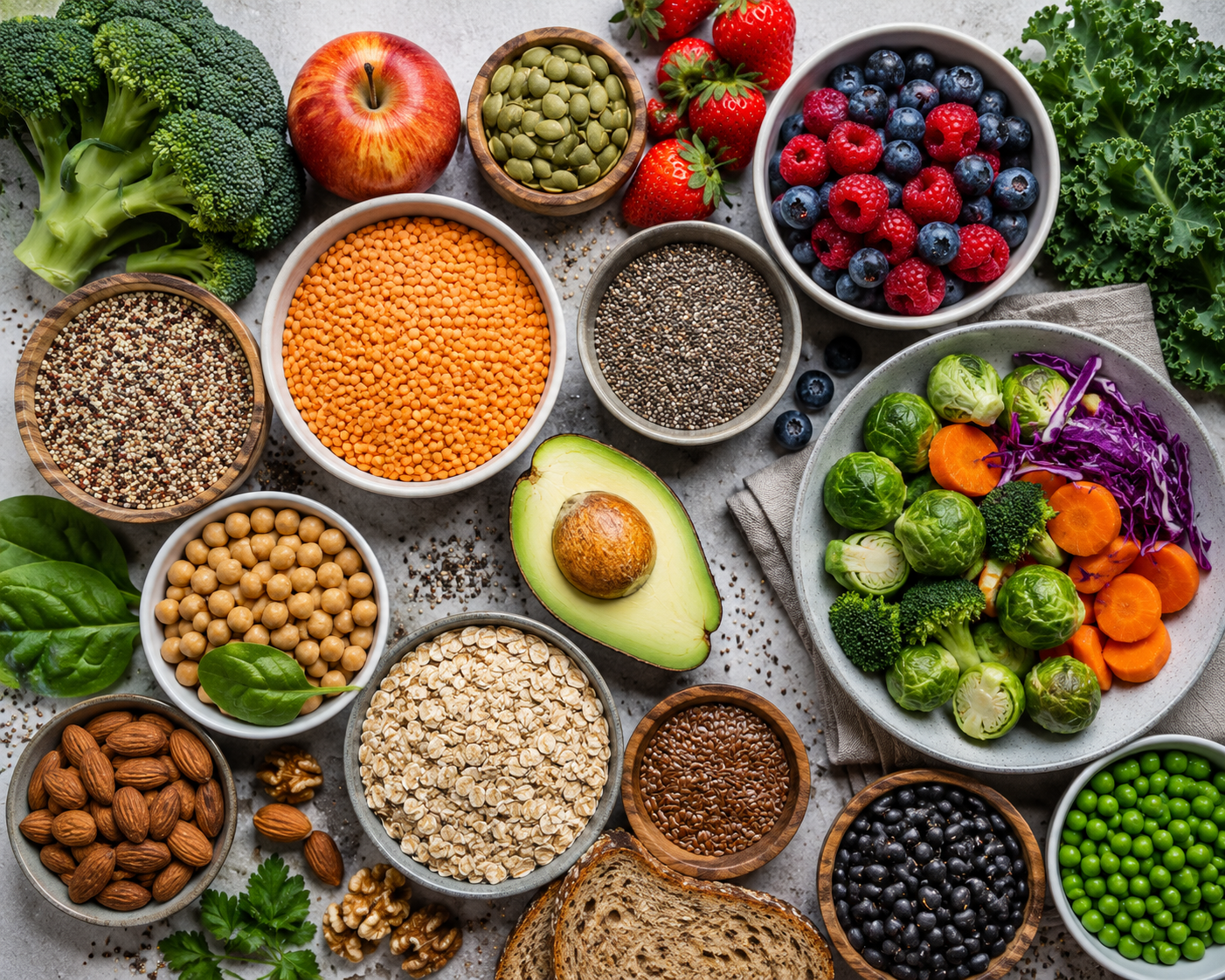
Prebiotics and Fiber: How to Feed Your Gut Microbiome
When people talk about improving gut health, the conversation often begins with probiotics.
Yogurt, kefir, fermented foods, and probiotic supplements have become familiar parts of the wellness landscape.
But probiotics are only one part of a much larger story.
Your digestive tract already contains a vast community of microorganisms collectively known as the gut microbiome.
Rather than focusing only on adding microorganisms from outside the body, another important question is:
What are you feeding the microbes already living there?
That is where dietary fiber and prebiotics become especially interesting.
What Are Prebiotics?
Prebiotics are substances that are selectively utilized by microorganisms in the body and provide a demonstrated health benefit.
Many well-known prebiotics are fermentable carbohydrates or forms of dietary fiber that resist digestion in the upper gastrointestinal tract.
Instead of being completely broken down and absorbed in the small intestine, they reach the large intestine, where certain microorganisms can use them as substrates.
Examples of compounds with established or extensively studied prebiotic properties include:
- Inulin
- Fructooligosaccharides (FOS)
- Galactooligosaccharides (GOS)
- Certain resistant starches
- Other specific fermentable carbohydrates
It is tempting to think of probiotics as the “seeds” and prebiotics as the “fertilizer” in a gut garden.
That analogy can be useful, but the microbiome is considerably more complicated.
Not every probiotic organism permanently colonizes the digestive tract, and different prebiotic compounds can influence different microbial populations.
The important principle is simpler:
What we eat helps shape the nutritional environment of our gut microbiome.
Fiber and Prebiotics Are Not Exactly the Same Thing
The words fiber and prebiotic are sometimes used interchangeably, but they are not identical.
Dietary fiber includes a broad collection of carbohydrates and related substances that resist digestion in the small intestine.
Some fibers are highly fermentable.
Some are minimally fermented.
Some form viscous gels.
Others primarily contribute bulk to stool.
And only certain substrates meet the scientific definition of a prebiotic.
That diversity is one reason eating many different fiber-rich foods can be more useful than searching for one supposedly perfect source.
Insoluble Fiber: Supporting Normal Bowel Function
Insoluble fibers generally do not dissolve readily in water.
They can contribute bulk to stool and help support normal bowel movements.
Common sources include:
- Wheat bran
- Whole grains
- Nuts and seeds
- Vegetable skins
- Many vegetables
You may sometimes hear insoluble fiber described as a “broom” sweeping through the digestive tract.
That image is easy to understand, but physiologically fiber does not literally scrub the intestines.
A better way to think about it is that insoluble fiber contributes physical structure and bulk to intestinal contents and can support normal bowel function.
Soluble Fiber: More Than a Sponge
Soluble fibers dissolve or disperse in water, and some form viscous gels within the digestive tract.
Sources include:
- Oats
- Barley
- Beans
- Lentils
- Apples
- Citrus fruit
- Chia seeds
- Flaxseed
- Psyllium
Certain viscous soluble fibers can slow aspects of digestion and nutrient absorption.
Some have demonstrated benefits for cholesterol management and post-meal glucose responses.
But soluble fibers vary considerably.
Not every soluble fiber behaves the same way, and not every soluble fiber is strongly fermented by gut bacteria.
Fermentable and Prebiotic Fibers: Fuel for Microorganisms
Some dietary carbohydrates reach the colon and become substrates for microbial fermentation.
Foods that can provide fermentable or prebiotic compounds include:
- Garlic
- Onions
- Leeks
- Asparagus
- Chicory
- Oats
- Barley
- Legumes
- Slightly green bananas
- Cooked and cooled potatoes or rice
- Other resistant-starch-containing foods
Different foods provide different combinations of fibers, resistant starches, polyphenols, and other plant compounds.
This is one reason dietary diversity can matter.
Your microbiome does not live on one type of fiber alone.
What Happens When Gut Microbes Ferment Fiber?
When certain microorganisms ferment carbohydrates in the colon, they produce metabolites known as short-chain fatty acids, or SCFAs.
Three of the most extensively studied are:
- Acetate
- Propionate
- Butyrate
These compounds do much more than remain inside the intestinal contents.
They can interact with intestinal cells, receptors, metabolic pathways, and immune signaling systems.
Why Butyrate Gets So Much Attention
Butyrate is particularly interesting because cells lining the colon can use it as an important energy source.
Research also suggests that butyrate participates in processes related to:
- Intestinal barrier function
- Immune signaling
- Cellular metabolism
- Regulation of gene expression
This does not mean that eating a particular prebiotic food automatically “repairs the gut” or eliminates inflammation.
The intestinal barrier and immune system are influenced by many factors.
But microbial fermentation of dietary fiber represents an important connection between what we eat and microbial metabolism.
Fiber, the Microbiome, and Immune Function
The gastrointestinal tract contains a large and sophisticated immune network.
Gut microorganisms and their metabolites interact continuously with this system.
Short-chain fatty acids are among the microbial metabolites being extensively studied for their potential roles in immune regulation.
The relationship is complex.
Rather than saying fiber simply “boosts immunity,” it is more accurate to say that a fiber-rich diet can support the intestinal environment and microbial activity associated with normal immune and metabolic function.
Why Plant Diversity Matters
Eating enough fiber is important.
But there is another useful concept:
Eat different kinds of fiber.
Vegetables, fruits, legumes, whole grains, nuts, seeds, herbs, and spices contain different combinations of fibers and phytochemicals.
Research from projects including the American Gut Project has found associations between greater plant-food diversity and differences in gut microbial diversity.
That does not establish a universal number of plants everyone must eat.
Instead, it supports a practical nutritional principle:
Variety gives your gut microorganisms a wider range of substrates to work with.
Build Your "Plant Points"
You do not need an elaborate tracking system.
Simply challenge yourself to introduce more plant variety across the week.
Vegetables
Try:
- Broccoli
- Spinach
- Carrots
- Onions
- Garlic
- Peppers
- Tomatoes
- Asparagus
- Cabbage
Fruits
Rotate between:
- Apples
- Berries
- Bananas
- Oranges
- Kiwi
- Pears
- Peaches
Whole Grains
Experiment with:
- Oats
- Barley
- Quinoa
- Brown rice
- Buckwheat
- Whole wheat
- Rye
Legumes
Include:
- Chickpeas
- Lentils
- Black beans
- Kidney beans
- Split peas
- Edamame
Nuts and Seeds
Add small amounts of:
- Walnuts
- Almonds
- Chia seeds
- Flaxseed
- Pumpkin seeds
- Sunflower seeds
Herbs and Spices
Don't forget:
- Basil
- Parsley
- Rosemary
- Oregano
- Ginger
- Turmeric
- Cinnamon
The goal isn't to achieve a perfect score.
It's simply to avoid eating the same three or four plants every day.
Three Practical Ways to Increase Fiber
Increasing fiber does not require dramatically changing your diet overnight.
In fact, gradual change is often more comfortable.
- Add Before You Subtract
Instead of beginning with a long list of foods to eliminate, add something.
Add berries to breakfast.
Add lentils to soup.
Add beans to a salad.
Add vegetables to pasta.
Add chia or ground flaxseed to oatmeal.
Small additions can accumulate quickly.
- Increase Fiber Gradually
Suddenly doubling your fiber intake can produce:
- Gas
- Bloating
- Abdominal discomfort
- Changes in bowel habits
Gut microorganisms ferment many fibers, and fermentation naturally produces gases.
If your current diet is relatively low in fiber, increase fiber-rich foods gradually and observe how your body responds.
Tolerance differs considerably between individuals.
- Remember Fluids
Adequate fluid intake is particularly important as dietary fiber increases.
Water helps support normal stool consistency and intestinal function.
You do not need to force enormous quantities of water.
Simply maintain appropriate hydration throughout the day, adjusting for activity, climate, health status, and individual needs.
A Simple High-Fiber Day
Fiber-rich eating does not have to look like a special “gut-health diet.”
Breakfast
Oatmeal + blueberries + chia seeds + walnuts
Lunch
Whole-grain bowl + chickpeas + spinach + tomatoes + cucumber + olive oil
Snack
Apple + almonds
Dinner
Salmon or tofu + roasted vegetables + lentils or barley
Across one ordinary day, you can provide your digestive system with numerous different fibers and plant compounds without purchasing a single specialty gut-health product.
More Fiber Isn't Always Better
Fiber is important, but more is not automatically better.
Some people with gastrointestinal conditions may experience symptoms from particular fermentable carbohydrates.
For example, onions, garlic, legumes, and certain fruits contain carbohydrates that may cause significant symptoms in some people with irritable bowel syndrome.
A temporary, professionally supervised low-FODMAP diet may sometimes be appropriate for specific individuals.
That does not mean these foods are unhealthy.
It means individual tolerance matters.
Persistent digestive symptoms should be evaluated rather than treated by endlessly adding more fiber or supplements.
Food First, Supplements When Appropriate
Prebiotic powders and fiber supplements can be useful in certain circumstances.
But they are not the only way to support fiber intake.
Whole plant foods provide much more than isolated fiber.
They can also provide:
- Vitamins
- Minerals
- Polyphenols
- Carotenoids
- Healthy fats
- Protein
- Other phytochemicals
This is why a food-first approach provides such a strong foundation.
Supplements can fill specific gaps.
They should not make us forget the value of ordinary food.
The WonderfulLife Bottom Line
Supporting your microbiome does not have to begin in the supplement aisle.
Start in the kitchen.
Eat more plants. Eat different plants. Include whole grains and legumes. Add nuts and seeds. Increase fiber gradually. Stay appropriately hydrated. Pay attention to your individual tolerance.
Probiotics can have useful applications.
Prebiotics can provide substrates used by certain microorganisms.
But the larger lesson is even simpler:
Your gut microbiome interacts with what you eat every day.
Feed it variety.
Feed it fiber.
And instead of searching for one magical gut-health ingredient, build a dietary pattern your microbiome can work with for years to come.
Scientific References & Sources
- Gibson, G. R., et al. (2017). Expert consensus document: The International Scientific Association for Probiotics and Prebiotics consensus statement on the definition and scope of prebiotics. Nature Reviews Gastroenterology & Hepatology, 14(8), 491–502.
2. McDonald, D., et al. (2018). American Gut: An open platform for citizen science microbiome research. *m
Systems*, 3(3), e00031-18.
- Koh, A., De Vadder, F., Kovatcheva-Datchary, P., & Bäckhed, F. (2016). From dietary fiber to host physiology: Short-chain fatty acids as key bacterial metabolites. Cell, 165(6), 1332–1345.
Medical & Nutritional Disclaimer
The information provided on WonderfulLife.ca is for educational, informational, and general wellness purposes only and is not intended as medical advice, diagnosis, or treatment.
Fiber, prebiotic, and probiotic tolerance can vary considerably between individuals.
People with irritable bowel syndrome, inflammatory bowel disease, bowel obstruction, significant gastrointestinal symptoms, or other digestive or medical conditions may require individualized dietary guidance.
Increase dietary fiber gradually and seek guidance from a physician, Registered Dietitian, or other qualified healthcare professional if you experience persistent abdominal pain, significant bloating, unexplained changes in bowel habits, or other concerning symptoms.
Never disregard professional medical advice or delay seeking care because of information you have read on this website.
Credits
Author: WonderfulLife Editorial Team Editorial Assistance: Gemini Published For: WonderfulLife.ca












WonderfulLife Community
Join the Conversation