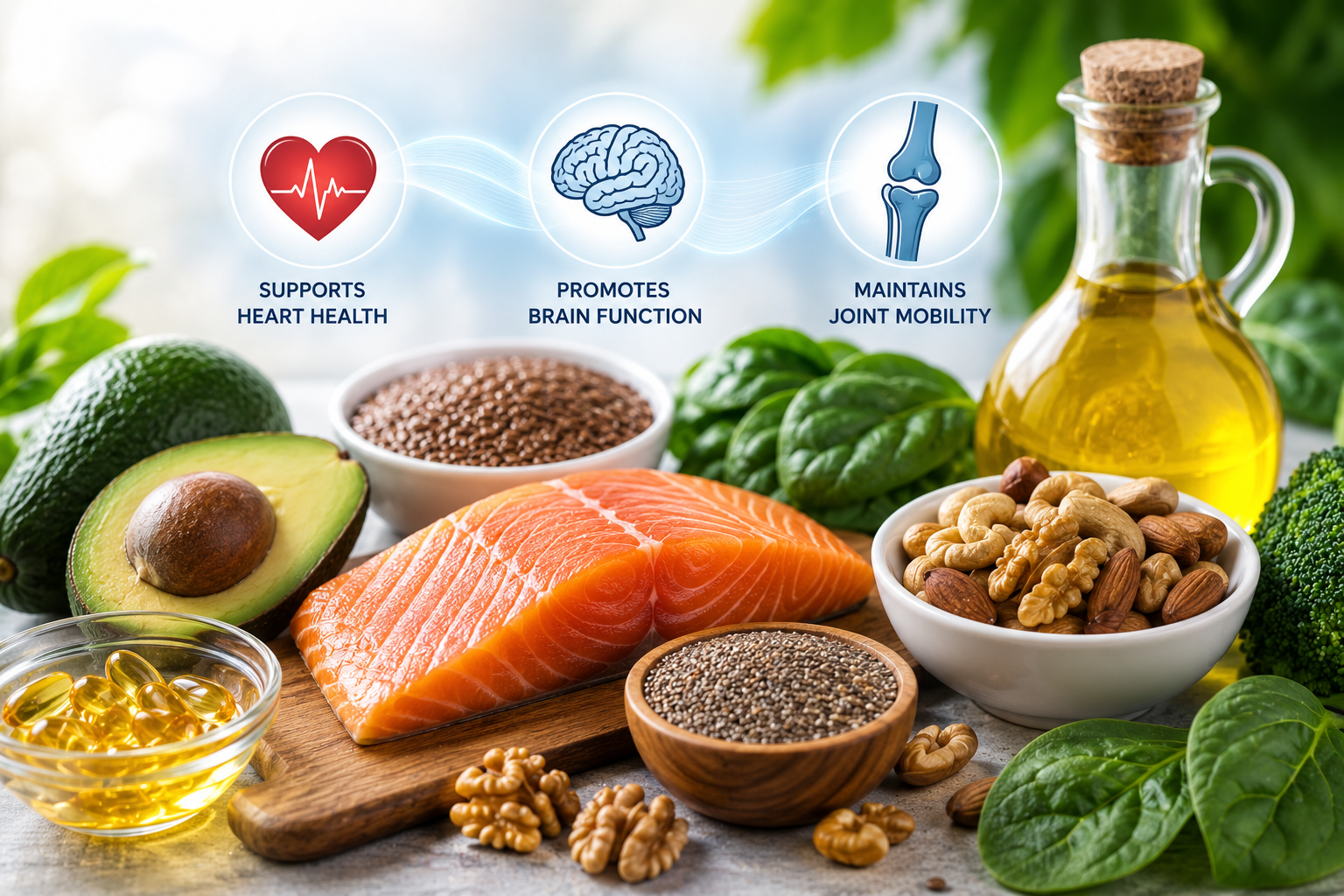
Omega-3 Fatty Acids: What They Do for Heart, Brain, and Joint Health
Not all dietary fats have the same effects on the body.
Some fats are essential components of normal physiology, while others are best limited because of their effects on cardiovascular and metabolic health.
Among the most studied are the omega-3 fatty acids.
Omega-3s participate in cell-membrane structure, inflammatory signaling, cardiovascular physiology, and neurological function.
They are not miracle nutrients.
But they are an important part of a balanced diet.
What Makes a Fatty Acid “Essential”?
The body can manufacture many fatty acids on its own.
But it cannot produce two particular fatty acids in sufficient amounts:
- Alpha-linolenic acid (ALA), an omega-3 fatty acid
- Linoleic acid (LA), an omega-6 fatty acid
These are considered essential fatty acids because they must come from the diet.
ALA is found mainly in plant foods such as:
- Flaxseed
- Chia seeds
- Walnuts
- Canola oil
- Soy foods
The body can convert some ALA into the longer-chain omega-3 fatty acids EPA and DHA, but conversion is limited and varies between individuals.
EPA and DHA are obtained more directly from foods such as fatty fish and some marine sources.
EPA and DHA: Why They Matter
EPA stands for eicosapentaenoic acid.
DHA stands for docosahexaenoic acid.
Both are long-chain omega-3 fatty acids that become incorporated into cell membranes and influence a range of physiological processes.
They have been studied extensively in relation to:
- Triglyceride metabolism
- Cardiovascular health
- Brain and retinal structure
- Inflammatory signaling
- Pregnancy and development
- Some aspects of joint health
The strongest evidence does not support treating omega-3s as a cure-all.
Instead, they are best understood as useful components of an overall healthy dietary pattern.
- Heart Health: Where Omega-3 Evidence Is Strongest
Cardiovascular health is one of the most extensively studied areas of omega-3 research.
Triglycerides
EPA and DHA can reduce elevated blood triglyceride concentrations, particularly at therapeutic doses.
This effect is sufficiently well established that prescription omega-3 products are used in some patients with high triglycerides.
That does not mean everyone needs high-dose fish oil.
For people with normal triglycerides, the most important foundation remains an overall heart-healthy lifestyle.
Blood Pressure and Heart Rate
Research suggests that omega-3 intake may have modest effects on blood pressure and resting heart rate in some populations.
These effects vary by:
- Dose
- Baseline health
- Medication use
- Dietary pattern
- Individual physiology
Omega-3 supplements should therefore not be treated as substitutes for antihypertensive medication or cardiovascular care.
Endothelial and Vascular Function
Omega-3 fatty acids may also influence endothelial function and vascular signaling.
They interact with cell membranes and lipid-derived signaling molecules involved in cardiovascular physiology.
But it is too strong to say they simply “keep arteries flexible.”
Vascular health depends on many factors, including:
- Blood pressure
- Smoking
- Blood glucose
- Physical activity
- Cholesterol levels
- Body composition
- Diet
- Genetics
Omega-3 intake is one piece of that larger picture.
- Brain Health: DHA as a Structural Fat
DHA is particularly important in the nervous system.
It is highly concentrated in neural membranes and plays a structural role in the brain and retina.
This makes DHA especially relevant during periods of development, including pregnancy and infancy.
In adults, omega-3 fatty acids continue to participate in normal membrane function and cellular signaling.
Does Omega-3 Improve Memory and Focus?
This is where wellness claims often move faster than the science.
Observational research has linked fish consumption and omega-3 status with certain aspects of brain health.
However, supplementation studies in healthy adults have produced mixed results.
It is therefore more accurate to say:
DHA is an important structural component of the brain, but taking extra omega-3 does not guarantee sharper memory, better focus, or improved mood.
Nutrition is only one factor affecting cognitive health.
Others include:
- Sleep
- Physical activity
- Blood pressure
- Hearing
- Social connection
- Mental stimulation
- Metabolic health
- Smoking
- Alcohol use
Omega-3s and Mood
EPA and DHA are also being studied in relation to depression and other mood disorders.
Some research suggests potential benefits in selected populations, particularly with certain EPA-rich formulations.
But omega-3 supplements should not be presented as treatments for depression without professional guidance.
Mental-health conditions deserve appropriate medical and psychological care.
- Joint Health: What the Evidence Actually Shows
Omega-3 fatty acids participate in inflammatory signaling pathways.
EPA and DHA can serve as precursors for lipid mediators involved in the regulation and resolution of inflammation.
This has made them interesting in the study of inflammatory joint conditions.
Some clinical research suggests that omega-3 supplementation may reduce certain symptoms, such as joint tenderness or morning stiffness, in people with inflammatory arthritis.
However, the evidence should not be generalized to every kind of joint pain.
Omega-3s have not been proven to rebuild cartilage or reverse ordinary age-related joint degeneration.
Joint health is influenced by:
- Body weight
- Injury history
- Muscle strength
- Physical activity
- Arthritis
- Genetics
- Age
- Inflammatory disease
Omega-3 intake may complement these factors, but it cannot replace appropriate treatment or rehabilitation.
How Omega-3s Influence Inflammatory Signaling
Omega-3s do not simply “turn inflammation off.”
Their biology is more sophisticated.
EPA and DHA can influence:
- Cell-membrane composition
- Eicosanoid production
- Cytokine signaling
- Specialized pro-resolving mediators
These processes can affect the way inflammatory responses are regulated.
The goal is not to eliminate inflammation.
Inflammation is an essential part of immune defense and tissue repair.
Healthy physiology depends on the ability to initiate inflammation when needed and resolve it appropriately.
Plant Omega-3s vs. Marine Omega-3s
Plant foods such as flaxseed, chia seeds, walnuts, and some oils provide ALA.
Fatty fish and certain marine sources provide more direct EPA and DHA.
The body can convert ALA into EPA and DHA, but the conversion rate is limited.
That does not make plant omega-3 sources unimportant.
They provide ALA along with other nutrients such as:
- Fiber
- Protein
- Minerals
- Polyphenols
- Unsaturated fats
A healthy diet can include both plant and marine omega-3 sources.
Best Food Sources of EPA and DHA
Good sources include:
- Salmon
- Sardines
- Mackerel
- Herring
- Trout
- Anchovies
For people who do not eat fish, some algae-derived supplements provide DHA and sometimes EPA.
Algae-based products can be useful for vegetarians, vegans, or people who prefer non-fish sources.
How Often Should You Eat Fish?
Many major dietary guidelines encourage eating seafood regularly as part of a healthy dietary pattern.
A common recommendation is around two servings of fish per week, particularly fatty fish.
The ideal amount depends on:
- Pregnancy status
- Mercury exposure
- Individual dietary preferences
- Cardiovascular history
- Cultural eating patterns
- Overall diet
Variety is useful.
Different fish contain different concentrations of EPA, DHA, mercury, and other nutrients.
What About Mercury?
Fish provides important nutrients, but certain species can accumulate mercury.
Larger predatory fish tend to contain more.
Lower-mercury options often include:
- Salmon
- Sardines
- Trout
- Anchovies
- Herring
Pregnant people, children, and others with specific exposure concerns should follow local public-health guidance about fish selection.
Choosing an Omega-3 Supplement
If you choose a supplement, quality matters.
Look beyond the front-label claim of “1,000 mg fish oil.”
That number may refer to the total amount of oil rather than the actual EPA and DHA content.
Check the label for:
EPA per serving
and
DHA per serving
Those are the numbers that tell you how much long-chain omega-3 the product actually provides.
Third-Party Testing Matters
A well-made omega-3 supplement should have appropriate controls for:
- Identity
- Purity
- Heavy metals
- Environmental contaminants
- Oxidation
- Label accuracy
Third-party certification can provide additional reassurance when the certification applies to the specific product.
“Molecularly distilled” is one purification method, but it is not the only acceptable way to produce a high-quality omega-3 supplement.
The meaningful question is:
Has the finished product been appropriately tested for purity, potency, and freshness?
Oxidation and Freshness
Omega-3 fatty acids are chemically susceptible to oxidation.
Poor manufacturing, prolonged exposure to heat, light, or oxygen, or improper storage can affect product quality.
Good manufacturing practices can help control oxidation through:
- Appropriate processing
- Antioxidant protection
- Packaging
- Storage conditions
- Shelf-life testing
Follow the storage instructions on the label.
A supplement should not have an unusually strong rancid odor or taste.
More Is Not Always Better
Omega-3 fatty acids are beneficial nutrients, but very high supplemental doses are not automatically healthier.
High-dose omega-3 products can affect:
- Bleeding risk in some circumstances
- Gastrointestinal symptoms
- Medication management
- Atrial fibrillation risk in certain high-dose cardiovascular studies
People taking anticoagulants, antiplatelet medications, or cardiovascular medications should discuss higher-dose supplementation with a qualified healthcare professional.
Food First When Possible
One of the advantages of eating fatty fish rather than relying exclusively on supplements is that fish provides much more than EPA and DHA.
It can also provide:
- High-quality protein
- Vitamin B12
- Selenium
- Vitamin D in some species
- Other nutrients
Similarly, walnuts, chia seeds, and flaxseed provide more than ALA.
This is why WonderfulLife generally favors a food-first approach.
Supplements can be helpful when they fill a specific nutritional need.
They should complement a healthy diet rather than replace one.
Three Practical Ways to Improve Your Omega-3 Intake
- Eat Fatty Fish Regularly
Try adding salmon, sardines, trout, mackerel, or another suitable fish to your weekly meals.
- Include Plant Omega-3 Foods
Add:
- Ground flaxseed to oatmeal
- Chia seeds to yogurt
- Walnuts to salads
- Soy foods to meals
These foods contribute ALA along with other valuable nutrients.
- Use Supplements Thoughtfully
If your diet contains little or no EPA and DHA, a quality fish-oil or algae-derived supplement may be worth discussing with a healthcare professional.
Choose based on:
- Actual EPA/DHA content
- Third-party quality testing
- Appropriate dose
- Your medical history
- Medication use
Not marketing hype.
The WonderfulLife Bottom Line
Omega-3 fatty acids deserve their reputation as important nutrients.
EPA and DHA participate in cardiovascular physiology, cell-membrane function, inflammatory signaling, and neurological structure.
ALA contributes essential omega-3 nutrition from plant foods.
But omega-3s work best as part of a larger pattern.
Eat fish when appropriate. Include nuts and seeds. Choose mostly unsaturated fats. Stay physically active. Protect your cardiovascular health. Use supplements when they solve a real nutritional need.
The goal is not to consume the largest possible dose of fish oil.
It is to give your body the right fats, in the right context, as part of a balanced approach to long-term health.
Scientific References & Sources
- Mozaffarian, D., & Wu, J. H. Y. (2011). Omega-3 fatty acids and cardiovascular disease: Effects on risk factors, molecular pathways, and clinical events. Journal of the American College of Cardiology, 58(20), 2047–2067.
- Dyall, S. C. (2015). Long-chain omega-3 fatty acids and the brain: A review of the independent and shared effects of EPA, DPA and DHA. Frontiers in Aging Neuroscience, 7, 52.
- Goldberg, R. J., & Katz, J. (2007). A meta-analysis of the analgesic effects of omega-3 polyunsaturated fatty acid supplementation for inflammatory joint pain. Pain, 129(1–2), 210–223.
- Calder, P. C. (2017). Omega-3 fatty acids and inflammatory processes: From molecules to man. Biochemical Society Transactions, 45(5), 1105–1115.
Medical & Nutritional Disclaimer
The information provided on WonderfulLife.ca is for educational, informational, and general wellness purposes only and is not intended as medical advice, diagnosis, or treatment.
Omega-3 needs vary between individuals. High-dose omega-3 supplementation may not be appropriate for everyone and can interact with medications or affect medical management.
People taking anticoagulants, antiplatelet medications, cardiovascular drugs, or those with bleeding disorders, heart-rhythm conditions, or upcoming surgery should consult a qualified healthcare professional before using higher-dose omega-3 supplements.
Pregnant or breastfeeding individuals should follow appropriate guidance regarding fish intake, mercury exposure, and supplementation.
Dietary supplements should not be used as substitutes for prescribed cardiovascular, neurological, or arthritis treatment.
Always consult with a physician, pharmacist, Registered Dietitian, or other qualified healthcare professional before making significant changes to your diet or supplement routine.
Never disregard professional medical advice or delay seeking care because of information you have read on this website.
Credits
Author: WonderfulLife Editorial Team Editorial Assistance: Gemini Published For: WonderfulLife.ca











WonderfulLife Community
Join the Conversation